An officer opens your new application, and the dates look familiar. Same route style, same travel window, maybe even the same reservation pattern. That is when cross-checking quietly kicks in. Not as a dramatic investigation, but as a fast comparison of who you are on paper across more than one file.
We are going to keep you out of the avoidable traps. We will map the common triggers, show how overlapping trips and small detail changes get noticed, and lay out a clean system for managing flight reservations when you apply more than once. You will know when reusing a reservation helps, when it backfires, and how to explain real plan changes without creating new questions. If you need one verifiable itinerary across applications, a dummy ticket booking can help keep dates and routes consistent.
Key facts:
- Applications may connect through passport details, biometrics, previous immigration history, border records and document patterns.
- Cross-checking risk rises when travel windows overlap, routes drift or the same proof is reused for a different story.
- A reused reservation is safest only when the route, dates, purpose and supporting documents still match.
- After a refusal or withdrawal, changing everything at once can make the next file harder to understand.
- The safest system is one source-of-truth itinerary that you update carefully before each application.
Need one clean itinerary before you apply again? BookForVisa can help you prepare a flight reservation that matches your route, dates and supporting documents instead of creating cross-file confusion.
Create Your Visa ReservationIn This Guide
Official-source check: Official systems and guidance support careful wording here: visa files can be connected through identity, biometric and immigration-history checks, but that does not mean every application is manually investigated the same way. The European Commission says the Visa Information System lets Schengen States exchange visa data, connects consulates and external borders, records application data and biometrics, and helps fight visa shopping. The Schengen Visa Code says examination considers the reliability of documents and applicant statements, may include interviews or additional documents in justified cases, and a previous refusal does not automatically refuse a new application. GOV.UK biometric guidance says biometrics support identity and suitability checks, while Canada states temporary-resident biometrics can remain valid for 10 years. Sources: European Commission VIS explanation, Schengen Visa Code, GOV.UK biometric enrolment guidance and IRCC temporary-resident biometrics guidance.
Reviewed for: cross-check wording, biometrics and prior-file caution, PNR and reservation reuse logic, overlapping-date risk, refusal/reapplication handling, route-date consistency, cross-platform terminology separation and official-source alignment.
The Quiet Ways One Visa File Can Connect To Another
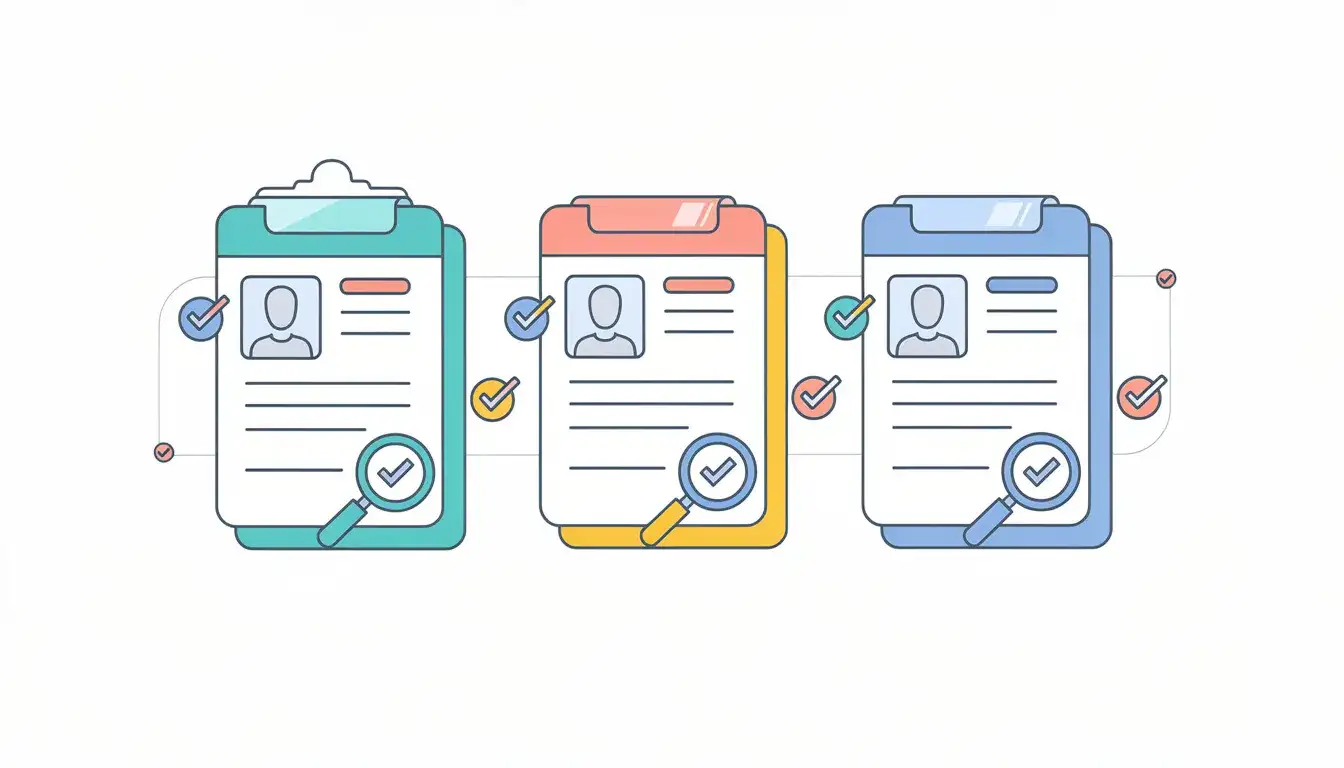
Visa officers and immigration systems can connect applications through normal identity, history and document checks. In many visitor visa cases, the link happens automatically, then your new file is read against what is already on record.
Your Identity Becomes The Connector: Passport Numbers, Biometrics, And Old Application Footprints
A Schengen short-stay file shows how linking works in practice. Your passport number, photo, and fingerprints can anchor a record even if you apply through different consulates over time. If an earlier application showed a Paris to Rome route in May, a new application with a similar window can be compared quickly.
Keep identity facts consistent across submissions:
-
Name spelling exactly as in the passport
-
Date and place of birth are formatted the same way
-
One stable email and phone number you actually keep
If you renewed your passport, expect the old passport number to still be part of the picture, especially when biometrics were captured before. Watch for small “identity drift” like adding or dropping a middle name, switching surname order, or using different spellings across forms.
When something changes, update it cleanly and once. A new employer is normal. A different birth city is not.
Data Doesn’t Sit In One Place: Regional Systems, Shared Watchlists, And Routine History Checks
A UK Standard Visitor application filed after a recent Schengen trip can still involve routine checks that pull from multiple sources, including your earlier UK history and the travel history you disclose now. This is where small differences turn into “why did this change?”
Officers also notice patterns. Two separate applications with the same neat 9-day itinerary, the same outbound timing, and the same perfectly timed return can look copied, especially if your circumstances shifted between files.
Practical move: before you submit, compare your last application to your current one and confirm three things still match reality: your travel purpose, your timeline, and your ties that bring you back.
Border Records And Carrier Data: How Your Past Trips Can Reappear During Review
For a U.S. B1/B2 or a Canadian TRV, your past entries and exits can matter when your new itinerary conflicts with your recorded travel. Airlines transmit passenger details for international trips, and border agencies keep arrival and departure records. Reviewers may not quote those sources, but contradictions can shape the tone of the file.
Flight-related mismatches that commonly raise questions:
-
Your declared return date conflicts with your prior entry or exit history
-
Your route ignores the connections normally needed from your departure city
-
Your transit airport repeats across applications, even when the rest of the plan changes
You do not need to explain everything. You do need to avoid dates that cannot all be true at the same time.
Application Center Consistency: When Submitting Through Different Locations, Raises Questions
Japan tourist visa processing and many other systems rely on application centers for biometrics and document intake. Using different centers can be fine. The risk shows up when the logistics do not match your flight plan.
If you submit biometrics in one city, then show an early-morning departure from a different city with no buffer, the file can feel rushed or assembled. Applying in Mumbai while your itinerary shows a departure from Delhi the next morning is not automatically wrong. It becomes questionable when there is no believable time to reposition.
Make the timeline plausible with one clean adjustment:
-
Move the international departure date
-
Add a realistic repositioning flight the evening before
-
Align appointment time and departure time with the real transit time
What Usually Triggers Cross-Checks When You Apply More Than Once
Most applicants do not get cross-checked because they applied twice. The cross-check starts when your new file gives an officer a reason to compare timelines, details, and travel logic across applications.
Overlapping Travel Windows: The Fastest Way To Invite A Timeline Comparison
Overlap is the loudest trigger because it is easy to spot on a calendar. Think of a Schengen C visa filed for a Rome trip from June 10 to June 20, then a UK Standard Visitor visa filed for London from June 15 to June 23. Even if you plan to choose one later, both applications are claiming the same days.
Officers do not need to guess your intent. They just see two “planned” international trips that cannot both happen.
Common overlap patterns that cause immediate comparison:
-
Two outbound flights on different routes leaving within 24 to 48 hours of each other
-
Two return flights that land on the same day in different countries
-
A second itinerary that starts before the first one ends
-
A “bufferless” plan where you attend a visa appointment in one city and fly internationally from another city a few hours later
For Japan tourist visas and many appointment-based systems, the timing around biometrics can also create friction. If your passport is expected to be held for processing, a second application showing travel during the same processing window can look careless.
Here, we focus on one rule that keeps you safe in most countries: never present two applications that claim the same travel days as primary travel days. If you are submitting close together, separate the travel windows clearly. Give yourself a realistic gap that matches how long passports and decisions can take in that system.
Story Drift: Small Differences That Don’t Feel Big Until They’re Compared Side-By-Side
Story drift is when your facts slowly change across applications, even though your life did not. It often shows up in countries with form-heavy processes, like a U.S. B1/B2 DS-160 or a Canada TRV application in IRCC. One version says you started your job in March. Another says May. One says you live at Address A. Another uses Address B without a clear move.
Now add a flight itinerary. If you used a Dubai transit last time and suddenly show a Doha transit for the same type of trip, that can be fine. The problem is when the rest of the file still reads like the old version, with dates and logistics copied over.
The drift points that most often trigger a deeper read:
-
Employment start dates and job titles
-
Monthly income figures that change without a supporting reason
-
Marital status or dependent details that shift between files
-
Prior refusal answers that are incomplete or inconsistent
-
Departure city changes that do not match your residence and schedule
If something truly changed between applications, do not hide it. Align it. A UK visitor file that updates your employer should also have a matching leave letter and dates that make sense for the route you show. A Schengen file that changes the travel month should not keep the same day-by-day pattern that was built for a different season.
The Repeat Pattern Effect: When Similar Applications Start Looking Automated
Repeat patterns trigger cross-checking because they feel manufactured. Officers see thousands of itineraries. When your Schengen applications to different consulates keep the same structure, it can look like you are submitting a template instead of a real trip.
The pattern is usually not one detail. It is the combination:
-
The same 9 or 10-day trip length every time
-
The same outbound day of the week, often a Friday night
-
The same “perfect” return that lands Monday morning
-
The same two-city split, even when the main destination changes
A France-focused route should read like France. A Spain-focused route should read like Spain. If both show identical timing and the same transit logic, the officer’s next move is simple. They compare your earlier file and check whether your travel story is evolving naturally or repeating mechanically.
We keep it practical by anchoring the itinerary to something real in your life. For an Australian Visitor (subclass 600), a three-week itinerary must match the leave you can credibly take and the flights that actually operate from your departure region. For a Canadian TRV, a short trip should match a clear reason for that length, not just the same number of days you used last time.
Refusals, Withdrawals, And Re-Applications: How “Trying Again” Changes The Review Tone
A refusal changes the lens. A second submission is often read as “What is different now?” That is true for Schengen refusals, UK visitor refusals, and Canada TRV refusals. If the refusal was tied to purpose, ties, or credibility, a new itinerary alone rarely answers the concern.
Cross-checks become more likely when you:
-
Re-apply quickly with new travel dates, but the same supporting evidence
-
Switch destinations abruptly without a clear reason
-
Withdraw an application and refile with a cleaner itinerary, but unchanged core details
Keep your changes targeted and coherent. If your Schengen refusal involved doubts about itinerary credibility, you fix itinerary credibility with consistent routing, realistic timing, and supporting logic that matches the rest of your file. If your UK refusal questioned your finances, a new flight plan is not the main fix.
A clean re-application usually looks like this:
-
One clear travel window that does not overlap any other pending plan
-
One consistent purpose that matches your documents and past statements
-
A short explanation only, where a reviewer would otherwise guess
Flight Reservations Across Multiple Applications: What Gets Verified And What Breaks Trust

A flight reservation is often the fastest “sanity check” in the visa application process. When you submit more than one file, visa applicants are compared on dates, routes, and reservation behavior.
PNR Reality Checks: What A Reviewer Can Validate Quickly (And What They Notice When It Fails)
When an embassy has requested a flight itinerary, consular officers usually want a reservation you can verify, not a perfect travel plan. For a Schengen C visa or a UK Standard Visitor, the checks are quick and specific, and a name match is essential.
Reviewers commonly confirm:
-
Passenger name consistency, especially after a new passport renewal
-
Travel window alignment with the visa application form and any invitation letters
-
Connection timing that matches the particular country you present as the main stop
-
Whether the record still looks valid if checked again later
Mismatch is the problem. If your bank statements show limited spending but the flights imply costly routing and extra fees, the itinerary can feel disconnected from your documentation. If your purpose is visiting family for ten days, but the booking implies a long loop, officers look for discrepancies across the required documents.
If any element resembles fraudulent documents, scrutiny rises. Reviewers may lean harder on government records and your immigration history, then run quick verification steps to confirm you are the same person across files, before moving on to decision factors.
Reusing The Same Reservation Vs. Creating A New One: A Simple Rule That Avoids Conflicts
One reservation should represent one trip, not several possible outcomes across other countries. Reuse only works when the trip is truly the same and the dates do not collide with another submission.
Reuse can make sense when:
-
You are re-filing the same Schengen plan with the same travel window
-
Your itinerary supports the same visa types and purpose
Create a fresh booking when:
-
A new visa has different dates or a different primary destination
-
You shift to multiple entries, and the timing story changes
-
Any overlap appears with biometrics, interviews, or processing calendars
Date logic matters even more for time-bound cases. If educational institutions set an enrollment deadline, the inbound students should arrive before it. If a work visa contract starts on Monday, arriving later creates a credibility gap that can echo into visa refusals.
Reliable reservation providers often hold space through major airlines like Lufthansa or Emirates, which helps maintain a consistent record without forcing non-refundable commitments too early.
Changes Leave Trails: Why Excessive Re-Issues, Cancellations, Or Date Swaps Can Look Suspicious
Plan changes are normal. The trigger is volume and timing. A Canada TRV file with repeated date shifts can look like the flight plan is chasing a narrative.
Patterns that can raise questions:
-
Multiple re-issues within a short turnaround time
-
A route that flips hubs with no supporting reason in the file
-
A booking that disappears, then reappears with slightly different passenger details
For a U.S. B1/B2, dates can be flexible, but the itinerary still needs to match your stated purpose and the rest of the application process. If you change the travel window, mirror that change wherever document requirements depend on dates.
Avoid bundling changes. Updating flights and identity details at the same time can look like a different person behind the file.
Transit And Departure City Logic: The “Does This Person Actually Live This Trip?” Test
This check is about plausibility. The route should reflect where you live, where you work, and how you realistically reach the departure airport.
For example, if you live in one city and fly long-haul from a faraway airport, reviewers expect a positioning segment or a buffer day. An applicant departing from Delhi, India, after morning biometrics elsewhere needs a timeline that works on the ground, especially when a Japan tourist visa appointment is involved.
Keep routing logic tight:
-
Match the departure city to your employment history location
-
Use transit points that exist in the world and connect with realistic layovers
-
Keep dates consistent with immigration screening expectations at busy hubs
-
Reduce complexity that invites extra access checks in government databases
A Clean System For Multiple Visa Applications Without Creating Contradictions

You do not need a perfect plan. You need a consistent one that survives edits, new dates, and a second application without turning into a different trip.
Build One “Source Of Truth” Itinerary Before You Touch Any Application Form
Start with one master itinerary that you treat as the only version that matters. Build it before you open a Schengen form, a UK visitor portal, or a DS-160.
Keep it simple and flight-first:
-
Departure city, transit city, and arrival city
-
Outbound date and return date
-
A short reason for the route choice, like “direct flights limited” or “arriving for a conference.”
-
A buffer day if you have biometrics or an appointment
Make the route realistic for the visa requirements you are facing. For a Japan tourist visa submitted through an application center, leave space between the appointment time and any international departure. For a Canadian TRV, avoid a connection that requires a transit entry if that stop hasa visa required for your nationality, because it forces extra explanations that distract from your main trip.
When your master itinerary is clean, every later step becomes controlled copying, not improvisation.
Version Control For Humans: Track What You Said Last Time So You Don’t Accidentally Rewrite Your Life
Cross-check problems usually come from edits you forgot you made. We avoid that by keeping a personal “application log” that sits next to your itinerary.
Log only items that are commonly compared across files:
-
The exact travel dates you used
-
The departure airport you claimed
-
The stated purpose, in one sentence
-
The address and employer line you typed into the form
This prevents common mistakes like changing your travel month while leaving an old departure city in the application form, or updating a route but forgetting to align the leave dates on a letter.
If you are applying under different visa categories, keep the purpose line consistent with each category. A UK visitor trip “to explore museums” and a U.S. business trip “to attend meetings” can both be true, but they should not be described with interchangeable language across two separate files.
If You Must Apply To Two Places Close Together: The Safe Sequencing Options
Sometimes timing forces parallel planning. A conference date is fixed. A family event is fixed. Or a passport return timeline is tight.
Use sequencing that reduces overlap and looks natural to a reviewer:
-
Submit the application with the earlier travel date first, then submit the later one after you have a clear outcome or a realistic processing window
-
Separate your travel windows so the second trip starts after the first trip would reasonably end, including travel time
-
If a country typically holds passports during processing, do not schedule a second departure inside that same window
This matters even more when you are dealing with a long-running immigration file. If you have a pending immigrant petition with a priority date, keep your short-term travel itinerary and purpose aligned with that reality, because the officer is already reading your profile through a stricter lens.
Build your calendar around what the process can support, not what you wish it would.
The Explanation Toolkit For Visa Applicants: How To Describe Plan Changes Without Sounding Defensive
You do not need a speech. You need one calm line that keeps your file coherent when something changes.
Here are explanations that work across a Schengen C visa, a UK visitor visa, and an Australian Visitor (subclass 600), without sounding rehearsed:
-
Date change: “My leave dates were updated by my employer, so I shifted the trip to match the approved leave window.”
-
Route change: “I switched to a routing with better connection times to reduce missed-connection risk.”
-
Timing gap: “I added a buffer day between biometrics and departure to allow for document handling and travel to the airport.”
Two rules keep this effective. First, stay accurate and match the same change everywhere it touches the file. Second, keep the tone factual, not emotional. Officers want clarity, not a story arc.
Also, be aware of what not to explain. If a connection airport changes but your overall dates and purpose stay the same, a short note is enough. Extra detail can create new questions.
After A Refusal: What To Change (And What Not To Touch) In The Visa Application Process
A refusal invites comparison, so your next file should look like an improved version of the same truth, not a replacement identity.
Change what caused doubt and leave stable facts alone. For example:
-
If the refusal questioned itinerary credibility, tighten the routing and remove unrealistic same-day jumps
-
If the refusal questioned finances, align your flight plan with what you can realistically pay without creating new contradictions.
-
If the refusal questioned the purpose, make the purpose sentence and supporting documents match the itinerary dates exactly.
Do not “refresh” everything at once. A new route, new employer details, and a new address in the same re-application can look like you are rebuilding the file to escape earlier scrutiny.
If you are reapplying for a Canada study permit or another travel-linked permit, keep your arrival timing consistent with your intake or start date, as a late arrival can suggest you are not serious about the stated plan.
Keep Your Next Submission Clean And Consistent
When you file a Schengen application, a UK Standard Visitor request, or a Japan tourist visa, your second submission often gets read next to the first. We keep you safe by making your flight dates, routes, and form answers match across the visa application process, so consular officers see one clear story from start to finish.
You can move forward with a reservation that supports your plan, avoids timing collisions, and stays aligned with your documents. That is the simplest way of ensuring credibility, protecting your security profile, and keeping your path smooth for travellers who apply more than once.
Keep the next file easier to compare. If you are reapplying or applying to more than one place, use one current reservation that matches the version of the trip you actually want assessed.
Start Your Booking for VisaFAQ
Are multiple visa applications cross-checked?
They can be. Applications may connect through passport data, biometrics, prior immigration history, previous refusals, travel records or document patterns, depending on the country and system.
Does a previous visa refusal automatically affect a new application?
Not automatically. For Schengen visas, the Visa Code says a previous refusal does not lead to automatic refusal of a new application, but the new file is assessed using available information.
Can two applications with overlapping travel dates create risk?
Yes. Overlapping windows can make the officer question which trip is real, whether the itinerary is reused correctly and whether the applicant is presenting one coherent travel plan.
Can I reuse the same flight reservation for another visa application?
Only if the same reservation still matches the new application’s route, dates, purpose, accommodation and return plan. If those details changed, create a clean current version.
Do biometrics connect old and new visa applications?
They can. Many immigration systems use biometrics for identity checks, and some systems reuse previously enrolled biometrics for a period of time.
Will embassies see every old document I submitted?
Access varies by country, visa type and system. The safer assumption is that identity, history and key application facts may be compared, so avoid contradictions.
What details should stay consistent across applications?
Name spelling, passport details, travel dates, route, purpose, accommodation, sponsor information, employment or study details and return obligations should all stay consistent unless a real change is explained.
Is applying to two countries at the same time a red flag?
It can be if the applications show overlapping trips or competing destinations. It is less risky when each file has a clear purpose, non-conflicting dates and honest supporting documents.
How should I explain a changed travel plan after a refusal?
Explain only the real change that matters: corrected dates, safer route, updated purpose evidence or new supporting documents. Do not rewrite unrelated facts just to make the file look different.
What is the safest way to manage multiple applications?
Keep one source-of-truth itinerary and compare every new form, reservation, hotel proof and cover letter against it before submission.
Friendly reminder: BookForVisa provides travel-proof documents for planning and visa-application support. Requirements vary by destination, consulate, visa category and applicant situation. A flight reservation can support a file, but it does not guarantee approval, boarding or entry.