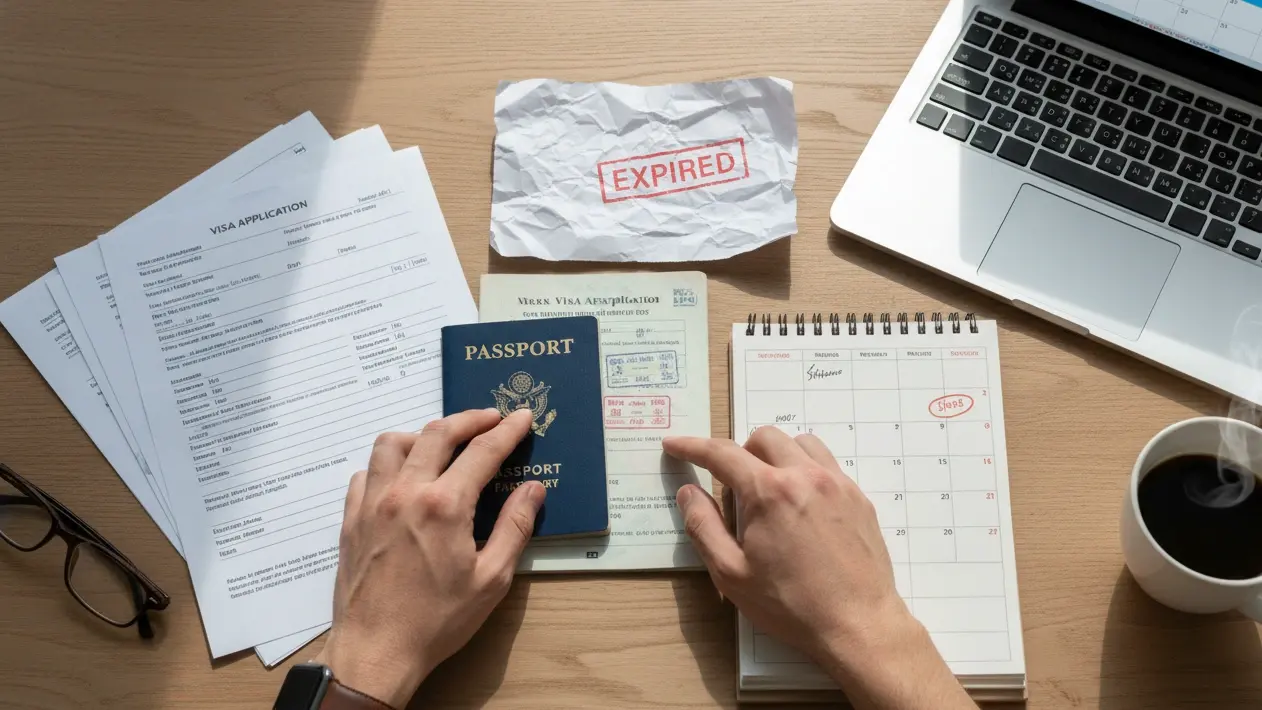
Short answer: If the final airfare is too expensive to risk before a visa decision, do not buy a non-refundable ticket simply to make the file look stronger. First check whether the destination accepts a temporary reservation; if it does, match the passenger name, route, dates and return plan to the rest of the application. A flight reservation for visa can support travel proof where permitted, but it cannot guarantee approval, boarding or entry.
Visa applicants often face a difficult choice: pay a large airfare before knowing the outcome, or submit a reservation that reflects the intended trip without tying up money. The right answer depends on the destination checklist, fare rules and how consistently the itinerary fits the rest of the file.
This guide explains the financial trade-offs, the difference between a genuine reservation and a fabricated document, and the checks to complete before you submit.
Key facts
- A paid ticket is not automatically stronger evidence than a truthful reservation.
- Refundable fares still tie up cash and may have carrier-specific conditions.
- A temporary reservation is acceptable only where the current checklist permits it.
- Never use fabricated flight data or a document that cannot be verified as represented.
- Passenger name, route, dates, accommodation and return logic must agree.
What the travel document proves
- Temporary reservation: intended route and dates without a full fare commitment, where permitted.
- Refundable ticket: paid carriage subject to the airline’s fare and refund conditions.
- Non-refundable ticket: a financial commitment that may be difficult to recover if the visa timeline changes.
- Supporting file: invitation, accommodation, insurance, funds and return evidence that explain why the route is plausible.
For the broader distinction between provisional travel proof and a paid booking, read the complete flight reservation for visa guide before paying a high fare.
Official-source check: The destination consulate or visa centre controls what travel proof it accepts. Verify the current checklist before choosing a fare or reservation. For US examples, consult State Department visa guidance and the IATA Travel Centre for current carrier-facing checks.
You have the visa appointment date. You have the documents folder half-filled. And now you are staring at a flight search page, watching the price of a full fare climb past what feels reasonable for a trip that might not even get approved.
That gap between what the embassy actually wants and what airlines want you to pay is where most applicants lose money they didn't need to lose. This isn't about whether you can afford the ticket. It's about whether you should pay that much before a visa officer has even looked at your file.
This guide walks through the actual financial and procedural logic behind that decision, so you can book something a consulate will accept without gambling on a fare you can't easily recover. Start with a verifiable dummy ticket for your visa file instead of locking in a full-price ticket before you know the outcome.
For the core document distinction, review the complete flight reservation for visa guide before committing funds to a fare.
The Real Cost Question Behind Every Visa Flight Booking

Before you open another flight search tab, it helps to separate two very different questions. One is what proof the visa officer actually needs. The other is what the airline wants you to pay. These are not the same question, and treating them as one is how applicants end up spending far more than necessary.
Why Embassies Rarely Ask You To Spend That Much Upfront
Visa officers are not airline customers. They review a visa file to judge intent, consistency, and eligibility. A consulate may not require you to have already paid for a full, non-refundable flight before your visa is even decided.
Most application checklists ask for a flight itinerary or flight reservation that shows your travel dates, flight numbers, and routing. A confirmed ticket is one way to show that. It is not the only way, and for most applicants, it is not the smartest way either.
Consider what a full ticket actually proves to a consulate:
-
Your intended travel dates
-
Your entry and exit points
-
Your trip length
A temporary reservation with a live booking reference proves the exact same three things. A flight reservation shows intended travel without full fare payment, which is precisely why it satisfies the requirement without the financial weight of a purchased fare. The difference is that one locks up hundreds of dollars in a fare that may not even get used, while the other doesn't.
This is why so many visa files, across very different countries, rely on flight reservations rather than fully paid tickets. It isn't a shortcut. It's simply matching the document to what's actually being verified.
What "Risk" Actually Means When You Book Before Approval
Risk here isn't abstract. It's the specific chance that money you spend today becomes money you cannot easily get back tomorrow.
Three risk points show up in almost every visa timeline:
-
Refusal risk — your visa application is denied, and the trip never happens.
-
Timing risk — your visa is approved late, after your original flight dates have already passed.
-
Refund risk — even when a ticket is technically refundable, getting the money back takes longer than expected.
Each of these hits differently depending on what kind of ticket you booked. A non-refundable ticket, sometimes written as non-refundable, collapses your options if any of the three happen, and the same applies to non-refundable flights booked in bulk for a group trip, where a single visa refusal can affect everyone's booking at once. A refundable ticket softens the blow but introduces its own cash-flow problems, which the next discussion breaks down. A temporary flight reservation sidesteps all three, because there was never a full fare sitting at risk to begin with.
The applicants who end up frustrated aren't the ones who chose the "wrong" ticket type in some absolute sense. They're the ones who didn't think through which risk point they were most exposed to before they clicked buy. Someone applying months in advance with a stable travel date has a different risk profile than someone applying two weeks before a wedding they cannot reschedule.
There's a paperwork angle worth flagging early too. Some consulates list a specific document checklist that names the flight itinerary as a required item, separate from proof of accommodation or financial statements. If your visa documentation packet is missing a clear flight details page, reviewers may set your file aside until it's complete, even if every other piece is strong. Treat the flight document as a checklist item to close early, not something to finalize the night before your appointment.
It also helps to think about this from the embassy's operational side for a moment. A visa section processes a high volume of files every week, and the officers reading them are trained to move quickly through documents that clearly match what's asked for.
A flight reservation with a working reference number, sitting alongside the rest of your paperwork in a predictable order, gets processed the way it's supposed to. A confirmed ticket that costs a small fortune doesn't move any faster through that same queue, because speed depends on document clarity, not on how much you spent producing it.
There's also a common misconception worth addressing directly: some applicants believe that spending more on travel documents signals seriousness about the trip, as if a bigger receipt somehow reads as stronger intent. Visa officers don't evaluate applications this way. They're checking for a consistent, plausible plan backed by appropriate documentation, not rewarding applicants for overspending on a category of proof that was never the deciding factor in the first place. Financial strength matters elsewhere in the file, through bank statements and income proof, not through an inflated flight purchase.
That's the real starting point for this decision. Not whether a dummy ticket is allowed, but which financial exposure you're actually trying to avoid, and what your specific travel intent needs to look like on paper.
It's also useful to think about this from a budgeting standpoint rather than only a compliance standpoint. Visa applications already carry a stack of unavoidable costs: application fees, biometric fees, translation costs for supporting documents, and sometimes courier charges for physical submissions. Adding an unnecessary full-fare flight purchase on top of all that, before you even know the outcome, turns an already expensive process into a significantly heavier one. Applicants who map out their total visa-related spending in advance, fees included, tend to make better decisions about where a flight document actually needs to sit on that list.
There's also a timing consideration that's easy to miss the first time you go through this process. Flight prices fluctuate constantly, and booking a full fare weeks or months before your actual travel date, purely to satisfy a document requirement, locks you into pricing that has nothing to do with when you'll actually want to fly.
A reservation used only for the visa file removes this pressure entirely, letting you shop for your real ticket at the point when you actually know your travel window, rather than guessing at it months in advance under time pressure from an approaching appointment. Once that's clear, the rest of the booking decision gets a lot easier to reason through, starting with what happens when you choose the refundable route.
Refundable Tickets: The Hidden Cash-Flow Trap
A refundable ticket sounds like the safe middle ground. You pay full price, but you can get it back if things don't work out. In practice, that safety net has more holes in it than most applicants expect.
How Airlines Handle Refund Timelines After Visa Refusal
Refund eligibility and refund speed are two separate things, and airlines are not shy about separating them either. A refundable fare typically means the airline will process a refund request. It does not mean that money lands back in your account quickly.
Processing windows for airline refunds commonly stretch across several weeks, and during high-demand travel periods, that window can extend further. If your visa gets refused and you request a refund the same day, you are still looking at a wait before you see that money again, and refund delays of this kind are common enough that most seasoned applicants plan around them rather than hoping for an instant reversal.
Now layer on the reality of visa timelines. Refusals don't always arrive quickly. If your refundable ticket was booked for a date close to your application submission, and the refusal comes in later than expected, you may be requesting a refund on a ticket that's already past its useful window, which can affect how the refund is processed.
Why Processing Delays Make Refundable Fares Riskier Than They Look
Visa processing delays are common enough that most embassy guidance pages mention expected wait times rather than guaranteed ones. A refundable ticket bought weeks before your appointment, based on an assumed decision date, can end up sitting through extra weeks of processing delays before you even get an answer.
During that stretch, your money is tied up. Even a fully refundable fare represents cash that isn't available to you for anything else, whether that's a hotel deposit, visa fees, or simply peace of mind about your budget. If your visa file also includes hotel reservations and other upfront costs, a refundable flight adds one more chunk of frozen funds to the pile.
There's also a quieter problem: refund rules for tickets marked "refundable" are not always as clean as the label suggests. Some carriers apply administrative fees, some tie refund eligibility to the original payment method, and some require the refund request to happen within a specific window after the flight date, not after your visa decision date. Reading the fare rules before you buy, not after you need the refund, is the only way to avoid an unpleasant surprise here.
There's one more angle worth knowing about. Refundable tickets can appear suspicious if dates mismatch other parts of your file, since a reviewer may wonder why you paid full price for a specific date range that doesn't quite line up with your hotel or invitation letter. A reservation, by contrast, is easy to adjust before submission if a date needs correcting, without the added step of cancelling a paid fare first.
When A Refundable Ticket Still Makes Sense
None of this means refundable tickets are a bad choice across the board. There are cases where it's genuinely the better refundable ticket decision:
-
You are applying with a very high approval likelihood and a short processing window.
-
Your travel dates are fixed and non-negotiable, such as a booked cruise departure.
-
Your destination or visa category specifically states that a reservation alone will not be accepted.
In these situations, a refundable ticket gives you a paid, confirmed booking while keeping an exit path if plans change. The key is knowing this is a deliberate choice made because your circumstances call for it, not a default option picked because it felt like the safer middle ground. For most standard tourist and short-stay visa applications, that middle ground carries more downside than it first appears to.
It's worth walking through a real scenario to see how this plays out. Say an applicant books a refundable round-trip fare two weeks before their visa interview, expecting a quick decision. The interview happens on time, but the consulate takes an extra three weeks to issue the visa due to a routine administrative backlog. By the time the decision arrives, the refundable ticket's original travel dates have already passed. The applicant now has to either change the dates, which usually comes with a fee even on refundable fares, or cancel and start the refund process from scratch, waiting weeks for funds that were never actually needed for the trip.
Compare that to an applicant who submitted a temporary flight reservation instead. When the visa is delayed, nothing needs to be cancelled or refunded, because no full fare was ever paid. Once the visa is approved, that applicant simply books the actual flight at that point, with dates that reflect the real approval timeline rather than a guess made weeks earlier. The outcome for the visa file is identical. The financial exposure during the waiting period is not.
This is also where it helps to separate emotional comfort from practical benefit. A paid ticket can feel more "real" and reassuring while you wait for a decision, but that feeling doesn't translate into any actual advantage with the consulate. The reservation can provide the relevant travel-plan evidence, without the emotional cost of watching a large sum sit frozen in a refund queue you can't control.
There's also a broader pattern worth noting across different airlines and fare classes. Full-service carriers often build more flexibility into their refundable fares, but even a low-cost airline may charge a cancellation fee on a fare marketed as refundable, quietly reducing the amount you eventually get back.
Budget carriers in particular tend to structure their refund policies around vouchers or credit rather than cash refunds, which is rarely mentioned upfront and only becomes clear once an applicant actually needs to cancel. None of this is disclosed clearly at the point of booking, which means the "safety" a refundable fare seems to offer during visa preparation often turns out to be narrower than advertised once you actually try to use it.
Applicants sometimes assume that paying more automatically buys more flexibility, but that's not always accurate either. Two refundable fares on the same route, from two different carriers, can carry very different refund conditions despite similar pricing. Reading the specific fare conditions attached to a ticket before purchase, rather than relying on the general "refundable" label, is the only reliable way to know what you're actually protected against.
Why Consulates Ask For A Flight Itinerary, Not A Bank-Breaking Ticket

Once the refundable-versus-non-refundable question is out of the way, it's worth understanding why so many visa checklists specifically ask for an itinerary rather than a paid ticket in the first place.
The Legal Difference Between A Reservation And A Purchased Fare
A flight reservation and a purchased fare are two distinct products, even though both can produce a document that looks similar on paper. A reservation holds a seat and generates a booking reference without requiring full payment. A purchased fare completes that transaction and issues a ticket number tied to that payment.
Embassies that ask for a flight itinerary are asking for evidence of a planned trip: dates, routing, and passenger details. They are not asking you to prove you've already spent money on it. Many visa files are approved every year with exactly this kind of legitimate reservation attached, because the document satisfies the actual requirement being checked. Verification of the flight itinerary is necessary for visa applications precisely because the consulate needs to confirm the plan is real, not because it needs proof of a completed purchase.
Where applicants get confused is assuming that itinerary and ticket mean the same level of financial commitment. They don't. One is a plan. The other is a transaction. Visa checklists, when read carefully, usually ask for the plan.
What Schengen Visa Code Actually Requires From Applicants
Applicants heading to Europe often assume Schengen rules demand a fully paid, non-refundable ticket. That assumption isn't accurate. The Schengen visa code framework, sometimes referenced as the EU visa code in guidance materials, focuses on applicants demonstrating sufficient means and intent to return, along with evidence of the planned trip itself. It does not mandate a purchased, non-refundable flight as the only acceptable proof of travel plans.
This is precisely why some checklists expressly permit provisional reservations, while others use different wording. It aligns with what the code is actually designed to verify: a coherent travel plan, not a locked-in financial commitment made before a decision is even reached. When you build your Schengen visa file, a verifiable reservation slotted alongside your other documents typically satisfies this requirement without committing to a paid fare, where the checklist allows it.
That said, wording varies slightly between consulates handling Schengen applications, even under the same underlying code. Some processing centers are explicit that a reservation is sufficient. Others use broader language that leaves room for interpretation. This is exactly why the next point matters as much as it does.
Reading Embassy Checklists Correctly Before You Book Anything
Every consulate publishes its own checklist, and the exact wording on that checklist should guide your booking decision more than general assumptions about what most people do. This step matters just as much as understanding the broader visa application process itself, since a strong file still stalls if one document doesn't match what was specifically asked for.
Look specifically for these phrases when reviewing your target embassy's requirements:
-
"Flight itinerary" or "flight reservation" usually signals a temporary reservation is acceptable.
-
"Confirmed booking" is more ambiguous and may warrant a quick clarifying email to the visa section.
-
"Proof of onward travel" is typically satisfied by a reservation showing exit from the destination country.
If a checklist explicitly states a ticket must be paid or ticketed, that instruction overrides any general pattern discussed here. Consult the specific embassy guidelines for your destination before finalizing your approach, since requirements can differ even between neighboring countries handling similar visa categories. A five-minute read of the actual checklist saves you from either overspending unnecessarily or submitting a document that falls short of what's specifically requested.
It also helps to notice how checklist language has evolved over the years. A decade ago, many consulate websites simply said "flight booking" without any further clarification, which left applicants guessing whether a reservation would suffice. Today, a growing number of embassy pages spell this out more precisely, distinguishing between a "confirmed itinerary" and a "purchased ticket" in separate lines. That shift reflects how common temporary reservations have become as a standard part of visa applications, not an exception a small number of applicants quietly rely on.
If a checklist is genuinely ambiguous and you can't find clarification through the visa section's website or a direct enquiry, the safest approach is to submit a reservation that's fully verifiable and clearly labeled, along with a one-line note in your cover letter explaining that the final ticket will follow approval. This preempts any confusion without requiring you to commit to a full fare on the strength of an unclear instruction, and it gives the reviewing officer everything needed to move your file forward without pausing to ask a question you could have answered upfront.
Applicants sometimes worry that asking a clarifying question to a visa section makes them look uncertain, but a short, polite enquiry about accepted documentation is a normal part of preparing a file properly, and most consulates are used to fielding exactly this kind of question.
It also helps to understand that checklist wording isn't arbitrary bureaucratic phrasing. It reflects what a reviewing officer actually needs to see in order to process the file efficiently. A checklist that asks for a "flight itinerary" is signaling that the officer's job is to confirm a plausible travel plan exists, not to audit your bank account for a large non-refundable purchase.
Reading the checklist with this underlying purpose in mind, rather than treating it as a list of hurdles to clear at any cost, usually makes the right approach obvious. If the goal stated on the checklist is proof of a plan, a verifiable reservation satisfies that goal directly, without needing to overcompensate with unnecessary spending.
One more detail worth checking: some consulates update their document requirements periodically, sometimes without much public announcement beyond a small note on their visa section webpage. A checklist you reviewed a year ago, or even a few months ago, may not reflect the current version.
Pulling the checklist fresh from the official consulate or visa application center website right before you assemble your file, rather than relying on notes from a previous application or a forum post from another applicant, avoids submitting a file built around outdated instructions.
How A Verifiable Flight Reservation Actually Works
Once you've decided a reservation fits your visa file better than a full fare, the next question is what actually makes that reservation credible in the eyes of a visa officer reviewing dozens of files a day.
The Role Of The PNR In Convincing A Visa Officer
A Passenger Name Record, or PNR, is the booking reference tied to your reservation inside an airline's system. It's the string of letters and numbers you'd normally see on a boarding pass or confirmation email, and it's the single most important detail on any flight document submitted with a visa application.
Visa officers check flight reservations using this PNR code. A verifiable flight reservation includes a live PNR that can be looked up directly on the airline's official booking portal. When a document includes this code and the details match on the airline's system, the officer has an easy, fast way to confirm the reservation is genuine, without needing to contact you or the issuing agency.
This is the core reason a reservation without a working PNR is close to worthless for visa purposes. A printed itinerary with fabricated flight numbers and no matching entry in any airline database does not hold up to even a basic check, no matter how polished it looks on the page.
What Makes A Reservation Verifiable Versus Just Printed
There's a meaningful difference between a document that looks official and one that actually is a real reservation. A verifiable itinerary typically includes:
-
A live PNR that returns a match on the airline's own system.
-
Correct flight numbers that correspond to real, scheduled routes.
-
Passenger details that align exactly with the applicant's passport.
Airlines may allow you to hold a flight reservation without purchasing a full ticket, which is exactly the mechanism that makes a legitimate dummy ticket possible in the first place. Some travel agencies issue un-ticketed flight reservations directly through official airline booking systems, on agency letterheads, which keeps the reservation traceable and checkable.
A knowledgeable travel agent working with the right airline systems can generate this kind of hold directly, and certain platforms specialize specifically in producing these temporary, verifiable reservations built for visa use, rather than general travel bookings.
A reservation that skips this step and simply mocks up a PDF with airline branding and invented flight details is not the same thing, even if it looks similar at a glance. The verification step is what separates a legitimate, accepted document from one that creates problems the moment an officer decides to check it. Dummy tickets are verifiable and widely accepted for visa applications precisely because this verification layer exists and holds up under scrutiny.
Matching Passenger Details Exactly To Your Passport
This part sounds obvious, yet it's one of the most common reasons a flight reservation gets flagged during review. Names on the reservation must match the passport exactly, including spelling, order, and any middle names that appear on official identification.
A minor mismatch, such as a missing middle name or a transposed first and last name, can be enough to raise a question mark on an otherwise solid application. Before submitting any reservation as part of your visa file, cross-check every passenger detail against your passport's data page, not against how your name typically appears on other documents like your driver's license or employment records.
Getting this detail right takes a few minutes. Getting it wrong can add unnecessary delays to a process that already has enough moving parts. A quick habit worth adopting: whenever you receive any flight document, whether it's a reservation or an eventual ticket, open your passport to the data page and read each field against the document side by side, rather than skimming both from memory. This small check catches the kind of typo that's easy to miss when you're moving quickly through a stack of paperwork under a deadline.
It's also worth understanding what happens on the airline's side when a reservation is created this way. When a travel agent or reservation platform books a seat through an airline's global distribution system without issuing a ticket, the airline holds that seat for a set period, sometimes 24 to 72 hours, sometimes longer depending on the fare class and route.
During that hold, the PNR is fully live and checkable, exactly as it would be for a paid booking. Once the hold period passes without payment, the reservation typically expires automatically, and the seat releases back into inventory, which is precisely why a reservation is not the same financial commitment as a purchased fare, even though it looks identical to a visa officer running a check during the active window.
This expiry mechanism is also why timing your reservation matters. Booking it too far ahead of your actual visa appointment risks the hold lapsing before the officer has a chance to verify it, particularly if there's a gap between document submission and the interview date. Reliable providers account for this by issuing reservations with a hold window long enough to comfortably cover typical processing timelines, and by making it simple to extend or reissue the reservation if your appointment gets rescheduled.
It's worth understanding what "date changes subject to current provider terms" typically means in practice with reservation services built for this purpose. Since no full fare has been paid, adjusting the dates on the reservation doesn't trigger the change fees or fare difference charges you'd see on an actual purchased ticket. If your appointment gets rescheduled, or your travel plans shift while you wait for a decision, a good provider can simply reissue the document with updated dates at no extra cost, keeping your visa file current without any financial penalty.
This is one of the more practical advantages a temporary reservation holds over a paid fare, since airlines routinely charge for date changes on purchased tickets, even refundable ones, depending on the fare rules attached.
Another detail worth checking before you commit to a provider is how the document itself is formatted. A reservation intended for visa use should clearly display the passenger name, the PNR, the flight numbers, the departure and arrival times, and the routing, laid out in a format that mirrors what an airline's own confirmation would look like.
A document missing any of these core details, or formatted inconsistently with standard airline confirmations, can raise unnecessary questions even if the underlying PNR is genuinely valid. This brings up the next practical question: once you know a reservation is verifiable, how does the actual cost compare to buying a refundable ticket outright?
Dummy Ticket vs Refundable Ticket: Running The Numbers
Numbers make this decision easier than opinions do. Here's how the two paths actually compare when you line them up side by side.
Comparing Upfront Cost Across Both Options
A refundable ticket usually costs significantly more than a standard non-refundable fare on the same route, sometimes double or more, because you're paying for the flexibility built into the fare rules. That premium exists whether or not you ever use the flexibility.
A temporary flight reservation, by contrast, is typically priced as a flat service fee rather than a percentage of a full fare. Reservation services built specifically for visa applications commonly charge a fixed rate, often in the range of around a service fee, regardless of the destination or route involved, since you're paying for a verifiable booking reference rather than an actual seat purchase.
Line these up for a typical long-haul route:
-
Refundable round-trip fare: often several hundred dollars, sometimes more depending on route and season.
-
Non-refundable round-trip fare: lower, but non-recoverable if plans change.
-
Temporary verifiable reservation: a small flat fee, with no fare payment involved at all.
Dummy tickets are cheaper than refundable tickets by a wide margin, which is exactly why they save money upfront rather than tying up funds you might need elsewhere during visa preparation, such as covering visa fees, hotel deposits, or bank statement requirements. Dummy tickets can also save money by avoiding non-refundable fares entirely, since there's no penalty fare structure to worry about if your plans shift before the final booking is made.
What You Lose If Your Visa Gets Refused Anyway
This is where the math becomes uncomfortable for the refundable route. If your visa is refused, you begin the refund process, which, as covered earlier, is neither instant nor guaranteed to return every dollar depending on the specific fare conditions attached. The same downside applies to non-refundable flights bought on the assumption that approval was a formality, since there is no refund path at all once the fare is issued.
With a temporary reservation, there's no refund process to chase, because there was no full fare payment to begin with. The financial exposure in a refusal scenario is limited to the small service fee already paid for the reservation, not a four-figure ticket sitting in refund limbo. Using a dummy ticket avoids financial risks during visa processing in a way that neither a refundable nor a non-refundable purchased fare can fully match.
This is one of the clearest ways to frame the entire decision: dummy tickets provide proof of travel without financial commitment, while refundable tickets provide proof of travel with financial commitment that only gets resolved after the fact, and not always cleanly.
Where Travel Agencies And Reservation Platforms Fit In
Not every reservation is created equal, and this is where a bit of due diligence matters. Some travel agencies can issue reservations directly tied to a real booking in the airline's system, while others simply generate a document without any backing reservation at all.
A dummy air ticket sourced from an unreliable provider can look identical to a legitimate one at first glance, which is exactly why the verification step matters more than the price tag. Whether you call it a dummy flight ticket, a dummy flight reservation, or simply a temporary reservation, the underlying requirement stays the same: it needs a live, checkable PNR behind it, not just a convincing layout.
When comparing services, look for:
-
Confirmation that the PNR is checkable on the airline's own site, not just the agency's.
-
Clear turnaround time between payment and receiving your reservation document.
-
Transparent, upfront pricing with no vague processing fees added later.
A verifiable dummy ticket from a legitimate provider does the job a paid ticket would do for visa purposes, at a fraction of the financial exposure.
To put the comparison in concrete terms, imagine two applicants preparing files for the same destination and the same travel window. The first books a refundable round-trip fare priced well above the standard non-refundable rate for that route, tying up a significant sum for weeks while the visa is processed. The second submits a temporary reservation costing a small flat fee, roughly the price of a modest meal out, and keeps the rest of that money available for visa fees, accommodation deposits, or simply as a financial cushion during an already stressful process.
If both applications are approved on the same day, the first applicant now has to actively manage a refund or date change on an expensive fare, while the second simply goes online and books the actual ticket at that point, often finding better pricing anyway since they're no longer booking under time pressure created by an uncertain visa timeline.
There's a secondary cost that rarely gets mentioned in this comparison: opportunity cost. Money tied up in a refundable fare during visa processing isn't just sitting idle; it's unavailable for anything else that might come up during that same window, from an unexpected expense to a better-priced accommodation deal that requires a quick deposit.
Applicants juggling multiple upfront costs for a single trip- visa fees, accommodation holds, travel insurance, and incidental document costs- often find that freeing up the flight budget until after approval gives them meaningfully more flexibility to manage everything else without financial strain.
If both applications are refused, the difference is even starker: one applicant is chasing a refund that may take weeks and may not return the full amount, while the other has lost only the small reservation fee. Running these two outcomes side by side is usually enough to make the cost-based reasoning behind a temporary reservation clear without needing any further persuasion. The next discussion covers what happens when that verification step is skipped entirely, and someone tries to submit a reservation that isn't real at all.
The Danger Zone: Fake Tickets And What They Cost You Long Term
There's an important line between a legitimate temporary reservation and a fabricated document, and crossing it carries consequences far beyond a single visa refusal.
Why A Fake Ticket Isn't The Same As A Dummy Reservation
A dummy ticket, done correctly, is a real reservation in an airline's system with a working PNR, even though no full fare has been paid. A fake ticket is something else entirely: a document designed to look like a reservation or ticket, with flight numbers, dates, and reference codes that don't correspond to anything real.
The distinction matters because embassies don't evaluate these two categories the same way. A verifiable, un-ticketed reservation is a normal part of many visa files. A fabricated document, once identified, is treated as a much more serious issue, because it suggests an attempt to deceive rather than simply present flight proof of a planned trip.
How Officers Catch Fabricated Bookings
Visa officers and the staff supporting them routinely check flight reservations using the PNR code provided in an application. This is a fast, simple lookup on the airline's own system. Fake tickets often lack verifiable PNR codes entirely, or include codes that return no match, an expired match, or a mismatch with the passenger details on file.
Other red flags that surface during checks include:
-
Flight numbers that don't correspond to any scheduled route.
-
Dates that don't align with the airline's actual published schedule.
-
Formatting inconsistencies that don't match a carrier's standard documentation style.
Once any of these surface, the reservation stops being a minor paperwork issue and becomes a credibility problem for the entire application, and it can affect how quickly, or whether at all, visa issuance moves forward for that file.
In some cases, a flagged document leads to a request for an in-person clarification interview even for visa categories that would otherwise be processed without one, adding weeks to a timeline that a verifiable reservation would never have triggered in the first place.
The Real Penalty Beyond A Simple Refusal
This is the part that deserves the most attention. Fake tickets can lead directly to visa application rejection, but the consequences don't necessarily stop there. Embassies may classify fake tickets as visa fraud rather than a simple documentation error, and that classification carries a very different weight.
In some jurisdictions, being found to have submitted fraudulent travel documents as part of a visa application can result in an entry ban lasting up to 10 years, depending on the country and the specific circumstances involved. Fake tickets can also trigger additional scrutiny across the entire application, meaning every other document in the file gets a harder look, not just the flight reservation.
Compare that to the downside of a legitimate, verifiable dummy ticket: worst case, the reservation isn't accepted for some specific reason, and you provide an alternative. There is no fraud classification, no entry ban risk, and no reason for the rest of your file to come under extra suspicion. The gap between these two outcomes is exactly why verification matters so much more than convenience when choosing where to get a flight reservation from.
It's worth understanding why this gap exists procedurally, not just as a warning. When an officer flags a document as inconsistent, the standard response is to request clarification or an alternative document, because inconsistency alone doesn't prove intent to deceive. When an officer identifies a document as deliberately fabricated, however, the response shifts from a documentation issue to a conduct issue, because a fabricated PNR or invented flight number cannot exist by accident. There's no plausible innocent explanation for a reference code that returns no match anywhere in an airline's system, which is exactly why this category of problem gets treated so differently from a simple date mismatch or a missing form.
This is also why saving a small amount of money by using an unverifiable, informally created document rarely makes sense as a trade-off. The cost difference between a properly issued, checkable reservation and a fabricated one is usually minimal, often just a few dollars, while the downside risk sits on completely different scales. A rejected file can be corrected and resubmitted. An entry ban tied to a fraud finding follows an applicant across future applications, sometimes for a decade, regardless of how straightforward the rest of their travel history looks.
Choosing a provider that issues a real, checkable PNR removes this risk entirely, for a cost difference that isn't worth debating. When you're comparing providers, a quick way to test their legitimacy before paying is to ask directly whether the PNR they issue can be verified on the airline's own website, not just through a confirmation page hosted by the provider itself. A provider confident in what they're offering will answer that question clearly and immediately.
It's also worth being aware of how this risk compounds for repeat applicants. Anyone who plans to travel internationally more than once, whether for work, study, or family visits, is likely to face several visa applications over the years, sometimes to different countries entirely. A fraud finding tied to a fabricated document doesn't stay contained to a single application or a single destination.
Many countries share information through visa and immigration networks, and a flag raised in one file can surface again during a completely unrelated future application, long after the original trip was forgotten. Treating every flight document as something that needs to hold up to scrutiny, not just this one time but as part of a longer travel history, is a habit worth building early.
Use the visa flight itinerary requirements guide to cross-check dates, airports and the return plan before submission.
Aligning Your Flight Dates With The Rest Of Your Visa File
A verifiable reservation solves half the equation. The other half is making sure your flight dates don't quietly contradict everything else in your application.
Matching Onward Travel Dates To Your Hotel Booking
Visa officers reviewing a file look for a coherent story, not just individually correct documents. If your flight reservation shows arrival on the 4th and departure on the 14th, but your hotel proof only covers five nights starting on the 6th, that gap raises an immediate question: where were you staying for the rest of the trip?
Before submitting your file, lay out flight dates and hotel dates side by side and check that:
-
Arrival date on the flight lines up with the check-in date at the hotel.
-
Departure date lines up with, or falls after, the checkout date.
-
Any gap in coverage is intentional and explainable, such as a planned side trip.
This is a five-minute review that catches one of the most common, entirely avoidable reasons a file looks inconsistent on first glance. It's also worth checking your intended travel dates against any travel insurance dates if you've purchased coverage for the trip, since a policy that starts after your flight departure or ends before your return date can create the same kind of visible mismatch a reviewer might question.
Syncing Flight Dates With Leave Approval Letters And Event Dates
If your trip is tied to a specific reason- a wedding, a conference, a family event- your flight dates need to reflect that reason clearly. A leave approval letter from your employer stating specific dates should match the reservation's departure and return dates precisely, not approximately.
The same applies to event dates. If you're attending a conference that runs from the 10th to the 13th, but your flight reservation shows a return two days before the event even ends, that mismatch undermines the very reason you gave for traveling. Visa officers connect these dots quickly, and a mismatch here is one of the easier inconsistencies to spot across a file.
Double-check these three documents together before submission:
-
Flight reservation dates.
-
Leave approval letter dates.
-
Event or invitation letter dates.
What Happens When Your Documents Tell Two Different Stories
When dates across a file don't align, the visa officer isn't necessarily assuming fraud. Often, it's simply read as sloppiness, which still counts against you. An application that looks carefully assembled signals a serious, organized applicant. One with mismatched dates signals the opposite, even if every individual document is genuine.
This is one of the most overlooked parts of visa preparation. Applicants spend hours choosing the right kind of flight reservation, then submit it alongside a hotel booking or leave letter that was arranged separately, without checking that the dates line up. A quick cross-reference before submission costs nothing and closes one of the more common gaps reviewers notice.
A simple way to catch these gaps before submission is to build a single-page summary of your trip, listing every date-bearing document you're including and the specific dates each one references. Something as basic as a short table works well:
-
Flight reservation: arrival and departure dates.
-
Hotel booking: check-in and check-out dates.
-
Leave approval letter: start and end dates of approved absence.
-
Invitation or event letter: relevant event or visit dates.
Once these are lined up next to each other, mismatches tend to jump out immediately, in a way they don't when each document is reviewed separately in isolation. This same summary is useful again later, at the interview itself, since it gives you a quick reference if an officer asks a specific question about your schedule.
A particularly common gap worth watching for involves buffer days. Many applicants arrive a day or two before an event and leave a day or two after it, which is completely reasonable, but the buffer needs to be reflected consistently across every document. If your leave approval letter covers exactly the event dates with no buffer, but your flight reservation and hotel booking both show a couple of extra days on either side, that's not usually a problem on its own, since taking additional personal leave alongside an event is common.
It only becomes an issue if the buffer days aren't accounted for anywhere, such as a leave letter that clearly doesn't cover the full span of the flight dates, leaving a portion of the trip unexplained on paper.
It's also worth building this cross-check habit into your process even if you're using a professional visa consultant or agent to help prepare your file. Third parties handling visa paperwork are generally reliable, but they're often working from documents you send separately, on different days, and a date typo introduced at any point in that chain can slip through if nobody does a final side-by-side comparison before submission. Taking five minutes to personally verify this final alignment, even when someone else has helped assemble the file, is a habit worth keeping regardless of how experienced your support might be.
From here, the next decision is whether your reservation should cover a round trip or something simpler.
Choosing Between A Round Trip Reservation And A One-Way Placeholder
Not every visa file needs the same reservation structure. Getting this part wrong can mean submitting a technically valid document that still doesn't satisfy what the destination country actually expects.
When Consulates Expect A Return Flight, Not Just Departure
Most short-stay visa categories, particularly tourist and business visas, expect evidence that you intend to leave the country after your visit. A one-way reservation, even a fully verifiable one, doesn't demonstrate that on its own.
This is why a round-trip flight reservation is the default choice for the vast majority of visa applications. It shows entry, a defined stay length, and a planned exit, which together support the broader case that you intend to return home rather than overstay. An onward ticket alone, without a clearly explained reason for a one-way trip, can prompt an officer to ask exactly the question you don't want raised: what's the actual plan after arrival? A clear return ticket showing your exit date removes that question before it gets asked.
Trip Length Rules That Change Your Booking Strategy
Trip length matters beyond just proving intent to return. Some visa categories specify a maximum permitted stay, and your return date needs to fall within that window, not just eventually happen at some point.
Before finalizing dates on your reservation, check:
-
The maximum stay allowed under the specific visa category you're applying for.
-
Whether your planned trip length comfortably fits within that limit.
-
Whether a longer buffer before your return date might look inconsistent with a short-stay visa purpose.
An applicant requesting a 90-day short-stay visa but showing a return flight only 10 days after arrival, with no travel plan explaining the shorter stay, isn't wrong exactly, but it's an unnecessary inconsistency that invites a question the file didn't need to raise.
Country-Specific Quirks Worth Checking Before You Book
Reservation expectations aren't identical everywhere. A few patterns worth checking against your specific destination:
-
Some countries, including certain Gulf destinations served by carriers like Qatar Airways on connecting routes, place more weight on the return leg matching the exact visa validity window.
-
UK visas processed through certain visa categories place particular emphasis on the applicant's stated travel plan matching supporting evidence closely, including flight dates.
-
Some destinations are more lenient about one-way bookings when combined with a separately documented onward travel plan, such as a connecting visa or work assignment.
None of these quirks are universal rules, which circles back to a point raised earlier: consult the specific embassy guidelines for your destination rather than assuming one country's approach applies everywhere. A round-trip reservation is the safer default in the absence of specific guidance otherwise, but checking the actual requirement takes only a few extra minutes and removes the guesswork entirely.
It's also worth thinking about how trip purpose interacts with this choice. An applicant traveling for tourism with no fixed end date to their plans is in a very different position from someone traveling for a specific event with a known departure and return window.
For the first group, a round-trip reservation with a return date set toward the later end of the permitted stay window usually reads as reasonable and unremarkable. For the second group, the return date should track the actual event or purpose as closely as possible, since a return date unrelated to the stated reason for travel tends to draw more questions than it answers.
There's one more practical point worth keeping in mind. If your travel dates are still slightly uncertain at the time you need to submit your visa file, a temporary reservation has a meaningful advantage over a purchased ticket: it can typically be adjusted or reissued with new dates far more easily than a paid fare, which usually involves a change fee and fare difference. This flexibility matters more than it might seem during a process where appointment dates, processing timelines, and personal schedules can all shift slightly between when you submit your file and when your trip actually happens.
This flexibility also matters for group applications, such as families or colleagues traveling together for the same purpose. When several people are applying at once, keeping every reservation synchronized to the same dates is far simpler with temporary bookings than with individually purchased tickets, especially if one applicant's interview gets scheduled on a different day than the rest of the group.
Adjusting a handful of reservations to reflect a shifted date takes minutes. Coordinating refunds or changes across several separately purchased fares, for the same reason, takes considerably longer and usually costs more in the process.
Building A Visa File That Survives Scrutiny Without Overspending
With the flight decision settled, the last piece is making sure the rest of your file supports it properly, without adding unnecessary cost anywhere else.
What To Include In Your Supporting Documents Beyond The Flight
A flight reservation, even a well-verified one, doesn't carry an application alone. It works best as one consistent piece inside a broader set of supporting documents that together tell a coherent travel story.
A well-organized visa file typically includes:
-
The flight reservation with a working, checkable PNR.
-
Hotel reservations or accommodation proof matching the flight dates exactly.
-
A cover letter explaining the purpose and timeline of the trip.
-
Financial documents showing sufficient means for the trip.
-
Any invitation letters, leave approval letters, or event confirmations relevant to your travel purpose.
Each of these should echo the same dates and details found on the flight reservation. Reviewers move faster, and with more confidence, through a file where every document reinforces the same simple story rather than requiring extra interpretation.
It also helps to keep a personal copy of everything you submit, organized in the same order as the checklist itself, rather than scattered across emails and downloads folders. If a visa section follows up with a question, or if you need to reapply after a refusal for an unrelated reason, having a clean, organized copy of exactly what was submitted the first time saves considerable time and reduces the chance of accidentally submitting an inconsistent version of your file on a second attempt.
Timing Your Actual Ticket Purchase After Approval
One of the most practical habits worth adopting: don't purchase your real, final ticket until the visa is actually approved. This sounds obvious once stated, yet plenty of applicants buy tickets early out of excitement, or under a mistaken belief that a paid ticket somehow strengthens the application.
Once your visa is approved, you're free to shop for the actual ticket with a clear head, compare non-refundable options against your now-confirmed travel dates, and book with confidence, since the biggest source of uncertainty, the visa decision itself, is already resolved. This single habit alone prevents the majority of the financial risk this entire guide has been walking through.
A Practical Cover Letter Line That Explains Your Reservation
A short, clear line in your cover letter can preempt any confusion about why your flight document is a reservation rather than a fully paid ticket. Something along these lines works well:
"A confirmed flight reservation is attached to support the visa application; the final ticket will be purchased upon visa approval to avoid non-refundable costs prior to a decision."
This single sentence does a lot of work. It shows the officer you understand the process, you're being financially sensible rather than evasive, and you intend to finalize travel promptly once approved. Paired with a verifiable reservation and a consistent set of supporting documents, it closes the loop on a visa file built to hold up under review, without spending a dollar more than the situation actually calls for.
Beyond the flight document itself, it's worth taking one more pass through your file specifically to check tone and framing across every written piece, including the cover letter, invitation letter, and any personal statement included. A file where every document, written or booked, presents a consistent, confident version of your travel plan reads very differently from one where the cover letter hedges uncertainty that isn't reflected anywhere else.
If your flight reservation and hotel booking clearly show a ten-day trip with specific dates, your cover letter should describe the same ten-day trip with the same dates, rather than vague language about "a short visit sometime in the coming months." Precision across every document, not just the flight reservation, is what actually builds the coherent story reviewers respond well to.
Putting all of this together, the strongest visa files aren't the ones with the most expensive documents attached to them. They're the ones where every document, from the flight reservation down to the cover letter, points toward the same clear, believable story.
A verifiable reservation with a working PNR, dates that match your hotel and leave letter exactly, and a short explanatory line about your ticket timeline together do more for your application than a costly, non-refundable fare ever could. Once that structure is in place, the only thing left to do is wait for the decision, and book the real ticket once you actually know when you're going.
It's worth remembering that visa officers see thousands of files built around expensive, purchased tickets that turned out to be entirely unnecessary once the actual requirement was read carefully. Avoiding that same mistake isn't about cutting corners.
It's about matching the document to what's actually being checked, and keeping your money available for the parts of the process that genuinely need it. That's a more useful definition of preparedness than simply spending as much as possible on every line of the checklist, and it's a habit that serves you well beyond this one application.
If a paid fare is not yet appropriate, the flight reservation for visa service can provide a provisional route document where the checklist permits it.
The Smarter Way To Prove Travel Without Betting On A Visa Decision
You don't need a fully paid ticket sitting in limbo to build a strong visa file. What you need is a reservation that checks out, dates that line up across every document, and a clear sense of when to actually commit real money to travel.
Get the reservation right, keep your hotel, leave letter, and flight dates consistent, and save the full-fare purchase for after your visa is approved. That sequence protects your budget and still gives the officer exactly what they're checking for. When you're ready for a verifiable flight reservation built specifically for visa use, BookForVisa.com offers instantly checkable bookings with a live PNR and PDF, transparent pricing, and date changes subject to current provider terms if your plans shift before approval.
Need travel proof without risking an expensive fare? Use the route and dates your visa file can support, then confirm the final ticket only when the visa and travel decision justify the spend.
Prepare your visa reservationFAQ
Do I need to buy an expensive flight before my visa is approved?
Not always. Check the destination checklist first; where provisional reservations are accepted, they may provide the requested travel-plan evidence without a full fare.
Is a refundable ticket risk-free?
No. It can still tie up cash, have refund windows or fees, and be subject to the original payment method and fare conditions.
When is a temporary reservation appropriate?
When the current destination checklist permits it and the document accurately represents the intended route, passenger and dates.
Are fabricated or altered tickets safe to submit?
No. A document that misrepresents a booking or cannot be verified can damage the application and create airline or legal concerns.
Should my flight dates match my hotel and invitation?
Yes. Align the passenger name, route, dates, accommodation, insurance and stated purpose before submission.
Can a cheaper reservation guarantee a visa decision?
No. Cost control addresses financial exposure only; the complete application and destination rules determine the outcome.
Friendly reminder: BookForVisa provides travel-proof documents for planning and visa-application support. Requirements vary by destination, consulate, visa category and applicant situation. A flight reservation can support a file, but it does not guarantee approval, boarding or entry.