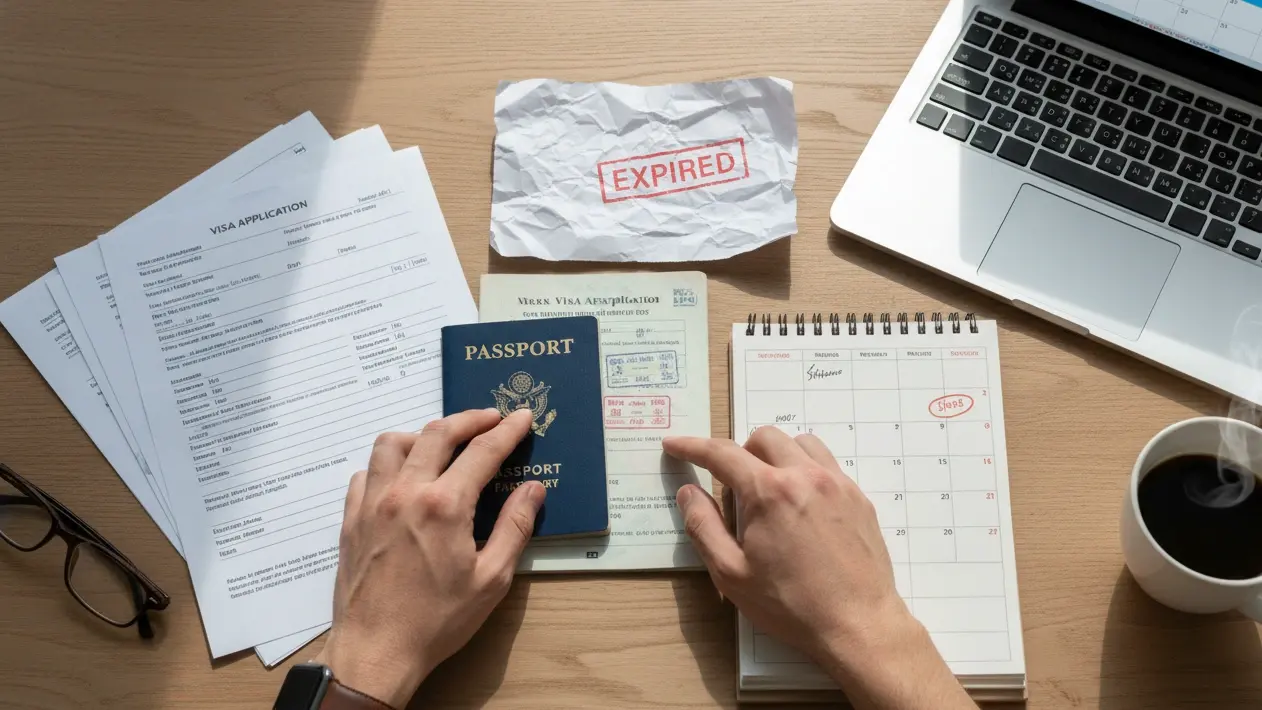
Short answer: A U.S. permanent resident with a pending Form I-131 reentry-permit application can plan a flight reservation for a separate destination visa, but the reservation must not imply the permit is approved. File while physically in the United States, account for any required U.S. biometrics appointment, and choose an absence and return date supported by your actual status documents. USCIS says departure while the application is pending does not automatically prevent approval after biometrics; an unissued permit, however, supplies no approved travel document or guarantee of admission.
You are a U.S. permanent resident with Form I-131 pending, and another country asks for a flight plan for its visa. The itinerary is one document in that destination-visa file; it does not decide whether USCIS will issue your reentry permit. Build a truthful route around the filing, any required biometrics and your return-document plan.
This guide separates two clocks: USCIS processing and the destination consulate’s visa process. It explains when a flexible reservation can describe your proposed trip without falsely claiming permit approval, and which U.S. return questions need individual advice.
Choose dates you can defend calmly in an interview, and keep every single supporting document fully consistent with them. Back your plan with a flight reservation that keeps dates flexible while your permit moves.
Key facts
- A destination visa and a U.S. reentry permit answer different questions; neither substitutes for the other.
- USCIS requires the reentry-permit applicant to be physically present in the United States when filing and to complete required biometrics in the United States.
- Departure after filing and biometrics while Form I-131 is pending is not an automatic denial, but the pending application is not an approved permit.
- A valid reentry permit addresses certain long-absence documentation issues; it does not guarantee U.S. admission or erase abandonment concerns.
- The consulate’s current checklist, rather than a universal rule, controls whether a flight reservation or a paid ticket is requested.
In This Guide
- Two Separate Approvals: A Destination Visa and a Pending U.S. Reentry Permit
- Build Flight Dates Around U.S. Filing and Biometrics
- Make the Destination-Visa Itinerary Match the Actual Travel Plan
- Plan the U.S. Return Without Assuming the Permit Guarantees Admission
- Your Next Step While the Reentry Permit Is Pending
Official-source check: USCIS Form I-131 instructions require U.S. physical presence at reentry-permit filing and completion of biometrics requirements. Its reentry-permit guide says USCIS may approve the application after the applicant leaves if biometrics have been obtained, and notes that an approved permit can be delivered abroad when requested. USCIS also explains in its permanent-resident travel guide that a permit is not a guarantee of admission. Check the current version of each instruction and seek qualified advice for unusual or long absences.
Reviewed for: U.S. lawful-permanent-resident travel, Form I-131 filing and biometrics, pending versus approved status, destination-visa proof and truthful date alignment.
Two Separate Approvals: A Destination Visa and a Pending U.S. Reentry Permit

A pending permit is an application state, not a travel document. It can influence your planning, but the trip you show to a consulate must be the one you presently intend.
What a Reentry Permit Does for a Green Card Holder
An approved reentry permit may help a lawful or conditional permanent resident document return after an extended temporary absence. It is ordinarily valid for up to two years, subject to the issued document and USCIS rules. It does not automatically prevent a finding of abandonment or guarantee admission, and it is not a visa for another country.
Keep these core points in mind:
-
A reentry permit is normally valid for up to two years, with case-specific limits; check the issued document.
-
A valid permit may avoid the need for a returning-resident visa after an absence of a year or more, but it does not guarantee admission.
-
Some permanent residents use an approved permit as a travel document when they cannot obtain a national passport; destination acceptance must be checked.
-
An expired permit cannot simply be extended from abroad; a new application ordinarily requires U.S. presence.
An absence of a year or more without the appropriate U.S. return document can create a serious problem. An approved permit can address the usual documentation issue during its validity, but the traveler’s continuing intent to reside in the United States still matters.
Refugee travel documents use the same Form I-131, but they serve refugees and asylees, not general permit applicants.
A short temporary trip may not require a reentry permit; longer absences require careful review. Even an absence under a year can raise residence questions if the traveler has effectively moved abroad. The six-month threshold has separate naturalization and inspection implications, not an automatic abandonment rule.
What Pending Form I-131 Does—and Does Not—Allow
Pending does not mean approved. It is reasonable to make a provisional itinerary, but not to claim that a reentry permit has already been issued.
The I-131 receipt confirms a filing, not an approved permit or guaranteed return. USCIS requires physical presence at filing and completion of required biometrics in the United States. Check the latest notice and instructions before leaving.
USCIS explains that a person who filed in the United States may depart while the application is pending, and approval can occur after departure if biometrics were obtained. This does not make departure safe in every case: the planned absence, current green card, passport, permit-delivery method and other pending immigration matters must be considered.
Do not use a blanket “wait for approval” or “leave immediately” rule. Complete required U.S. steps, review the likely absence and return-document position, and get case-specific advice when the trip is long or the stakes are high.
If departure precedes the permit decision, describe the permit as pending. Keep the genuine flight plan flexible where possible and know what document you will present for return if the permit is delayed or denied.
Three Questions to Ask Before You Choose a Departure Date
Before any reservation goes into your visa file, run your plan through three quick questions.
How long will you be outside the United States? A two-week trip and an intended 15-month absence raise different document and residence questions. Do not assume a filed I-131 alone solves the latter.
What does the visa file say? Your application form states your travel window. Your reservation has to sit inside it. A mismatch invites questions you could have avoided.
What happens if the decision arrives late? Picture the worst case. If the permit is still pending on the day you planned to leave, could you wait? If not, the plan needs more slack.
For example, Maria moves her proposed flight until after a required biometrics appointment and chooses a reservation she can revise. The change aligns her proposed visa itinerary with known dates; it does not predict USCIS approval.
The Visa You Need and the Permit You Are Waiting For Are Different Things
The U.S. reentry-permit application concerns a permanent resident’s return document. A foreign visa application concerns entry to the destination. Keep those processes distinct in the file.
An approved reentry permit can serve an important U.S. return-document purpose, but CBP still makes an admission determination. A visa for another country does not settle U.S. residence status, and a U.S. green card does not automatically replace that country’s visa.
Daniel, a permanent resident whose nationality requires a Schengen visa, proposes a two-week trip to France. His visa application may need a flight plan under the local checklist, while his I-131 remains pending. He should describe both accurately rather than implying that the consulate is adjudicating his U.S. permit.
Check the destination’s visa rules for your nationality and any residence-based exceptions. For many shorter U.S. trips, a valid permanent resident card is the usual return document; a long absence can change the analysis.
Travel may affect a pending visa or residence application, depending on application requirements. Read the instructions attached to each file before you choose any date. Next, we look at how the filing steps and the biometrics appointment set the earliest safe window for your itinerary.
Build Flight Dates Around U.S. Filing and Biometrics
Your flight dates should grow out of the filing timeline, not the other way around. Start with what USCIS requires and build outward.
Filing Steps That Must Happen on U.S. Soil
The application begins with a single form, and where you stand when you send it matters.
-
File Form I-131 under the current USCIS instructions while physically present in the United States.
-
Identify the correct reentry-permit category and current fee from USCIS before filing.
-
Retain the receipt and monitor the biometrics notice; any required biometrics are completed in the United States.
USCIS instructions specify the filing and biometrics requirements for a reentry permit. Avoid relying on a marginal geographic example to establish eligibility: confirm physical U.S. presence, the correct filing method and any case-specific details directly from the current I-131 instructions.
Form I-131 fees change. Check the current USCIS fee schedule for the exact category and filing method before budgeting; an old fixed amount in a travel article may be wrong.
Use a reliable U.S. mailing address and monitor your case and notices while traveling. A missed biometrics notice or evidence request can disrupt the application, even when a proposed flight reservation remains available.
USCIS advises filing well before a planned departure; its reentry-permit guide recommends no fewer than 60 days. This is planning guidance, not a promised processing window or approval date.
Where Biometrics Fits Around Your Travel Window
Biometrics is the step most travelers underestimate. It is also the step most likely to collide with an itinerary.
USCIS will notify applicants when biometrics are required. The applicable instructions call for completion of required biometrics in the United States; do not assume one age bracket or that every applicant has an identical appointment process.
A booked visa appointment does not excuse missing a required U.S. biometrics appointment. Plan around the actual USCIS notice; if dates collide, use the official rescheduling process rather than assuming that a flight booking locks the appointment.
Here is an illustration only, not an official schedule:
-
File from inside the United States and save the receipt.
-
Watch for a USCIS biometrics notice; the scheduling interval is not predictable from this illustration.
-
Attend or properly reschedule any required U.S. biometrics appointment.
-
Only then assess whether the intended departure, absence and return documents are workable.
If you cannot attend the assigned biometrics appointment, consult USCIS rescheduling instructions promptly. Skipping a required visit can harm the case. There is no reliable universal “weeks 2–8” timetable.
Two-clock decision test: On one line, write the Form I-131 filing date, biometrics notice and appointment, intended U.S. departure, and planned U.S. return. On another, write the destination-visa appointment, expected decision window and the proposed trip dates. If the trip begins before biometrics, conflicts with the destination-visa process, or extends beyond the travel document you expect to use for return, pause and resolve that issue before submitting a reservation. A proposed flight date is not evidence that a pending permit will be approved by then.
Example: Maria files Form I-131 in March, receives an April biometrics appointment and applies for a May visa appointment for a June trip. Her visa itinerary can show June dates if that is genuinely her plan, but the cover letter should not call the reentry permit approved. If she may need a long absence and cannot yet establish the return-document plan, she should review the USCIS instructions and obtain individualized advice before buying a restrictive fare.
Monitor USCIS notices through the official channels and respond by the stated deadline. Keep contact information current before and during travel.
Building a Document Packet That Travels With You
A tidy packet helps you at the airport, at the consulate, and at the border on your way home.
Keep the documents actually needed for each process separate, with a concise cross-reference where useful. A destination consulate may want a travel itinerary; USCIS needs the I-131 materials. One does not replace the other.
-
Form I-131 receipt and any biometrics notice or completion record relevant to your case.
-
Passport, valid permanent resident card and, if issued, the reentry permit or its approved pickup instructions.
-
Current destination-visa documents required by that authority.
-
Optional evidence of continuing U.S. residence for a long absence, chosen with individualized advice.
Carry paper copies in your hand luggage. Store scans in a secure cloud folder as well.
At U.S. return, an officer may ask about the temporary nature and length of the absence. Keep accurate travel dates and relevant proof of continuing U.S. residence, without assuming every traveler must carry the same stack of records.
Put the flight reservation with the visa documents only if the destination authority asks for it. Do not make it the lead document in a USCIS or border packet solely for presentation.
Reading Processing Delays Before You Pick Dates
Even a perfect filing cannot tell you when a decision will land. Re-entry permit processing times can be unpredictable.
If the destination-visa appointment arrives before USCIS decides, use proposed dates you could reasonably follow, with a truthful account of the permit’s pending status. A reservation’s validity and change terms matter if the trip may move.
An approved reentry permit is generally valid for up to two years from issuance, but check the actual document and applicable USCIS instructions. The permit’s validity, if granted, should be compared with the intended return date; filing alone does not create that coverage.
A valid permit can improve the documentation position for a long temporary absence. It still does not guarantee CBP admission or resolve every question about maintaining U.S. permanent residence.
Passport validity for the destination visa depends on that country’s rules; there is no universal six-month-beyond-return requirement. Check the passport, green card, any issued permit and destination visa together against the actual trip.
Once your timeline is clear, the next question is how a consular officer will read the dates you present. For the separate visa-document decision, see the flight-reservation planning guide and then follow the specific consulate’s checklist.
Make the Destination-Visa Itinerary Match the Actual Travel Plan

An officer sees your itinerary beside a stack of other papers. When those papers tell different stories, questions follow quickly.
Date Conflicts That Raise Questions at the Counter
A destination officer may compare the proposed travel dates with the visa form and supporting evidence. What is requested varies by authority; present genuine changes transparently.
Make sure the travel dates align logically with your visa application form. Your reservation, your leave letter, your hotel plan, and your stated purpose should all point to the same window.
Watch for these common mismatches:
-
A proposed departure before a required U.S. biometrics visit.
-
A visa form showing different trip dates without an explained change.
-
A return date that does not fit the traveler’s actual U.S. return-document plan.
-
An expired or unissued booking presented as a live paid ticket.
The destination authority may evaluate purpose, funds and intended return under its own rules. A U.S. reentry-permit receipt should not be portrayed as proof of visa eligibility or as an approved return document.
If you intend to be away for a long period, explain why in your cover letter. Keep the explanation short and matched to the dates.
A real date change can be explained. Update the documents the receiving authority allows you to update rather than silently replacing an already submitted PDF.
Ticket Choices That Match What Embassies Recommend
There is no universal embassy preference for a particular reservation product. Read the current destination-visa checklist: some authorities ask for a flight itinerary, some discourage ticket purchases before a decision, and others treat bookings differently.
Avoid non-refundable commitments until you understand both the visa and permit timelines. Whether a paid ticket is appropriate depends on the checklist, fare rules and your risk tolerance.
If buying an issued ticket, inspect its actual refund and change rules. “Fully refundable” can still involve deadlines, conditions or service fees.
A genuine temporary reservation may serve as intended-travel evidence where permitted. Confirm its current status, expiry and issuer-supported verification method; do not imply it is a paid ticket or guarantees visa approval.
Describe a reservation as a reservation and an issued ticket as a ticket. Either document should match the proposed dates and the receiving authority’s instructions. If a temporary booking is under consideration, what a dummy ticket means explains the difference between a planning reservation and an issued paid ticket.
Writing a Cover Letter That Explains Your Dates
A short letter can do what a reservation alone cannot. It tells the officer why your dates look the way they do.
Keep it to one page. Cover these points:
-
Who you are, and your status as a lawful permanent resident.
-
Why you are traveling and where you will go.
-
Your departure and return dates, exactly as shown on the reservation.
-
That you have filed for a reentry permit and are waiting for a decision.
-
What ties you to the United States, such as work, a home, or close relatives.
Write in plain language. Avoid legal arguments. The officer wants a clear story that matches the paperwork, not a legal brief.
If dates may move because of the pending permit, say so only if relevant and permitted by the visa process. Explain what is known, what is proposed and how you will update the file if necessary.
A cover letter is not universally required. Follow the authority’s instructions for placement, signing and submission; keep any optional explanation concise and factual.
Details on the Reservation That Should Mirror Your Passport
Match the traveler’s name to the passport and other application records. If a transliteration or name-order difference exists, resolve it with the issuer and application guidance rather than editing a PDF yourself.
Check the passport number you enter anywhere in the booking or on the application. One wrong digit can make a file look inconsistent. Confirm the issue and expiry dates too.
Blank-page and passport-validity rules depend on the destination and visa type. Check the exact current consular requirements for the passport used in the application.
A flight reservation may not display a mailing address at all. Where addresses are requested, use accurate current information and explain any legitimate difference between a U.S. mailing address and travel contact details.
Keep a folder, paper or digital, with every version of your plan. That makes interview answers fast and calm. With the paperwork aligned, you can turn to the bigger question of how to travel without hurting your residence.
Plan the U.S. Return Without Assuming the Permit Guarantees Admission
An itinerary is only one part of the decision. For a long absence, assess U.S. residence and travel-document consequences independently of how persuasive the destination-visa file looks.
Short Trips Versus Absences Longer Than a Year
Think in terms of the real duration and purpose of the absence, the applicable return document and evidence of continuing U.S. residence—not a three-tier automatic risk score.
-
A brief temporary trip may generally be documented with a valid permanent resident card, subject to the individual facts.
-
Absences of six months or more can affect some assessments, including naturalization continuity; they are not an automatic loss-of-residence rule.
-
An absence of a year or more creates a different travel-document problem. Read the USCIS rules and seek individualized advice.
For many temporary trips shorter than a year, a valid permanent resident card is ordinarily the return document. Longer absences and evidence of living abroad need more careful review; the pending permit does not itself authorize an extended return route.
If delaying departure is feasible, it may resolve uncertainty around biometrics, permit delivery or visa processing. If delay is not possible, seek individualized immigration advice before relying on a provisional plan.
Approval can give you a definite permit validity period to compare with the intended trip. Until then, do not build the visa explanation around an assumed approval date.
When a Stay Abroad Runs Past the Permit
Plans change. Family emergencies, job extensions, and health issues can stretch a trip beyond what you expected.
A reentry permit cannot simply be extended from overseas. A new application ordinarily requires physical U.S. presence. If a trip may outlast the document, seek advice before the deadline rather than treating an overseas renewal as routine.
The U.S. State Department describes the SB-1 returning-resident visa for certain permanent residents who stayed abroad beyond the card or permit travel-validity period for reasons beyond their control. Eligibility is specific and it is not an automatic rescue option.
A new I-131 filing involves current instructions, fees and potentially biometrics. Do not assume the previous permit or a proposed flight date extends its validity.
If a permit is lost or expires, consult USCIS and qualified counsel about available documentation and the location-specific filing rules. Do not promise that a replacement can be obtained abroad.
Even with a valid permit, CBP may assess admission and continuing residence. Keep accurate evidence of your temporary purpose and U.S. ties as appropriate to the circumstances.
Keeping Proof of Your U.S. Life While You Are Away
There is no universal checklist proving that a green-card holder has maintained U.S. residence. A home, employment, tax treatment, family ties and duration of absence may matter in different ways; discuss unusual facts with counsel.
Maintain these links for as long as you are abroad:
-
A home or lease that stays in your name.
-
U.S. bank accounts with regular activity.
-
U.S. tax returns filed on time as a resident.
-
Employment, or a clear plan to return to work.
-
Family members who remain in the country.
Do not maintain a sham lease, bank activity or paperwork solely to create an appearance. Preserve genuine ties and truthful records of where you live and why travel is temporary.
Keep a simple log of your trips and dates. Include flight tickets, boarding passes, and entry stamps. If anyone questions how long you stayed away, the log gives a precise answer.
Arrange a lawful and secure way to receive USCIS notices while away. Keep your address current through the official process; missed mail can affect a pending application.
Questions to Settle With an Immigration Attorney Before You Fly
Rules differ by case, and small facts change the advice. Seek advice well before you pay for any fare. An immigration attorney can read your history and flag risks you did not notice.
Bring these questions to that meeting:
-
Is your pending application strong enough to support a longer trip?
-
Should you wait for the final decision before you leave?
-
How will your trip affect any other pending application?
-
What should you carry to prove that your residence in the U.S. continues?
-
How should your itinerary read if you need to extend your stay?
Ask counsel about the actual I-131 timeline, biometrics, return document, prior absences and any other pending immigration filings. Separately ask the destination consulate what its current travel-proof checklist requires.
Use the answers to lock in your dates. Then build a reservation that matches them and can bend if the permit decision arrives early or late.
Your Next Step While the Reentry Permit Is Pending
Set the proposed visa-flight dates around the real U.S. filing and biometrics steps, destination-visa timeline and return-document plan. Do not label a pending permit as approved or a temporary reservation as an issued ticket.
Before a long or complicated absence, read current USCIS instructions and obtain individualized advice. Use an honestly described, changeable itinerary only where the destination checklist calls for it; no reservation or permit guarantees visa approval, U.S. admission or preservation of status.
Need flight evidence for a destination-visa checklist while Form I-131 remains pending? Check BookForVisa’s current reservation validity and change terms, and use dates that accurately describe your intended trip.
Review flight-reservation optionsFrequently Asked Questions
Can I leave the United States while my reentry permit is pending?
USCIS says departure after filing does not automatically bar approval if required biometrics have been obtained. Filing must occur while physically in the United States. Whether departure is prudent for your absence and return-document situation is case-specific.
Does filing Form I-131 protect my green card during a long absence?
A pending application is not an approved permit. Even an issued permit does not guarantee admission or erase all abandonment concerns.
Must I wait for permit approval before submitting a destination-visa flight plan?
There is no universal rule that the permit must be approved before a separate visa itinerary is submitted. Tell the truth about status, use a realistic plan and follow the destination authority’s checklist.
Can the reentry permit replace my destination visa?
No. Entry requirements for another country depend on its rules for your nationality and travel document.
Does a PNR prove I have a ticket?
No. A PNR identifies a reservation record. Verify whether an e-ticket was issued and describe the document accurately.
What if my trip will last more than a year?
Review USCIS travel-document and residence guidance, the validity of any issued permit, and the consequences for naturalization. An immigration attorney can assess your specific history and ties.
Friendly reminder: BookForVisa provides travel-proof documents for planning and visa-application support. Requirements vary by destination, consulate, visa category and applicant situation. A flight reservation can support a file, but it does not guarantee approval, boarding or entry.