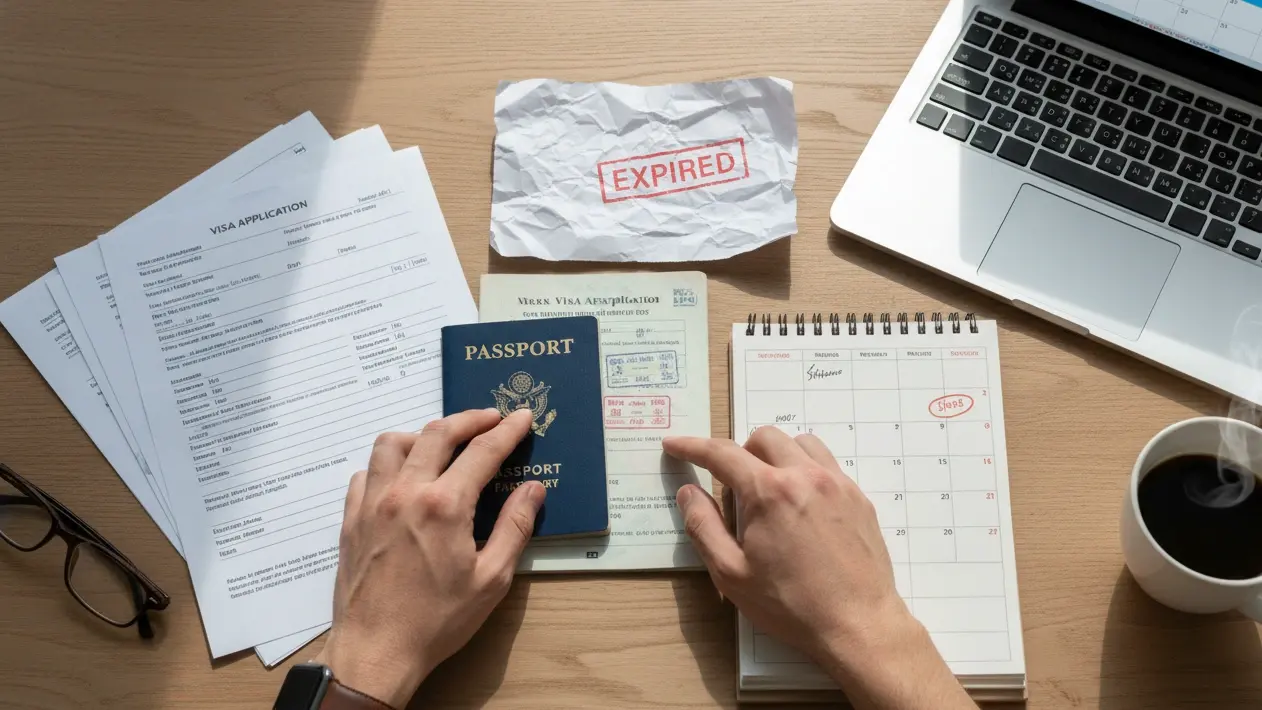
Short answer: If a temporary flight hold expired before a visa appointment, do not present it as a live reservation. First read the receiving authority’s current checklist: some processes ask for current travel evidence, while others do not rely on flight bookings. If a replacement is required, obtain an accurately labelled issuer document for the trip you genuinely intend, then reconcile its dates, route and return with the application. If the old PDF was already submitted, keep it in your records and follow the authority’s update procedure.
Your visa appointment is close, but a temporary flight hold in your file has ended. This is a document-validity question, not necessarily an airline flight cancellation. Before paying for another reservation, determine whether this visa checklist asks for current flight evidence and whether the underlying trip has changed.
This guide is about the pre-appointment choice: leave an old document only as a record, revalidate the original hold if possible, or obtain a current issuer-backed replacement. It is distinct from a scheduled airline cancellation or a failed public PNR lookup. Keep the trip truthful and follow the authority’s instructions for any post-submission update.
Key facts
- An expired hold is a reservation-validity issue; it does not mean the scheduled airline flight was cancelled.
- A PDF may still describe the intended journey after a hold ends, but it cannot be claimed as proof of a current booking.
- The receiving authority’s visa category and local checklist determine whether fresh flight evidence is needed.
- If a replacement changes the journey, review the form, cover letter, leave, accommodation and insurance before submission.
- Keep a copy of what was previously submitted and identify the new version clearly; never modify the issuer’s PDF yourself.
In This Guide
- First, Check Whether Your Visa Checklist Needs a Current Flight Hold
- Refresh the Hold Without Changing the Trip You Actually Intend
- Align a Required Replacement With the Rest of the Visa File
- If the Officer Asks Why Your Flight Hold Changed, Answer Factually
- Finish With a Current, Truthful Appointment File
Official-source check: The European Commission’s Schengen application guidance describes supporting evidence for purpose, accommodation, means and intention to return; local checklists provide the details. By contrast, the UK visitor supporting-document guide lists flight bookings as less useful for ordinary visitor applications except transit. Neither source creates a universal rule to refresh every expired hold before biometrics.
Reviewed for: hold expiry before appointment, checklist-specific need for fresh evidence, version control, honest status labels and date alignment.
First, Check Whether Your Visa Checklist Needs a Current Flight Hold

An expired hold before an appointment does not automatically require a replacement. The decision depends on the destination, visa type, local checklist and whether the authority requests a current itinerary. Never present a lapsed record as a live booking.
What Matters More Than The Expiry Itself Is Whether Your Travel Story Still Hangs Together
Start with one question: Does your application still describe the same trip? If the answer is yes, the expired reservation may not be the real issue.
Check the parts of your file that quietly carry your travel timeline:
-
Your cover letter
-
Your leave approval or work schedule
-
Your intended travel month
-
Your planned trip length
-
Your return timing
A coherent trip matters, but consistency alone cannot turn an expired hold into current reservation evidence. If current proof is requested, obtain it from the issuer.
A flight reservation becomes more sensitive when it exposes a gap. That gap could be small, like a return date that no longer matches your approved leave. Or it could be larger, like a July tourism plan supported by a reservation that now expired weeks ago, while your appointment sits in late August.
The Risk Jumps When The Appointment Moves, The Trip Window Shifts, Or The Reservation Now Looks Disconnected From Reality.
A delay changes the equation. That is where many applicants get into trouble.
If your appointment was pushed back, your original flight dates may now sit too close to the interview date or even before it. That can make the reservation look careless, even when the rest of your file is genuine.
Watch for these pressure points:
-
Your appointment was rescheduled by the embassy or visa center
-
Your employer changed your approved leave window
-
Your trip depends on an event, meeting, wedding, or family visit date
-
Your route still shows the old travel month, but your supporting documents now point to a later one
A date gap is a prompt to review the file, not a universal consular red flag. Compare the appointment, intended departure and current checklist before acting.
Before Submission, After Submission, And At Appointment Are Three Different Risk Moments
Timing matters because the same expired ticket can carry different weight depending on where your case stands.
Before submission, you have room to fix things cleanly. You can refresh the reservation and align the rest of the file before anyone sees it.
After submission, but before the appointment, you need more discipline. A replacement should support the same trip, not introduce a second version of it.
At the appointment, bring the documents the authority instructs. If current flight proof is required, a lapsed hold should not be described as active even when its proposed route still matches the form.
This stage-based view helps you avoid a common mistake. People react to the word expired as if it creates the same risk at every step. It does not.
When a Checklist Does Not Require a New Booking, Preserve the Old Record Honestly
This is where smart applicants slow down.
A rushed replacement can create fresh inconsistencies:
-
Different route logic
-
Different travel month
-
Longer or shorter stay
-
A new return date that no longer matches leave proof
-
Multiple PDFs with conflicting issue dates
If flight bookings are not requested for your visa type, do not order a new one solely to make the PDF appear newer. Retain the old copy as a record of what you had, and disclose its status accurately if asked.
If the checklist asks for current evidence, however, leaving an expired record as though it is live is not a safe shortcut. Ask the issuer about revalidation or obtain an accurate replacement.
A Practical Threshold: Is Fresh Flight Evidence Required?
Use a simple filter before you touch anything.
Stale but consistent usually means:
-
Same destination
-
Same broad travel window
-
Same trip length
-
Same return logic
-
No supporting document conflict
Expired and misaligned usually means:
-
The appointment moved far beyond the original dates
-
Leave dates no longer match
-
Travel purpose timing changed
-
The route or return plan now looks off
Pre-appointment decision grid: If the checklist does not ask for a flight reservation, do not order one solely because an older hold expired. If it asks for a current itinerary, ask the issuer whether the original can be revalidated; otherwise obtain a new, clearly labelled reservation. If the proposed trip moved, update dependent dates and explain the real change. If the file was already submitted, retain the original upload and use only the authority’s specified update channel or respond to a request.
Example: Your 8–18 July Spain hold ended on 1 July; biometrics is on 3 July. If the local Schengen checklist requests a flight reservation, confirm a current 8–18 July issuer record and check hotels, insurance and leave. If instead your appointment moves beyond the intended outbound date, choose realistic new trip dates and update the connected evidence. Do not call the old hold “active.”
Refresh the Hold Without Changing the Trip You Actually Intend
If the authority calls for current flight proof, update the record in a controlled way. Preserve route and dates only when they are still the travel plan; otherwise revise dependent evidence openly.
Keep The Original Travel Logic First: Same Destination Flow, Similar Dates, Similar Trip Length
The safest refreshed reservation usually looks a lot like the earlier one.
That does not mean every detail must stay identical. It means the travel logic should stay stable. If your original file showed a 10-day visit to Spain in July from Karachi with a return at the end of the approved leave period, the new reservation should not suddenly turn into a 15-day August trip landing in a different city with a different return pattern.
Try to preserve these core elements where possible:
-
Departure city
-
Arrival city
-
Travel month or the same broad window
-
Overall trip length
-
Return structure
This matters because visa files are read as one story. If the refreshed booking changes the shape of that story, you create work for yourself. You may then need to explain why the trip seems to have changed even though your purpose did not.
A smart refresh keeps the skeleton of the plan intact.
Know What Can Change Quietly And What Can Trigger Unnecessary Scrutiny
Some booking details can move without causing much friction. Others can alter the feel of the application right away.
Usually, manageable changes include:
-
A different flight number on the same route
-
A small shift in departure or arrival time
-
A carrier change that keeps the same city pair and timing logic
-
A slightly adjusted outbound or return date within the same supported trip window
More sensitive changes include:
-
A new entry city not mentioned elsewhere in your plan
-
A different travel month
-
A longer stay than your leave approval or budget supports
-
Removal of the return segment
-
A new transit pattern that makes the route look unusual for your purpose
For example, if your application is for a short tourist visit to Italy and your renewed reservation now routes you through two long stops and lands in a city not connected to the rest of your plan, the booking may start drawing attention for the wrong reason.
When in doubt, ask a simple question: Does this still look like the same trip, or does it now look like a new plan wearing the old paperwork?
If an Appointment Move Changes Your Real Trip Dates, Update Related Proof
This is where people often make a preventable mistake.
Your appointment has been moved, so you feel pressure to push the reservation much further out. Then the new flight dates start reflecting an ideal trip instead of a file-supported one. That is when mismatches show up.
Anchor the renewed reservation to real constraints:
-
The likely decision timeline in your case
-
Your approved leave period
-
The event or visit dates are already tied to the application
-
The travel month, your documents still support
If your original file showed travel in early June but your appointment was moved into late May, a modest adjustment may be enough. But if your new reservation now jumps to late August, you may need more than a ticket refresh. You may need updated leave proof, revised trip notes, and a clearer explanation of the new timing.
Use the appointment delay as a reason to stay realistic, not as an excuse to redesign the trip.
Refresh Your Dummy Ticket For Visa Application, But Do Not Create A Trail Of Conflicting Versions
A late-stage refresh should be controlled.
Many applicants create extra confusion by generating multiple versions while trying to perfect small details. That leaves them with different PDFs, different issue dates, and slightly different travel windows saved across email, downloads, and printouts.
A cleaner workflow looks like this:
-
Decide the corrected travel window first
-
Create one replacement reservation
-
Save the final PDF clearly
-
Remove outdated versions from the folder you will print from
-
Check that the version you carry is the version that matches your active file
Confirm the corrected window, ask whether the original hold can be revalidated, and save one clearly named current issuer PDF. Keep the older submitted file separately for an audit trail; do not erase or alter it. Avoid mixing old and new copies in the folder used for submission. The current version should accurately describe the trip now intended.
This matters even more if your application portal already has an earlier upload. If you are carrying a refreshed reservation to biometrics or an interview, you should know exactly how it differs from the older one and why.
When You Need A Clean Replacement Quickly, Choose Verifiability Over Fancy Formatting
Focus on route, dates, passenger details, actual booking status and the issuer-supported verification method. A PNR is not proof of ticket payment or visa acceptance. For the general reservation-versus-ticket choice, use this flight-reservation planning guide alongside your own visa checklist.
So focus on the qualities that matter:
-
Clear route
-
Readable dates
-
Proper passenger details
-
Visible reservation structure
-
Easy verification where applicable
BookForVisa offers flight-reservation services. Check its current price, delivery, validity and change terms before ordering; do not assume a fixed fee, instant lookup or unlimited revisions.
What matters most is not the presentation style. It is whether the refreshed reservation still looks like a normal, believable travel plan connected to the purpose in your file.
A refreshed flight reservation should solve a timing problem, not become the center of attention.
That is why over-editing usually hurts more than it helps. You do not need the smartest-looking itinerary. You need one that quietly supports the dates, route, and return plan already sitting in the rest of your application. For the mechanics of a temporary booking, see what a dummy ticket is. This page concerns the visa-file decision immediately before an appointment.
Align a Required Replacement With the Rest of the Visa File
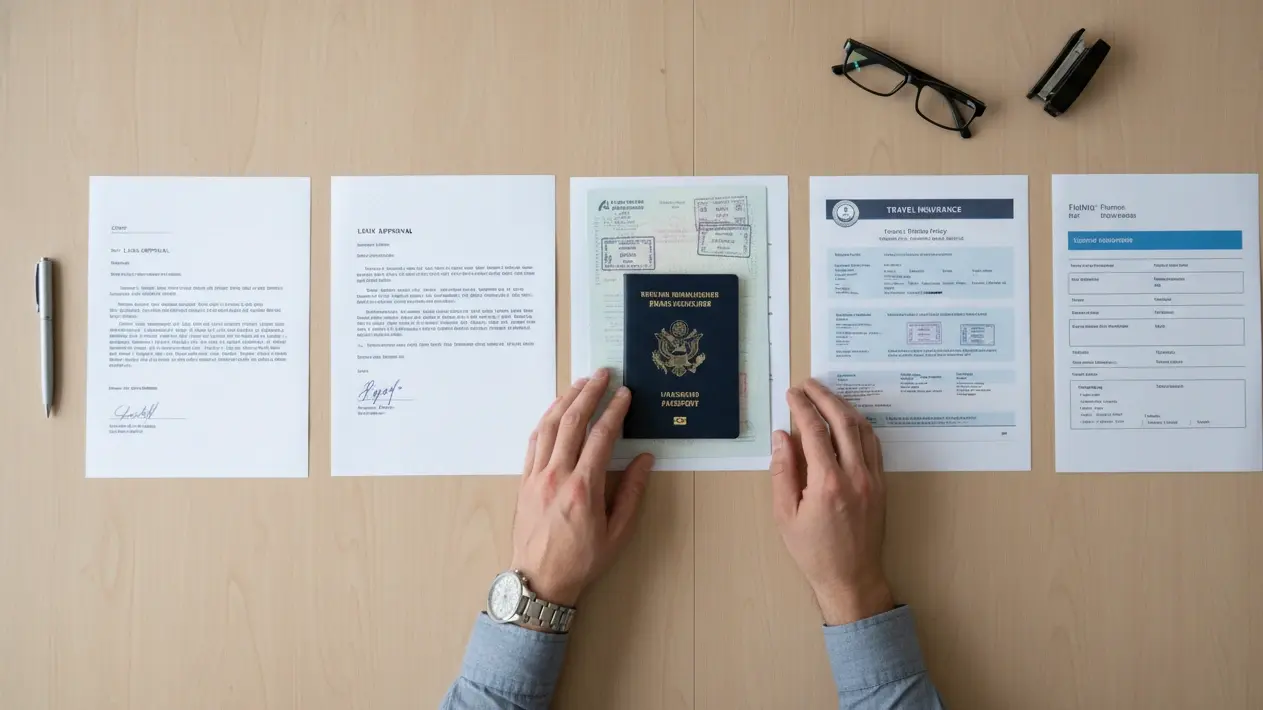
Refreshing a reservation is only half the job. The harder part is making sure that one change does not quietly break the rest of your file before your visa appointment date.
Your Cover Letter, Leave Proof, And Travel Dates Should All Point To The Same Trip
Once you replace the old flight itinerary, read your file like an officer would. They are not reviewing one PDF in isolation. They are scanning whether your visa application still points to one clear trip.
Start with the documents that carry your intended travel dates:
-
Cover letter
-
Leave approval
-
Event or invitation timing
-
Travel insurance
-
Internal trip plan
-
Any onward travel explanation
If your updated dummy flight ticket now shows a July 18 departure and a July 28 return ticket, but your leave letter still says July 15 to July 24, that mismatch matters more than the fact that the old reservation expired.
If the application describes a seven-day trip, a replacement showing eleven days may require a revised explanation and dependent evidence. Do not assume a precise match is mandatory when a legitimate change has occurred; explain it truthfully.
Your proof of travel should support the same purpose from start to finish. If the reservation changed, check whether your words still match the flight details on the page.
Trip Length Math Is Where Otherwise “Safe” Renewals Often Go Wrong
This is where many careful applicants still slip.
A temporary flight reservation can look fine at first glance, but the actual stay length may no longer match what you claimed. A short route change, a midnight departure, or an arrival on the next calendar day can alter the trip count.
Count the trip again from the new flight tickets, not from memory.
Look closely at:
-
Local departure and arrival dates
-
Overnight connections
-
Time zone shifts
-
Same-day return versus next-day return
-
Round-trip timing if one leg lands after midnight
A dummy air ticket for a short tourist visit should not accidentally turn a 6-night plan into an 8-night stay on paper. That can affect budget logic, leave approval, and how your travel purpose reads.
This matters even more when you are trying to show valid proof for a short, fixed trip. A round-trip ticket with an awkward overnight routing may still be fine, but only if the math still fits the file you submitted.
Entry City, Transit Pattern, And Return Routing Should Still Make Sense For The Stated Purpose
A safe renewal does not just keep the dates close. It keeps the route believable.
If a new itinerary lands in a different city, make sure the actual route and supporting plan agree. A different entry airport is not automatically disqualifying, but unexplained contradictions can make the file harder to assess.
Check three things:
-
Entry city: Does it still match the first stop described in your paperwork?
-
Transit pattern: Does the airline system show a normal routing for this kind of trip?
-
Return routing: Does the return ticket still fit your leave window and trip purpose?
For Schengen, the country competent to assess a visa is generally the main destination, not automatically the first landing point. Check the itinerary and the current consular instructions before changing the route.
Whether the reservation sits in airline reservation systems or is simply used as onward travel proof, the route should look natural for visa purposes.
If The Old And New Reservations Differ, Decide Which Supporting Documents Also Need A Quiet Update
Not every change requires a full rewrite. But some changes do require a quiet correction elsewhere.
Update the related document only if the new dummy ticket booking changed something material:
-
Departure date
-
Return date
-
Trip length
-
Arrival city
-
Onward travel timing
A material shift may require changes to accommodation, insurance, leave or a cover letter. Follow the authority’s permitted update route rather than quietly altering a document already submitted.
If you used a verifiable dummy ticket or other verifiable flight reservations, keep the rest of the file just as disciplined. A legitimate dummy ticket works best when the surrounding documents do not contradict it.
This is also where people create unnecessary confusion by mixing a real flight ticket with an older dummy ticket, or by carrying a confirmed ticket that no longer matches the submitted dates. Use one current version of the plan.
Avoid The “Too Polished, Too Revised” Look
A file can start to look over-managed when every page appears freshly edited around one booking change.
You do not need to make the entire application look newly manufactured just because one reservation was updated. In fact, that can backfire. If your cover letter, budget note, and route explanation all suddenly look rewritten to match one refreshed dummy ticket valid for a later date, the file may feel more staged than stable.
A forged ticket is different from a genuine temporary reservation. Never alter an issuer PDF or claim that an unissued booking is a paid ticket. The concern here is accurate evidence, not how “polished” a document looks.
Keep the update proportionate. If only the flight proof changed, adjust only what that change clearly affects. That approach gives you more peace of mind than trying to make the whole application look brand new.
Build A Final Pre-Appointment Consistency Sweep Around Five Checks
Before visa submission or interview day, do a final pass.
Ask yourself:
-
Does the dummy flight ticket still match the purpose and city sequence in the file?
-
Does the trip length still fit your leave, budget, and travel insurance dates?
-
Does the booking reference connect to a confirmed booking structure that reads clearly?
-
If the ticket expires again, will the current version still make sense at the appointment?
-
Are you carrying one coherent set of proof of onward travel, onward travel proof, and return timing rather than mixed versions?
A consistent document set is easier to review, but no source supports a promise that embassies accept it more readily or that renewal improves approval odds.
If the Officer Asks Why Your Flight Hold Changed, Answer Factually
A replacement can be explained with the actual dates and issuer status. Avoid speculation about what the officer will infer from a new PDF.
“It Expired, So I Refreshed The Reservation To Keep The File Current” Is Stronger Than A Long Defense
At the counter or interview window, short answers work better than long ones.
You do not need a speech about airline reservation systems, fare rules, or why you did not buy a fully paid ticket. You need one clear point. The reservation changed because the earlier one expired, and you updated it to keep the file current.
That answer works because it stays practical. It does not invite extra confusion about whether you held a real ticket, a paid ticket, or a non-refundable ticket. It also keeps the focus on document maintenance inside the visa process.
Keep your tone steady. Do not sound apologetic. Do not sound overprepared. A dummy ticket serves one simple purpose here. It supports the trip you already described.
Answer accurately and briefly if asked. A particular explanation does not improve visa approval by itself.
If You Uploaded One Itinerary Earlier And Bring A Refreshed One Later, Keep The Explanation Tight And Consistent
This happens often. Your earlier upload showed one flight itinerary. The version in your hand is newer.
That is not hard to explain if the trip itself still matches. Say that the earlier reservation expired before the visa appointment date, so you brought a current one that reflects the same route, purpose, and travel window.
Keep three points aligned:
-
Same trip purpose
-
Same broad travel dates
-
Same return logic
Do not make the refreshed copy sound like a different plan. Do not start comparing sources either. Whether the older reservation came through online travel agencies, a travel desk, or another channel is usually not the issue.
It also helps to avoid switching formats without reason. If the first upload looked like a standard reservation and the new one is a screenshot from an airline website or an airline's official app, the change in presentation can draw more attention than the dates themselves. A clean, readable document is easier to explain than a mixed stack of formats.
Keep the Previously Submitted Version for Reference, Not as Current Proof
Carrying the older expired copy is not always wrong. Leading with it often is.
If the officer has not asked for the earlier version, showing two reservations at once can create an unnecessary side discussion. Now the focus moves from your current proof of travel to why you have multiple documents for the same trip.
Use the earlier copy only when it solves a specific issue:
-
You previously uploaded it and are asked about the difference
-
Another document still points to those exact dates
-
You need to show continuity between old and new bookings
If the previous version is requested, provide it and explain the change. Otherwise follow the authority’s document instructions and keep the current evidence clearly labelled.
This also protects you from a common trap. Applicants start flipping between copies and accidentally introduce small differences they had not noticed before. That is when simple matters start sounding complicated. If your current document already fits the file, let that one do the work.
Some Applications Can Absorb Small Itinerary Movement; Others Cannot
Not every case reacts the same way to a reservation change.
A flexible leisure plan may absorb a modest shift more easily than a tightly scheduled trip. A short tourist case with free dates can handle a small change in departure timing. A business visit tied to fixed meetings cannot. A family visit linked to a ceremony or school holiday also leaves less room.
The route matters too. If your refreshed reservation still shows a normal round trip, the explanation stays simple. If the new version changes the entry city, adds a long layover, or alters onward travel, you may need a more precise answer.
The same goes for carrier changes. If the old plan showed one major carrier and the new one now reflects Singapore Airlines or Qatar Airways on a similar route, that alone does not change the case. What matters is whether the flight still fits the application you submitted.
Your best visa tips here are practical. Know which part of the itinerary changed. Know why it changed. Know whether that change affects anything else in the file.
The Real Red Flags Are Not “New PDF” And “New Issue Date” — They Are Uncertainty, Contradiction, And Drift
A new printout is not the danger by itself. Drift is.
Trouble starts when the refreshed booking points in one direction and the rest of the file points in another. That can happen when the reservation now shows a later return, a different city pair, or dates that no longer fit the leave window.
It can also happen when applicants say too much. They mention a confirmed ticket, then correct themselves and call it a dummy ticket for visa use. They refer to a real ticket, then produce a different booking reference. They say they plan to buy on the airline website after the decision, then point to something printed from a travel source. Those small slips matter more than the refresh itself.
Do not call a temporary reservation fake simply because it is not a paid ticket. What matters is whether the document is genuine, accurately labelled and suitable under the relevant checklist.
Finish With a Current, Truthful Appointment File
An expired hold before a visa appointment is not an automatic refusal trigger. Check whether current flight evidence is actually required. If it is, obtain a present issuer document and align the route and dates with the real plan.
Keep the submitted copy as a historical record, present only the current document as current, and answer honestly if asked. A reservation supports a travel narrative; it does not guarantee visa approval.
Need current flight evidence for a near-term visa appointment? Check the current BookForVisa validity and change terms, then request only a reservation matching your actual plan.
Review flight-reservation optionsFrequently Asked Questions
Is an expired hold the same as a cancelled flight?
No. The temporary booking record may have ended while the airline still plans to operate the flight. Ask the issuer for the exact status.
Must I refresh it before biometrics?
Only if the receiving authority asks for current flight evidence or requests an update, and the old record no longer serves that purpose. Follow its current checklist.
Can I submit the old PDF?
You may need to retain it as a record of what was previously submitted, but do not describe it as a current live booking once the hold has expired.
What if the new date differs from the application?
Update the dependent travel plan, accommodation, insurance and leave evidence as applicable, using the authority’s permitted update process.
Does a new PNR prove that I bought a ticket?
No. A PNR identifies a reservation record. Ask the issuer whether any e-ticket was actually issued.
Will refreshing the reservation improve my visa odds?
No particular document guarantees approval. It can make required travel evidence current and consistent, but the authority assesses the whole application.
Friendly reminder: BookForVisa provides travel-proof documents for planning and visa-application support. Requirements vary by destination, consulate, visa category and applicant situation. A flight reservation can support a file, but it does not guarantee approval, boarding or entry.