Remote work does not always follow a return flight. Contracts renew, clients shift deadlines, and the next destination may depend on Wi-Fi, cost of living or a project extension rather than a fixed vacation calendar. Embassies do not review the file that casually. They want a start date, an end date, a clear purpose and documents that support the dates you declared.
That gap creates friction for applicants whose work travels with them. A remote worker may honestly have flexible plans, but a visa file still needs a defined reservation. The reservation should satisfy the officer’s checklist without locking the applicant into a date that makes no sense later. The safest approach is to build a clean reservation around the declared stay, then keep the rest of the file consistent: occupation, income proof, accommodation, insurance, cover letter and travel route.
- A flexible work lifestyle still needs a clear visa-file timeline.
- The reservation should match the visa form, not a vague “maybe” travel plan.
- Long stays, one-way routes and freelance occupations invite closer review when the exit plan is unclear.
- Remote work should not contradict the visa category or the permitted activities for that destination.
- Income proof, accommodation, insurance and travel dates should support the same stay length.
Create Your Visa Reservation
Why Remote Workers’ Flight Reservations Get Extra Scrutiny
A remote worker’s visa file looks different from a typical tourist file. The occupation field, income pattern and trip length can all suggest a longer, less defined stay. That means the flight reservation for visa carries more weight than it might for someone taking a short holiday with fixed annual leave.
Officers are trained to spot mismatches between stated purpose and travel behavior. If the form says tourism but the reservation shows a 60-day stay, vague accommodation and a freelancer occupation, the file may invite a closer look. The concern is often not the flight itself. The concern is whether the applicant intends to work locally, overstay, or use the wrong visa category.
The undeclared-work concern
Listing “freelancer,” “consultant,” “remote employee” or “self-employed” is not a problem by itself. Many legitimate travelers fall into these categories. The issue begins when the rest of the file does not support that label. A long stay with no exit plan, unclear accommodation and weak income proof can make a remote worker look less like a visitor and more like someone quietly relocating.
These patterns tend to trigger a second look:
- A one-way or open-ended reservation paired with a vague purpose statement.
- A stay length that sits at the maximum allowed duration without explanation.
- A reservation date range that does not match accommodation, insurance or funds.
- A tourist visa application that reads more like a work-from-abroad plan.
- Multiple pending visa applications with overlapping travel windows.
Officers rarely explain every concern. They move faster through applications that read cleanly and slower through applications that ask hidden questions. Your reservation is often one of the first documents that either reduces uncertainty or increases it.
When occupation and travel pattern do not match
A salaried employee with approved leave and a two-week itinerary is easy to understand. A remote consultant asking for a long stay with flexible dates needs a cleaner file because the officer has more to interpret. The reservation should quietly reinforce the declared purpose: temporary visit, lawful stay, clear exit date and sufficient means.
For example, a marketing consultant applying for a 90-day stay should not create a reservation that looks like a hidden relocation unless the visa category actually supports that. If the applicant is applying under a digital nomad visa, a longer stay may fit. If the applicant is applying as a tourist, the same stay length may need stronger explanation, stronger funds and clearer return or onward logic.
Long-stay itineraries can signal risk even with a valid visa
Visa approval does not end scrutiny. Airline staff and border officers can still ask basic questions about entry purpose, return or onward travel, accommodation and allowed stay. Remote workers feel this more because their plans are often flexible by design.
A long-stay itinerary is not automatically weak. It becomes weak when the visa category, reservation and real work pattern do not match. If the destination has a digital nomad route, the reservation can reflect a longer stay. If the destination only allows a short visitor stay, the reservation should not behave as if the applicant has long-term residence rights.
Building a Reservation That Matches Your Remote Work Story
A strong reservation is not built from random cheap dates. It is built backward from the visa application. The entry date, exit date, route and stay length should support the exact story you are asking the officer to accept.
Align entry and exit dates with the declared stay
Your visa form states a planned duration. Maybe it is 30 days, 45 days, 60 days or 90 days. The reservation should reflect that duration closely. If the form says 45 days but the reservation shows 63 days, the applicant has created a question the officer did not need to ask.
A small buffer can be natural, especially when flights arrive late, depart early or cross time zones. But the reservation should not feel disconnected from the declared length of stay. If the application says one plan and the ticket says another, the ticket usually becomes the louder document.
Single-country versus multi-stop reservation
Not every remote worker travels the same way. A first-time long-stay applicant with limited travel history may look stronger with a simple single-country route. A more experienced remote worker with stamps and past long-stay history may have a believable multi-stop pattern. The reservation should match the applicant’s actual profile.
Use this simple test:
- If this is the first long-stay or remote-work-style application, keep the route clean and simple.
- If the passport already shows regional movement, a multi-stop route can be believable when it follows that history.
- If the destination has strict review patterns, choose clarity over complexity.
- If the route crosses several countries, make sure the accommodation and insurance dates follow the same sequence.
For route-heavy applications, compare the reservation against the broader visa flight itinerary requirements before submitting. The route should be easy to understand even if the applicant’s lifestyle is flexible.
When you genuinely do not have a fixed return date
This is the honest problem many remote workers face. A contract may extend. A client may renew. A new opportunity may appear in another city. But a visa application cannot be submitted with “we will see later” as the exit plan.
The practical answer is to choose a reasonable reservation date that fits the declared stay and visa category. The reservation should show a clear exit or onward plan at the time of submission. If the real travel plan later changes, the applicant can update the travel arrangement through the correct process, but the submitted file still needs a complete timeline.
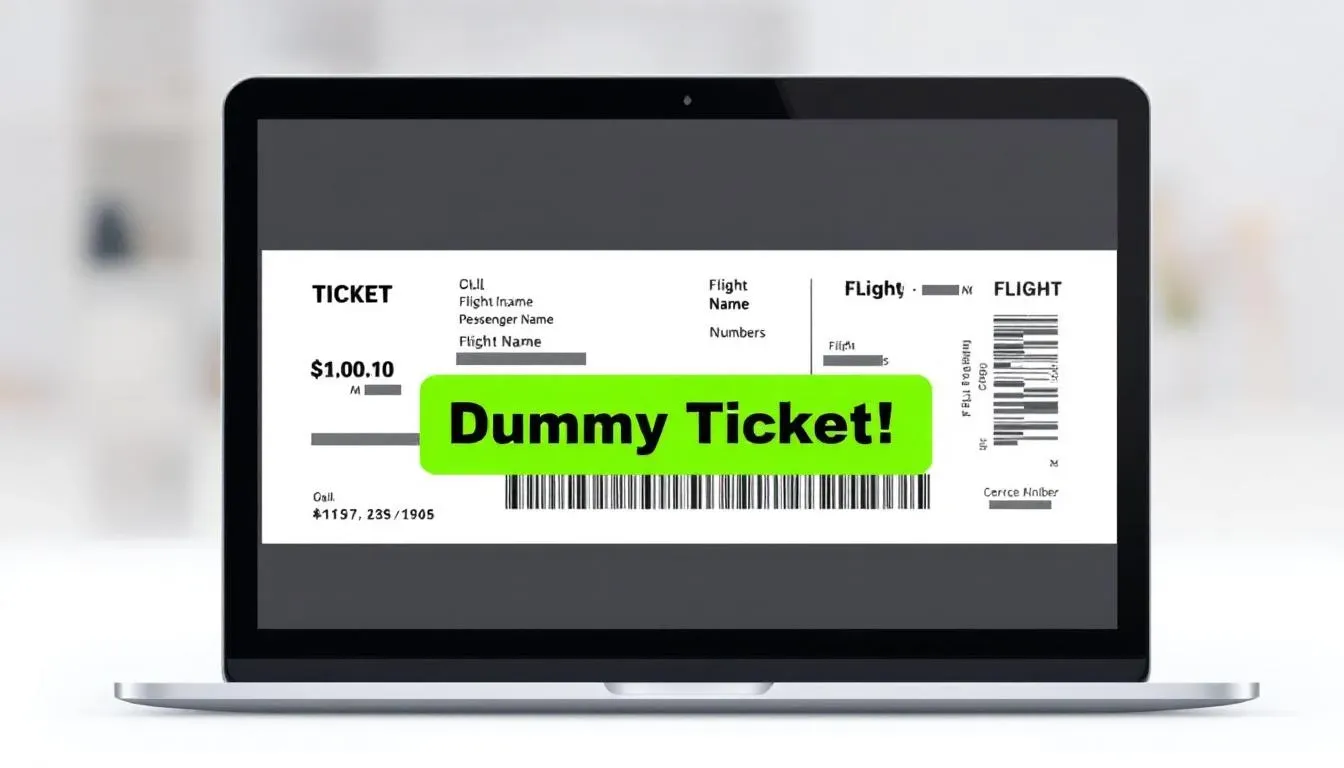
That is why a flexible, date-adjustable booking for visa can be useful. It allows the applicant to submit a clear file now without buying final airfare too early. The document still needs to look clean and specific; the flexibility is for planning, not for making the file vague.
Common Reservation Mistakes That Trip Up Remote Workers
Remote workers usually make mistakes for understandable reasons. Their plans really are flexible. Their income really is irregular. Their next destination may really be undecided. But the visa file cannot rely on that context unless the documents explain it.
One-way tickets without exit logic
Many remote workers prefer one-way travel because that is how they live. The problem is that a one-way ticket paired with a tourist or visitor route can look incomplete. It does not show where the applicant goes after the permitted stay, and it can leave the officer wondering whether the applicant understands the visa limit.
The fix is usually a return or onward reservation that matches the allowed stay. It does not always need to be a flight home. It can be an onward route to the next destination when that fits the travel story, but it should still answer the officer’s basic question: how does this stay end?
Overlapping bookings across multiple applications
Remote workers sometimes apply for several visas in one season. A Schengen plan, a non-Schengen plan and a digital nomad plan may sit open at the same time. The risk appears when reservations overlap in a way that makes the applicant look physically present in two places at once.
Before creating a new reservation, track every pending travel window. If one application shows you in Germany from April to June and another shows you in Costa Rica during the same period, the documents are inconsistent even if each application looks reasonable alone.
Reservation dates that contradict financial proof
Bank statements, invoices, client contracts and income proof help explain whether the applicant can support the stay. If the reservation implies a long stay but the bank statement looks too thin for that duration, the file may invite extra scrutiny.
This is especially common for freelancers. Income may be real but irregular. A short explanation, recent invoices, client contracts or proof of foreign income can help, but the reservation should still match what the applicant can reasonably fund. A 90-day stay should not be supported by documents that only make sense for a two-week trip.
Insurance and accommodation dates that do not match
Remote workers often focus on the flight document and forget the surrounding dates. Travel insurance should cover the full intended stay. Accommodation should make sense beside the reservation. If the reservation ends on 20 July but the insurance ends on 15 July, the file has a quiet contradiction.

Country-Specific Patterns Remote Workers Should Watch For
General best practices only go so far. The right reservation depends on the visa route. Tourist visas, visitor visas, digital nomad visas, business visits and long-stay categories do not all expect the same travel pattern.
Digital nomad visa countries
Countries with dedicated digital nomad or remote-work routes usually expect a longer stay than a standard tourist route. A two-week reservation may look too short if the program is designed for months. On the other hand, a months-long reservation can look too aggressive under a short visitor category. The reservation should follow the visa route, not the applicant’s preferred lifestyle label.
Before booking, confirm whether the destination expects proof of foreign employment, minimum income, health insurance, accommodation, background checks or local registration. These requirements can change the reservation timeline and the supporting documents around it.
Regional day-limit rules
Some regions calculate stay limits using rolling windows. A reservation that looks fine for one trip can become a problem when added to previous days already spent in the region. Remote workers who move often should calculate total days, not just the next trip.
This matters for any applicant who has recent travel history in the same region. If the passport already shows substantial time inside the allowed window, the new reservation should not quietly exceed the limit. The complete flight reservation for visa guide can help connect route timing, permitted stay and document consistency before submission.
Countries that cross-check supporting records
Some destinations may compare flight data with accommodation, local address filings, co-working registrations or long-stay visa records. If the reservation shows a short stay but the accommodation or workspace record suggests a much longer presence, the file can look inconsistent.
The solution is not to hide information. It is to align the documents. If the remote-work program supports a longer stay, use the correct category and make the reservation match. If the applicant is only visiting briefly while performing limited remote tasks for an overseas employer, keep the stay length and purpose consistent with that visitor route.
Remote-Work Document Grid
Remote workers benefit from a simple grid before creating any reservation. The grid keeps the file from becoming a pile of documents that each tell a slightly different story.
| Document | What it should prove | Remote-worker risk if mismatched |
|---|---|---|
| Visa reservation | Entry, exit, route and stay length | Looks open-ended or unrelated to the visa type |
| Visa form | Declared purpose and duration | Purpose says tourism but route suggests relocation |
| Income proof | Foreign income or funds for the stay | Long stay unsupported by cash flow |
| Accommodation | Where the applicant stays during the trip | Dates do not cover the reservation period |
| Insurance | Coverage for the full stay | Policy ends before the reservation date |
| Cover letter | Plain-language explanation of purpose | Sounds like local work or permanent relocation |
If one row does not match, fix it before submission. A clean reservation cannot carry a file where the accommodation or funds say something else.
Cover-Letter Wording for Remote Work Travel Purpose
The cover letter should not overconfess or overmarket. It should clarify the trip. If the visa category allows the applicant to work remotely for an overseas employer as an incidental activity, the wording should keep the travel purpose primary and the remote work context secondary.
A clean sentence might say: “I will visit Portugal from 4 May to 28 May for tourism while continuing limited online duties for my overseas clients, with no local employment or local clients.” The exact wording depends on the destination rules, but the logic is the same: purpose, dates, income source and no unauthorized local work.
Avoid wording that creates doubt:
- “I will decide my return after I see how work goes.”
- “I may stay longer if I find good clients.”
- “The visa is just to start my remote-work life there.”
- “I booked one way because I do not know when I will leave.”
- “I will work from cafes and extend if possible.”
Those phrases make the reservation look like a placeholder for an unclear stay. The better approach is to submit a definite reservation and a definite explanation, even if the applicant’s lifestyle remains flexible after the visa process.
Final Check Before Submission
Before submitting a remote-worker visa file, read the reservation against every major document. The question is simple: would a stranger understand why this applicant enters, where they stay, how they pay, and when they leave?
- The visa reservation matches the declared entry and exit dates.
- The stay length fits the visa category and permitted activities.
- The route is simple enough for the applicant’s travel history.
- The income proof supports the full stay length.
- The accommodation proof covers the reservation period.
- The insurance dates do not end before the exit date.
- The cover letter explains remote work without implying local employment.
- Any onward or return route is believable, not random.
Remote workers do not need to hide flexibility. They need to document it intelligently. A visa reservation should give the officer a clean, reviewable travel frame. The rest of the documents should support that frame instead of pulling the application in different directions.
The strongest remote-work file is calm, specific and consistent. It shows a real route, a lawful purpose, foreign income or sufficient funds, accommodation that matches the dates and an exit plan that makes sense. When those pieces align, the reservation does its job.
Create Your Visa Reservation
Frequently Asked Questions
Do remote workers need a return flight for a visa application?
Many applications are stronger with return or onward proof because it shows how the stay ends. The exact requirement depends on the visa type and destination, but an open-ended route often creates more questions.
Can I use a visa reservation if my remote-work dates may change?
Yes, if the reservation is accurate for the application you are submitting. If plans change later, update the travel proof through the correct process instead of submitting vague dates from the beginning.
Is remote work allowed on a tourist visa?
It depends on the country and visa rules. Some visitor systems allow limited remote activity for overseas employment only when it is not the primary purpose. Always check the current official rule for the destination.
Should a digital nomad visa reservation show a longer stay?
Usually the reservation should match the intended visa route. A dedicated remote-work or digital nomad visa may support a longer stay than a standard tourist visa, but the dates should still match the application and supporting documents.
What if I do not know my exact exit destination?
Choose a realistic return or onward plan for the application. The reservation should answer the officer’s exit question even if your real travel plans may change later.
Can one-way travel hurt a remote worker’s visa file?
It can when the visa category expects a temporary stay and the applicant gives no exit logic. One-way travel is easier to justify when the visa route, cover letter and onward plan explain it clearly.
What documents should match the visa reservation?
The visa form, accommodation proof, insurance, income proof, cover letter and any onward or return travel proof should all support the same travel period.
Does a visa reservation guarantee approval?
No. A reservation supports the application, but approval depends on the full file, including purpose, funds, ties, eligibility, travel history and destination-specific rules.
Friendly reminder: BookForVisa provides temporary travel-proof documents for planning and visa application support. Requirements vary by country, visa type, route and applicant profile, so always confirm the current official checklist for your case.