
You book a connecting flight for your visa file, then notice the layover stretches to 27 hours instead of the two you expected. That single detail can turn a routine flight reservation into a document that raises questions, or quietly pull you into transit rules for a country you never planned to visit.
This guide breaks down what a stopover past 24 hours actually means for a visa itinerary: when the gap needs a shorter connection, when it may require separate transit permission, and when it only needs a clear line in your cover letter. The goal is simple: make the route look planned, legal and easy to verify before a visa officer has to ask why your “connection” looks like another trip.
A long stopover is especially important because it sits between two categories. It is not always a normal short connection, but it is not always a destination visit either. That middle position is where applicants make small mistakes: they choose the cheapest fare, copy the itinerary into the visa file, and only later realize that the stopover created a hotel gap, a transit-visa question, or an arrival date that no longer matches the application form.
For visa purposes, the itinerary should make the travel story easier to believe. It should show where the applicant starts, where they are going, when they arrive, how they leave, and whether every date around the journey is realistic. If the longest or strangest part of the file is the stopover, the itinerary is doing too much work in the wrong direction.
Key facts before using a 24-hour-plus stopover:
- A long layover is not automatically bad, but it must make route sense.
- Airside transit, landside transit, self-transfer and overnight stopover are not the same thing.
- Some countries treat long transit differently depending on passport, visa, airline and border-control status.
- The stopover date must match the visa form, cover letter, hotel proof and final destination logic.
- If the layover becomes the hardest part of the file to explain, reissue the reservation with a cleaner route.
Long layover making your visa route look messy? Create a clean flight reservation for visa with BookForVisa so your connection time, arrival date, onward route and cover-letter timeline support one believable application.
In This Guide
- Official-source check
- Why 24-hour-plus layovers appear
- How a long gap reads to visa officers
- The transit visa question
- How to rebuild the itinerary
- What must match after 24 hours
- Where layover length gets extra scrutiny
- Common mistakes
- How to explain a long stopover
- Fix it, explain it or leave it
- FAQ
Official-source check: European Commission guidance says a Schengen airport transit visa allows connection through the international transit area during a stopover or flight change, but does not allow leaving that area. UK guidance separates airside transit from landside transit and says a Visitor in Transit visa is for travelers going through border control and leaving the UK within 48 hours, while longer stays can require a Standard Visitor visa. U.S. State Department guidance says Transit C visas are for immediate and continuous transit and that layover privileges for other purposes may require the relevant visitor visa. Sources: European Commission Schengen visa guidance, UK transit visa guidance and U.S. Transit Visa guidance.
Reviewed for: long-stopover route logic, transit visa wording, airside/landside distinction, flight-reservation date consistency, cover-letter alignment and official-source accuracy.
Why a 24-Hour-Plus Layover Shows Up in a Visa Itinerary
Most travelers do not intentionally plan a 27-hour layover. It often appears because the flight search engine is chasing price, not visa-file clarity. A cheap combination can look attractive on the booking page, but the itinerary may create an awkward overnight gap once the dates, time zones and next available flight are expanded.

How fare search engines insert overnight gaps
Search engines are built to compare fares quickly. They may combine routes through large hubs, mixed carriers and next-day departures because that produces a lower total fare. The result can look reasonable until you read the detailed itinerary.
A traveler searching Mumbai to Chicago may see a cheaper option through Amsterdam. The first screen highlights price and total duration, but the expanded view shows arrival on Monday morning and departure on Tuesday afternoon. That is no longer a short airport connection. It is an overnight stopover that may require accommodation, transit permission, baggage handling and a clear explanation.
This matters for visa reservations because applicants often scan the route quickly. They check the origin, destination and price, then miss the connection time. A visa officer does not read the itinerary that casually. They see every date and ask whether the route makes sense for the application.
The risk becomes higher when the booking page hides the layover inside total journey duration. “Thirty-eight hours total travel time” may not look alarming until you notice that twenty-six of those hours sit in the connecting city. In a normal leisure booking, the traveler may accept that inconvenience to save money. In a visa file, that inconvenience can become a review question because it affects legal transit, destination arrival, hotel proof and the story in the cover letter.
Some fare engines also show mixed-airline combinations that are not true through tickets. The route looks like one itinerary on the screen, but the passenger may actually be moving across two separate bookings. That difference is invisible to many applicants and very important for document review. A protected airline connection usually reads cleaner than a loosely combined route that forces the traveler to manage baggage, immigration and recheck alone.
The self-transfer trap
A self-transfer is one of the easiest ways to create a stopover problem. Two separate one-way tickets may look like one journey on a comparison site, but the airlines may not protect the connection. You may need to collect baggage, pass immigration, enter the transit country, change terminal, recheck bags and clear security again.
That is very different from staying airside on a protected connection. A self-transfer can turn a “layover” into an entry event. If the traveler cannot legally enter the transit country, the route may fail before the visa officer even considers the destination file.
Self-transfer red flags:
- Two separate booking references instead of one through itinerary.
- Different airlines that do not interline baggage.
- Airport change inside the same city.
- Overnight gap requiring hotel or landside access.
- Connection described by the platform as “self-transfer” or “separate tickets.”
- Baggage collection before the next flight.
For a visa file, the question is not only “is this route cheap?” It is “can this traveler legally and practically complete this route?” If the answer is not obvious, the itinerary needs to be rebuilt or explained.
A self-transfer can also make the reservation look less official because the segments do not behave like one continuous journey. If the first flight is delayed, the second airline may not protect the onward flight. If baggage is not checked through, the traveler may have to enter the transit country. If the transit country requires permission the traveler does not hold, the itinerary becomes weak even if the final destination visa application is otherwise well prepared.
For applicants using a flight reservation only as visa proof, this is exactly the kind of issue to remove early. The document should not force the officer to study airline interline rules. It should show a travel plan that is easy to read, easy to match against the form, and believable for the traveler’s passport and visa route.
When a layover is real vs an artifact of search
A real layover is a normal connection that exists because the airline schedule requires it. A search artifact is a cheap combination created by the booking engine, often with a long gap that no traveler would choose if the route were being judged for official documents.
A real layover may be easy to defend when there are limited flights, the connecting city is a major hub, the baggage stays checked through, and the onward flight is the next practical departure. A search artifact looks weaker when the traveler could have chosen a cleaner route but selected a strange connection solely because it was cheaper.
Before using the itinerary, ask whether the stopover would still make sense if no visa document were involved. If the answer is no, the route may not be strong enough for a formal application.
The same test applies to return travel. A strange outbound route may attract attention, but a strange return route can do the same because it relates to the applicant’s intention to leave. If the itinerary shows a short stay in the visa country but a long and unexplained detour before returning home, the reviewer may wonder whether the stated route is complete. The return leg should be checked with the same seriousness as the arrival leg.
A practical rule is to choose the route that creates the fewest questions. If a longer total journey still keeps the traveler airside and protected on one reservation, it may be stronger than a shorter-looking route that requires a risky self-transfer. Visa-strength is not only about duration. It is about whether the journey can be understood without hidden assumptions.
How a Long Gap Between Flights Reads to a Visa Officer
A long layover can create three different impressions. It can look like a normal airline schedule, an unplanned route weakness, or an attempt to hide an extra stop. The surrounding documents decide which impression wins.
Why disconnected dates trigger the “edited” reaction
Visa officers see many travel documents. When dates jump awkwardly, they may wonder whether the itinerary was edited, stitched together, or generated without real route logic. The concern is not that every long layover is false. The concern is that disconnected dates make the document harder to trust.
A 27-hour stopover can create questions such as:
- Where will the traveler stay overnight?
- Can the traveler legally leave the transit area?
- Will baggage be checked through or collected?
- Does the cover letter mention the extra night?
- Does travel insurance cover the transit period?
- Does the arrival date on the application form match the actual destination arrival?
If the file answers those questions cleanly, the long stopover becomes manageable. If the file ignores them, the stopover becomes the story.
That is why the stopover should never be treated as a harmless detail after the reservation is created. It affects the entire file. A hotel booking that starts the day before the traveler reaches the destination looks careless. Insurance that starts after the transit date may leave a gap. A cover letter that says “direct flight” when the itinerary shows an overnight stop is a contradiction. These issues are small individually, but together they can make the application feel less reliable.
The officer is usually not trying to punish a traveler for choosing a cheaper connection. The officer is checking whether the submitted documents tell one coherent story. If the long stopover is legal and logical, it can remain. If it creates a contradiction, it should be corrected before submission.
Officers compare layover length with travel purpose
Layover length should fit the traveler’s stated purpose. A business traveler attending a fixed meeting may look careless if the route creates an unnecessary two-day transit before arrival. A tourist may have more flexibility, but the stopover still needs to fit the trip timeline and budget.
For example, if the visa application says the traveler will enter France on June 10 for a conference on June 11, but the flight itinerary shows a 30-hour stopover in Istanbul and arrival late on June 11, the route undermines the stated purpose. The issue is not the stopover itself. The issue is that the itinerary makes the trip difficult to believe.
For family visits, long layovers can also create questions. If the traveler claims a short five-day visit but spends more than a day in transit each way, the useful visit time becomes very limited. The route may still be possible, but it needs to look intentional rather than accidental.
Student, work and long-stay applicants may have more flexible travel logic, but they still need clean timing. A student arriving after orientation, a worker arriving after the contract start date, or a medical traveler arriving after the appointment creates a stronger issue than the stopover itself. The problem is not that the connection is long. The problem is that the itinerary no longer supports the stated purpose.
For tourism, the same principle applies through accommodation and day count. If the traveler plans seven nights in Italy but the flight itinerary spends nearly two days in transit, the hotel and travel dates should show the true period inside Italy. Otherwise the application may look inflated or carelessly assembled.
Why 26 hours is different from 6 hours or 6 days
A six-hour layover is usually easy to understand as a connection. A six-day stop is clearly another destination and should be declared as part of the trip. A 26-hour layover sits in the uncomfortable middle. It is long enough to create accommodation and transit questions but short enough that travelers may forget to explain it.
That middle zone is where mistakes happen. Applicants may call it “just a connection” even though the route requires leaving the airport. They may forget to include the overnight city in the cover letter. They may use a hotel booking only for the final destination, leaving the transit night unaccounted for. These are fixable issues, but they should be fixed before submission.
A 26-hour connection also creates a practical question: where is the traveler during the missing night? If the answer is an airside hotel or airport waiting area, that may be fine if the airport allows it. If the answer is a city hotel, the traveler may be entering the transit country. If the traveler has no answer, the itinerary looks incomplete. This is why the file should not treat every long connection as invisible.
A six-day stop is easier to classify because it is plainly part of the trip. It can be declared, supported by hotel proof and explained as a multi-country route. A 26-hour stop is more subtle, which makes it more likely to be forgotten. The safest approach is to classify it deliberately: short connection, long airside connection, landside transit, or actual stopover.
The Transit Visa Question a Long Layover Can Quietly Force On You
Transit rules are not universal. A stopover that is legal for one nationality may be impossible for another. A route that works airside may fail if the traveler must pass border control. A connection that looks simple with one airline may become complicated when baggage is not through-checked.
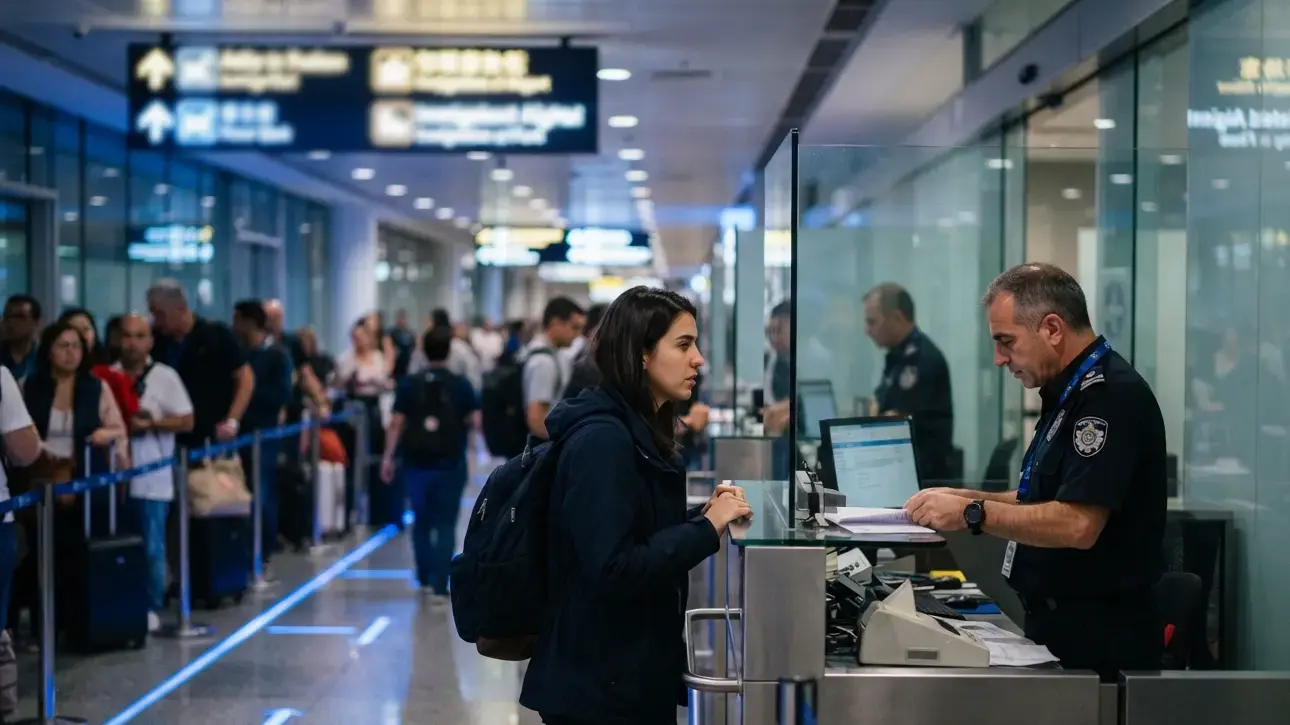
There is no global 24-hour rule
The “24-hour rule” is a useful warning line, not a global legal answer. Some systems focus on whether you remain airside. Some focus on whether you pass border control. Some apply specific time limits. Some depend on the passport, visa held, destination country, airline, airport and terminal arrangement.
That is why you should not assume that a 23-hour layover is automatically safe or that a 25-hour layover is automatically forbidden. The correct question is more specific: for this passport, this airport, this airline, this baggage arrangement and this onward destination, can the traveler legally complete the connection?
The same country may also apply different treatment depending on whether the traveler changes airport, remains in the same terminal, holds a visa for a third country, or travels with a specific document category. A rule found in a forum or old blog post is not enough for a visa file. The itinerary should be built around the official rule that applies to the applicant’s exact route.
For Schengen-related files, applicants often assume that “transit” is always a simple airport concept. In reality, airport transit, short-stay entry, main destination and first-entry logic can interact. If a traveler passes through border control or spends time outside the international transit area, the file may need to show why that movement is permitted and how it relates to the main destination.
Airport-transit visa vs regular transit visa
An airport-transit visa usually relates to staying inside the international transit area while changing flights. It does not normally allow the traveler to enter the country, collect bags landside, sleep in a city hotel or switch airports. A regular transit or visitor-in-transit permission may be needed when the traveler passes border control.
The difference matters in real routes. If your connection stays inside the international transit zone and the bags are checked through, the paperwork question may be narrow. If you must leave airside, change airports or collect baggage, the route may require permission to enter the transit country even if your final destination is somewhere else.
Applicants should also be careful with overnight airport stays. Some airports do not keep all terminals open the same way overnight. Some require passengers to clear security again. Some transfers are only possible landside. A flight itinerary that looks legal on paper can still become impractical if the airport operation forces the traveler into a zone they cannot legally enter.
Check these before finalizing the reservation:
- Do you pass through border control?
- Will your baggage be checked through to the final destination?
- Are both flights on one ticket or separate tickets?
- Do you change airport or terminal in a way that requires entry?
- Does the stopover require an overnight hotel outside the airport?
- Does your passport require an airport transit visa or visitor transit visa?
- Does your onward destination require proof before boarding the first flight?
Check the connecting country before the reservation is final
The worst time to discover a transit issue is after the visa file has already been submitted. Before you use the itinerary, check the transit country’s official guidance, the airline’s document-check requirements and the airport transfer arrangement. If any part is unclear, choose a cleaner route.
Do not rely only on a booking engine. Search platforms may sell or display itineraries that are cheap but not suitable for every traveler. The airline counter still applies travel-document rules, and the visa officer still reviews whether the itinerary makes sense.
If the official guidance is unclear, avoid building the visa file around the unclear route. Choose a connection that does not require interpretation. The best reservation is the one that makes the officer’s job easier: the route is visible, the dates match, the transit status is sensible, and the final destination remains the focus.
Rebuilding the Itinerary So the Stopover Does Not Become the Story
If the stopover is awkward, fix the route before it becomes the most memorable part of the application. The best itinerary is often not the cheapest itinerary. It is the route that supports the visa story with the least explanation.
Rebuilding does not mean making the article or file look more complicated. It usually means removing friction. A cleaner route may have fewer airlines, fewer booking references, a more logical hub, or a destination arrival date that matches the hotel and form without explanation. The goal is not perfection. The goal is a travel plan that feels intentional and easy to verify.
Split one long layover into two cleaner movements
Sometimes a single long stopover can be replaced by a more logical route. Instead of a 29-hour gap in one hub, you may find a same-day connection through another hub, a later departure from your origin, or a different arrival airport that connects better with the final destination.
Cleaner does not always mean shorter. A 12-hour protected connection can be stronger than a 4-hour self-transfer across airports. A route with one legal overnight stay can be stronger than a confusing same-day connection that requires baggage collection and recheck without enough time.
When comparing alternatives, write down the real tradeoff. One option may be cheaper but require a landside overnight. Another may cost slightly more but keep the passenger on one airline record. Another may leave one day later and remove the stopover entirely. For visa support, the option with the cleanest document logic often wins over the lowest fare.
Choose a connecting city that does not create its own visa question
Some hubs are practical for one traveler and risky for another. If the connecting city creates extra visa complexity, do not use it just because the fare is slightly lower. The route should support the destination application, not introduce a second application problem.
For applicants with limited travel history, high-scrutiny passports or fixed arrival deadlines, simplicity is a ranking signal inside the file. The officer should not need to study transit law to understand why the itinerary works.
Connecting city choice can also affect credibility. A normal hub on the way to the destination is easy to understand. A strange detour in the opposite direction may require explanation. If the route jumps backward geographically, creates a long overnight gap, and saves only a small amount of money, it can look like the itinerary was selected by a tool rather than planned by a traveler.
When it is fine to keep the long layover
A long layover can be fine when it is legal, operationally normal and explained by the route. Some long-haul connections have limited onward flights. Some airports require overnight waiting because the next flight departs the following day. Some travelers intentionally choose a longer protected connection to reduce missed-flight risk.
Keep the long stopover when:
- The traveler can legally transit or enter if required.
- The airline or reservation shows a protected connection.
- The onward flight is the next practical option.
- The cover letter does not contradict the transit timing.
- Accommodation or airport-stay logic is covered if needed.
- The final destination arrival still supports the travel purpose.
If you keep it, do not hide it. Mention the connection calmly where relevant, especially if the itinerary includes an overnight transit before the main destination.
The wording should stay modest. You do not need to turn a normal connection into a long legal essay. A single accurate sentence is usually better than a paragraph that sounds defensive. The itinerary should remain the main evidence; the cover letter should simply remove ambiguity.
What Has to Match Once the Layover Crosses 24 Hours
A long stopover makes date matching more important. The reservation, application form, cover letter, hotel proof, insurance and final destination plan must all agree on which date the traveler actually enters the destination country.
This is where many applicants lose consistency without noticing. They build the flight reservation first, then create accommodation, then write the cover letter, then fill the form. Each step uses a slightly different idea of “arrival.” One document means departure from home. Another means arrival in the connecting hub. Another means first night in the destination country. The reviewer sees all of it together.
Connecting flight dates and cover-letter dates
Suppose your first flight leaves Delhi on March 3, lands in Doha on March 4, and the onward flight leaves Doha on March 5. If your cover letter says you arrive in Paris on March 4, the file is wrong. You may be traveling on March 4, but you are not yet in Paris.
Use the destination arrival date as the main travel-entry date unless the form specifically asks for departure from home. Then keep every other document aligned around that distinction.
Time zones can make this even more confusing. A flight may depart late at night, cross midnight, and arrive two calendar days after the traveler left home. If the stopover crosses another midnight, the final destination date may shift again. Always check the local arrival date shown on the itinerary, not only the departure date from the origin city.
Dates to compare before submission:
- Home-country departure date.
- Transit arrival and departure date.
- Destination arrival date.
- First hotel check-in date.
- Visa application intended-entry date.
- Travel insurance start date.
- Cover-letter travel period.
- Return or onward departure date.
Arrival date on the visa application
Some applicants enter the date their first flight leaves home. Others enter the date they arrive in the visa destination. The correct answer depends on the form wording, but the supporting documents should make the timing clear.
If the application asks for intended date of arrival in the destination, use the date you reach that destination, not the date you start flying. If the route includes a long stopover, that difference may be one or two days. A mismatch here can make the hotel booking look wrong even when the hotel is correct.
If the form asks for planned travel period, keep the language precise. For example, “depart India on 3 March and arrive in France on 5 March after an overnight transit” is clearer than using one date for the entire journey. The more unusual the stopover, the more useful this precision becomes.
Why a reissued or updated reservation matters more with an unusual gap
When the route is simple, a small date update may be easy to understand. When the route has a long stopover, old versions become dangerous. A reissued reservation can prevent the officer from comparing an abandoned route with the current one.
If you change a 28-hour stopover to a 4-hour connection, update the cover letter, hotel dates, insurance and any internal itinerary references that mentioned the old stop. Do not leave both versions in the active file.
A well-timed flight reservation for visa should support the version of the journey you actually intend to submit. It should not preserve old route confusion just because the first draft was cheaper or faster to generate.
This is especially important when the reservation includes a booking reference or PNR. A reviewer may not need to verify every reservation live, but the document should still look current, coherent and internally consistent. If the dates were changed, the visible itinerary should be the version that matches the application being submitted.
Which Visa-Processing Contexts Look Hardest at Layover Length
Not every file receives the same level of attention. A long layover can pass quietly in one application and become a serious question in another. Risk depends on visa type, traveler profile, route logic and how much the application relies on the itinerary.
High-scrutiny does not mean the applicant is doing anything wrong. It simply means the documents may need to answer more questions without creating new ones. Long stopovers, unclear hotel dates, mixed-purpose trips and weak employment or funding proof can combine into a file that feels less settled than it should.
Short-stay tourist and business files
Short-stay tourist and business applications often depend on a clean temporary travel story. The route should show arrival, stay, purpose and departure without requiring a long explanation. A strange stopover can weaken that story if it makes the trip look less planned.
Business files are especially sensitive when timing is fixed. If the meeting starts Monday morning, a route that arrives late Monday because of an avoidable long stopover does not support the purpose. For tourist files, the issue is usually less strict, but the trip still needs to look realistic.
A short-stay file should usually show a tidy loop: arrive, stay, complete the purpose, leave. When a long stopover interrupts that loop, the applicant should either choose a cleaner route or make sure the stopover does not affect the actual stay. The more compressed the trip, the less room there is for strange transit gaps.
Systems that read layovers as disguised additional stops
Some applications are reviewed through forms and uploaded documents before any interview. If a long stopover appears but the applicant never explains it, the reviewer may treat it as an undeclared stop. That is more likely when the transit city requires landside access, hotel accommodation, airport change or a full calendar day between flights.
If the route genuinely includes an extra stop, name it correctly. If it is only a connection, keep it visibly connected to the onward travel. Ambiguity is the problem.
This is common with multi-country files. A traveler applying through one Schengen country may have a long transit through another. If the itinerary and hotel plan make the transit country look like a meaningful stop, the application may invite main-destination or first-entry questions. The route should not accidentally undermine the jurisdiction logic of the visa application.
Where a long connection draws less attention
Long connections draw less attention when they are common for the route, protected by the airline, clearly airside, and do not affect the destination arrival date or travel purpose. A traveler going from a smaller city to a long-haul destination may have limited options. The officer may understand that a hub connection is unavoidable.
Even then, the itinerary should be readable. The better the reservation shows airline, date, time, airport and onward segment, the less the officer has to infer.
Long connections also draw less attention when the applicant’s purpose is flexible. A long-term student, relocation traveler or family visitor may have more tolerance for a slower route than a business traveler attending a fixed event. But tolerance is not the same as invisibility. The stopover still needs to be lawful and consistent.
Mistakes Applicants Make Once the Layover Runs Long
Long-layover mistakes are usually practical, not dramatic. The applicant overlooks one field, and the whole route becomes harder to defend.
The most common pattern is that the applicant focuses on the destination country and forgets the connecting country. But the airline, embassy or border officer may look at the whole route. If the traveler cannot explain the stopover, the document becomes weaker even when the final destination is correct.
Booking a long layover on purpose to use up time
Some travelers intentionally choose a long stopover because it reduces fare cost or helps them arrive closer to an appointment date. That can be reasonable only if the route remains legal and believable. Do not use a transit city as a hidden mini-trip if the visa file says you are going directly to the main destination.
If you plan to leave the airport and visit the transit city, check whether that country should appear in your travel plan. If you cannot enter the transit country, choose a different route.
Using a long layover to create a hidden visit is rarely worth it. If the traveler genuinely plans to stay in the transit city, the hotel, insurance and cover letter should say so. If the traveler does not plan to enter, the itinerary should not force them to enter. The file should never depend on a quiet assumption that no one will notice the extra stop.
Forgetting the return leg
Applicants often fix the outbound route and ignore the return. A messy return stopover can still weaken the file because it affects departure intention and final travel proof. The return journey should also show realistic connection times, lawful transit and a clear route home or onward.
If the return includes a long stopover, check whether it changes the final exit date from the visa country. Insurance, hotel checkout and employment leave may need to match that date.
Return-leg confusion can be subtle. A traveler may leave the visa country on the final allowed day, but the itinerary may show arrival home two days later because of an overnight connection. That is usually fine if the exit from the visa country is clear. It becomes messy when the documents confuse exit date, transit date and home-arrival date.
Assuming the booking engine filtered out bad connections
Search platforms are not visa officers. They may show routes that are technically bookable but unsuitable for your passport, baggage, visa status or airport transfer. The fact that a route appears online does not mean you can travel it without additional documents.
Before submission, review the route manually. If you do not understand the connection, do not expect the officer to trust it.
A good manual review takes only a few minutes. Open the full itinerary, not just the summary. Check each airport code, each date, each terminal note, each layover length and each booking reference. If there is a self-transfer label, an airport-change warning or a note about baggage collection, treat it as a serious document issue rather than small print.
How to Explain a Long Stopover If You Are Asked
The best explanation is short, factual and tied to the itinerary. Do not sound surprised by your own route. Do not make the officer feel that the stopover is an accident you never noticed.
The explanation should also match the traveler’s real plan. If the passenger will stay airside, say that only if it is true. If the passenger needs to enter the transit country, do not call it airside. If the long connection exists because no same-day onward flight is available, say that plainly. Accuracy is stronger than aggressive wording here.
One cover-letter line that pre-empts the question
If the stopover is long but acceptable, add one calm line in the cover letter. For example:
- “The itinerary includes an overnight airside connection in Doha before the onward flight to Paris on 5 March.”
- “The London transit is within the permitted transit window and the onward flight is booked for the following day.”
- “The long connection is the next available onward flight on the same airline route.”
Keep it factual. Do not over-explain the fare search, panic about transit rules, or claim that the stopover guarantees anything. The sentence should reduce doubt, not create a new debate.
In most cases, one sentence is enough because the documents should do the heavy lifting. The reservation shows the route, the accommodation shows the stay, the insurance shows the covered period, and the cover letter connects the pieces. If the explanation needs half a page, the route may be too complicated for the file.
What to say in a visa interview
If asked about the stopover, answer the route question directly:
- Where you connect.
- How long the connection is.
- Whether you remain airside or pass border control.
- When you reach the visa destination.
- How the hotel and itinerary begin after arrival.
Avoid saying “I did not notice” or “the website gave it to me.” Those answers make the itinerary look unreviewed. It is better to say the route was checked and the connection supports the onward travel plan.
Applicants should also avoid implying that the reservation is disposable or imaginary. The document may be temporary travel proof, but the route should still represent a plausible travel plan. If the officer asks, the answer should focus on the plan: where you connect, when you arrive, why the dates match, and how the trip continues.
Keep the explanation consistent everywhere
Your itinerary, cover letter and interview answer should describe the same stopover. If the cover letter says the connection is airside, but the flight requires baggage recheck, the explanation fails. If the form says arrival on June 10 but the itinerary reaches the destination on June 11, the date conflict remains.
Consistency is the strongest defense. The broader flight reservation for visa complete guide is useful when the route has timing, PNR, accommodation and insurance dependencies that need to move together.
Consistency also helps the applicant speak confidently. When the traveler knows the route, the transit status and the destination arrival date, the interview answer stays calm. When the traveler only copied a booking summary, small questions become stressful. A visa-ready itinerary should prepare the applicant as well as the document.
A Quick Decision Framework: Fix It, Explain It or Leave It
Every long stopover falls into one of three categories. It should be fixed, explained or left alone. The mistake is treating every case the same.
This framework prevents overreaction. Some long stopovers are harmless and should not be rewritten into a complex explanation. Others are serious enough that a short explanation is not enough. The correct move depends on whether the route is legal, operational and consistent with the visa story.
The three questions that sort every case
Ask before submission:
- Can the traveler legally complete the stopover with the passport and documents they hold?
- Does the stopover make operational sense with baggage, airport transfer and onward flight timing?
- Does the stopover support the visa story instead of distracting from it?
If any answer is no, fix the route. If every answer is yes but the stopover looks unusual, explain it briefly. If every answer is yes and the connection is normal, leave it alone and avoid overloading the file.
Use the framework before ordering or submitting the reservation. It is easier to choose a cleaner itinerary upfront than to repair a file after every supporting document has been built around the wrong dates. Once hotel bookings, insurance and cover letters are created, a stopover change can create a chain reaction.
When reissuing the reservation is worth it
Reissue the reservation when the stopover creates a legal risk, a date conflict, a hidden accommodation gap, or a story problem. The cost of a cleaner reservation is usually lower than the cost of submitting a route that forces avoidable questions.
Reissuing is also worth it when the applicant cannot explain the route in one calm sentence. If the traveler needs to say “I think the airline handles it somehow,” the route is not ready. A clean itinerary should not require hope. It should show a route that a traveler with that passport can actually complete.
Reissue especially when:
- The traveler may need a transit visa they do not have.
- The connection requires airport change or border control.
- The destination arrival date no longer matches the form.
- The first hotel begins before the traveler arrives.
- The cover letter would need a long explanation to defend the route.
Final check before submission
Before uploading, read the itinerary as if you know nothing about the traveler. Can you identify the origin, stopover, final destination, arrival date, hotel start date and return plan in less than a minute? If not, simplify.
Then compare the same route against the visa form and cover letter. The dates do not need to be repeated in identical wording everywhere, but they must describe the same journey. If one document says the trip starts on the home departure date and another says the destination arrival date, make the distinction clear enough that a reviewer cannot mistake it for an error.
For terminology clarity, travelers sometimes call any travel-proof document a dummy ticket. For BookForVisa, keep this article’s focus on flight itinerary and reservation consistency so the document supports the visa file without crossing into DummyFlights-owned wording.
Getting Your Layover Right Before You Submit
A stopover longer than 24 hours is not automatically a visa problem. It becomes a problem when it creates a transit requirement, hides an extra destination, breaks the arrival date, leaves a hotel night uncovered, or makes the route look like a cheap search result rather than a planned journey.
Final long-stopover checklist:
- The stopover is legal for your passport and visa status.
- You know whether the connection is airside or landside.
- Baggage handling and airport transfers are realistic.
- The destination arrival date matches the application form.
- Hotel check-in starts after arrival, not before.
- Travel insurance covers the actual travel window.
- The cover letter explains unusual overnight transit only if needed.
- The return route is checked with the same care as the outbound route.
- Old reservations are removed from the active file after reissue.
The strongest itinerary is not the one with the most impressive route. It is the one that a reviewer can understand quickly. If the stopover is clean, keep it. If it is legal but unusual, explain it. If it creates avoidable doubt, replace it before submission.
Need a cleaner route before you submit? Use BookForVisa to prepare a flight reservation that matches your travel dates, stopover logic, accommodation proof and visa timeline.
Frequently Asked Questions
Can I use a flight itinerary for visa with a layover longer than 24 hours?
Yes, if the stopover is legal, realistic and consistent with the rest of the visa file. Check whether you remain airside, pass border control, need a transit visa, or require accommodation during the gap.
Does a 24-hour stopover always require a transit visa?
No. There is no single global rule. Transit requirements depend on the country, passport, airline, airport, ticket type, baggage handling and whether you pass border control.
Is airside transit different from landside transit?
Yes. Airside transit usually means staying inside the international transit area. Landside transit means passing border control, which can trigger different visa or entry requirements.
Should I mention a long stopover in my cover letter?
Mention it briefly if the stopover is overnight, unusual, or could affect the arrival date. If the connection is normal and does not create confusion, avoid overexplaining it.
What if my hotel starts before I reach the visa destination?
Fix the hotel date or explain the timing if there is a valid reason. A hotel that starts before destination arrival can make the itinerary look inconsistent.
Can a self-transfer create visa problems?
Yes. A self-transfer may require baggage collection, border control, airport change or recheck. That can turn a simple connection into a transit or entry-permission issue.
When should I reissue the flight reservation?
Reissue it when the layover creates a legal risk, date mismatch, hidden accommodation gap, unrealistic route or cover-letter explanation that becomes too complicated.
Does the return journey need the same layover check?
Yes. The return or onward route also supports your intention to leave. Check return stopovers, baggage, transit rules, insurance dates and final departure timing.
Can a long layover look like an undeclared destination?
It can, especially if the traveler leaves the airport, books a hotel, changes airports or spends a full day in the transit country without explaining it.
What is the safest long-stopover strategy?
Use the cleanest legal route available, keep dates consistent across the form and documents, explain only what needs explanation, and replace the reservation if the stopover distracts from the visa purpose.
Friendly reminder: BookForVisa provides travel-proof documents for planning and visa-application support. Requirements vary by destination, consulate, visa category and applicant situation. A flight reservation can support a file, but it does not guarantee approval, boarding or entry.