Short answer: A flight itinerary for visa for a film production assignment should show a truthful route that fits each traveler’s authorized role, assignment or petition dates, shooting schedule, accommodation and planned exit. Build it only after the production confirms the correct immigration category for that person. The itinerary documents proposed travel; it does not authorize filming, employment, media activity, equipment import or location access, and it cannot guarantee a visa, boarding or admission.
A film crew is not one visa case. A director, foreign-media journalist, commercial camera operator, scout and local fixer can follow different immigration and permit paths even when they share flights. The safest workflow is role first, authorization second, production window third and itinerary last.
This guide uses a Mumbai-to-Honolulu production as a detailed example while keeping the method useful for international assignments generally. Always apply the destination’s current immigration, consular, permit and customs rules to the actual crew.
Key facts:
- Classify every traveler by actual activity; do not assign one category to an entire crew by convenience.
- Match the route to the petition, assignment letter, shoot window, permits, hotel plan and traveler’s final duty.
- Separate proposed flight evidence from permission to work, film, report, import equipment or enter a location.
- Use one controlled crew roster and update every affected document when a traveler or date changes.
- Keep expensive tickets flexible until the visa is issued and the production confirms the final schedule.
Role-to-itinerary decision check:
| Planned activity | Category question to resolve first | What the itinerary should reflect |
|---|---|---|
| Meetings or genuine location scouting without production labor | Whether the limited activity fits the published business-visitor rules | Short, purpose-led trip with meeting or scouting dates and no invented shoot duties |
| Foreign news gathering or qualifying documentary work | Whether the media (I) classification applies to the organization, content and funding | Assignment locations, reporting window and return after the defined media work |
| Commercial, entertainment, motion-picture or television production work | Whether a petition-based temporary-worker category is required | Travel inside the petition and production window, with role-specific arrival and departure |
| Essential support for a qualifying lead worker | Whether a related support classification and separate filing are required | Dates tied to the lead worker and approved production activity, not a generic group route |
Need a production itinerary after the crew’s categories and dates are confirmed? Prepare each traveler’s passport name, authorized window, route and final duty before creating the reservation.
Prepare your visa flight itineraryIn This Guide
- What a film crew itinerary should communicate
- Resolve the visa category first
- Translate the shooting schedule into travel dates
- Plan the Hawaiʻi production base
- Align filming permits with travel
- Control crew names, roles and documents
- Use a reserved itinerary carefully
- Coordinate local production support
- Run the final visa-packet check
Official-source check: The U.S. Department of State foreign-media guidance distinguishes qualifying I-visa activity from visitor travel and petition-based temporary work. For the Hawaiʻi example, the Hawaiʻi Film Office permit guidance explains state-location jurisdiction, minimum submission lead times, insurance and extra drone or water requirements. Productions considering incentives should verify registration, spend and reporting conditions through the official Hawaiʻi production tax-credit guidance. Immigration classification is fact-specific; use official instructions and qualified U.S. counsel for the actual assignment.
Reviewed for: film-role and visa-category separation, foreign-media versus production-work wording, petition-date alignment, Hawaiʻi permit jurisdiction, crew-roster consistency, reservation-status accuracy, India-origin routing and separation between consular review, airline checks and border admission.
What a U.S. Film-Crew Itinerary Needs to Communicate

A consular reviewer can use the itinerary to compare the proposed trip with the assignment, petition or media evidence in the rest of the file. A genuine film assignment still needs the correct immigration category, and flights cannot repair a category that does not authorize the planned activity.
Reading Your Assignment Through the Officer's Eyes
Start with the question the officer silently asks. Why is this person entering the country, and when will they leave? Your itinerary answers half of that. Your production letter answers the other half.
A crew member is one part of a larger schedule. The file should show that the assignment exists, that the traveler has a defined role and that the proposed travel dates fit the approved or documented work window. Open dates and unexplained routes make the purpose harder to assess.
Proper documentation, including production letters, is crucial for visa applications. Your production company should issue a letter that names you, your role, the shoot dates, and the Hawaii locations. Attach the itinerary directly behind that letter so the dates read as one document.
Match the vocabulary too. If the letter says "documentary shoot on Oahu," your itinerary notes should not say "holiday." Keep the wording identical across every page you submit.
A detailed trip purpose should align with the classification selected by the applicant and production. A short note such as “crew travel for an on-location production assignment in Honolulu” can identify context, but it must not imply authorization that the visa or petition does not provide.
Itinerary Mistakes That Raise Doubts About a Film Assignment
A film-assignment file can become difficult to assess when its itinerary, production letter and permissions describe different trips. The most common problems are ordinary coordination errors rather than sophisticated visa issues.
The most common problems are easy to spot:
-
Flights booked far in advance with no permit or letter to explain the timing
-
A one-way route with no exit plan
-
A layover city that has no link to the assignment
-
An itinerary for one crew member that conflicts with the rest of the team
Each inconsistency creates an unanswered question. Applicants may not receive an opportunity to correct every missing explanation, so the submitted documents should be understandable on their own.
Read the itinerary the way a stranger would. If someone with no knowledge of your project can follow the trip and understand why each date exists, you are close. If they need a phone call to make sense of it, rewrite it.
Entry and Exit Points That Tell a Clear Story
Flight itineraries should include route details with entry and exit points. That means the airport where you arrive, every connection, and the airport where you leave. Officers scan for the same thing every time: a clear way in and a planned way out.
A return or onward plan may be requested as part of a visa application. For a film assignment, the departure date should follow the traveler’s real final duty, such as wrap, equipment handover or an approved post-production meeting. It supports the proposed exit plan but does not prove future compliance or guarantee a visa decision.
Multi-city itineraries are common for film crews working in various locations. If your shoot moves from Oahu to Maui and then the Big Island, list each leg. The officer should see a logical chain, not scattered flights.
Here is a clean example for a crew member based in Mumbai:
-
Mumbai to Honolulu with one connection, arriving two days before the first prep meeting
-
Honolulu to Kahului for the Maui unit
-
Kahului to Honolulu for the final shoot days
-
Honolulu to Mumbai, departing the day after wrap
Keep layovers realistic. A 45-minute connection that no airline would sell looks careless on paper.
Names, Dates, and PNR Details That Must Match
The passenger name must match the passport exactly for visa applications. Copy it from the data page of your valid passport, including middle names if they appear there. One missing letter can trigger questions at the counter.
If the itinerary includes a reservation reference, it should belong to the passenger and route shown. Public display varies between airline and agency systems, so do not claim that every officer can verify every PNR in the same way. Keep the issuer-generated reference visible and describe its status accurately.
Consistent dates reduce avoidable contradictions but do not increase approval by themselves. Check the itinerary against three core documents before submission:
-
The production schedule
-
The invitation or production letter
-
The visa application
If any of those three disagree, fix the problem before the appointment, not during it.
Keeping the Itinerary in Step With the Production Calendar
A film-production itinerary should align with the assignment and production schedule. The visa flight itinerary requirements guide explains the broader route, passenger and date fields; this page applies them to crew roles, petitions, permits, equipment and shoot windows.
Build your flights after the schedule is stable, not before. If the shoot dates are still floating, ask the producer for a locked window, even if individual days may move. Officers care about the window, not the daily call time.
Think about who else is traveling. When several people fly on the same schedule, their itineraries should look like siblings. They share the same route logic and dates, with different names. Any difference needs a visible reason, such as a director arriving early for scouting.
The Supporting Pages That Sit Behind Your Flights
Officers rarely judge an itinerary alone. They judge the whole file, and your flights are one page in it. Gather the supporting documents that prove your role, your employer, and the purpose of the trip.
Typical pages include:
-
A signed production letter on company letterhead
-
A contract or deal memo showing your position
-
Permit confirmations or applications from Hawaii
-
A short crew biography if your category calls for it
Required documents differ by consulate and visa category, so check the official appointment site for the current list. General visa requirements can change without much notice. Visa rules for working travelers are stricter than for tourists, and officers know the difference.
Need further information about a specific document? Contact the consulate through its official channel, not through a third party. Save the reply. It may help if the officer asks why you prepared a document a certain way.
A tidy order matters as well. Put the itinerary directly after the production letter and before permit pages. That sequence lets the officer move from "who and why" to "when and where" without flipping back.
Finally, print two copies and keep a digital copy on your phone. Consulates sometimes ask for a fresh printout at the window.
A complete, well-ordered file helps the applicant explain the assignment efficiently. It does not replace eligibility evidence or the consular decision.
Picking the Visa Category Before You Build the Itinerary
Your visa category shapes how you write the itinerary, how early you book, and how much time you need. Settle the category first, because it controls almost every date that follows.
Where a B1 Fits and Where It Does Not
U.S. visa rules turn on what each person will actually do, who employs or assigns them, the nature of the production and, for media work, the content and funding structure. Depending on the facts, a traveler might fall within a limited business-visitor activity, foreign-media classification or petition-based temporary-worker category. A flight itinerary should be built only after that role-level analysis.
B-1 is a business-visitor classification for permitted temporary business activities; it is not general employment authorization. Meetings or a genuinely limited scouting visit may be analyzed differently from directing, operating equipment, performing or supplying production labor. Confirm the planned activity through official guidance and qualified U.S. immigration counsel.
If your role is a short scouting visit, the itinerary should show a short trip. Two or three days on Oahu with a clear exit looks very different from a three-week shoot. The dates must fit the category, and the category must fit the work.
Before you apply, ask your production company or an immigration attorney to confirm the category for each person. Do not guess, and do not copy what another crew used last year. Their role may have differed from yours in ways that change everything.
When the O1 Route Makes More Sense
The O-1B framework can cover qualifying individuals with extraordinary achievement in motion picture or television production. It is petition-based and eligibility is not established by having a film credit or senior role alone. The petitioner or U.S. agent should set the authorized dates and activities before the travel itinerary is finalized.
For a petition-based case, treat petition dates and the consular process as controlling inputs. A working route can help production planning, but the submission version should not contradict the petition, approval notice or assigned work window.
Some essential support personnel may qualify under a related classification, such as O-2 in an eligible case, but each person requires an appropriate filing and cannot simply borrow the lead applicant’s status. The production and counsel should document how every traveler fits.
Keep a written record of every category decision. Note who advised you, what documents they reviewed, and the date. If a question comes up later, you can show that the choice was deliberate and informed.
Ask about the dependents and spouses issue early if family members plan to join. Their travel follows separate rules, and their dates should never appear inside the crew itinerary.
Journalist Visa Territory for News and Documentary Work
The media (I) classification applies to qualifying representatives of foreign media temporarily working in their profession. Official guidance includes certain news and documentary activity when the work is informational and tied to a foreign media function, but some entertainment, advertising or other production work requires a petition-based temporary-worker category instead.
If the crew works for a foreign broadcaster or news organization, obtain an assignment letter that explains the employer, content, role, locations, funding and temporary dates. Foreign media representatives working in that profession cannot rely on the Visa Waiver Program or an ordinary visitor visa for the media activity.
Do not mix categories inside one crew without a plan. A director on one visa and a camera operator on another can travel together, but their documents must each stand on their own. Every person needs a file that makes sense without the others.
Mixed Nationalities and Mixed Visa Timelines Inside One Crew
Film crews rarely share one passport. A director may hold a passport from one country, a camera operator from another, and a sound mixer from a third. Each person faces a different process and a different timeline.
Travelers from visa waiver countries should not assume that electronic travel authorization covers paid production work. Confirm the rule for each person before booking anything. Some crew members may also hold an older visa that does not match the current job, so do not reuse it without checking.
Build a simple status tracker for the whole team:
-
Visa category chosen
-
Appointment date
-
Documents complete
-
Decision received
Sort crew into groups by status. The group with approved visas can plan prep travel first. The pending group waits for a decision. Ask yourself who truly needs to fly early, because a smaller advance team can start scouting while others wait.
Update the tracker weekly and share it with your producer. A clear picture of who can fly and who cannot protects the shooting schedule from surprises.
Planning for Variable Visa and Petition Timelines
Visa and petition timelines vary by classification, embassy or consulate, appointment availability, petition processing and individual review. Do not publish or plan around a universal one-to-three-month promise. Check current wait-time and petition information for every traveler and build contingency into the production schedule.
Work backward from the first shooting day:
-
Subtract at least one week for travel and jet lag
-
Subtract the current appointment, petition and consular processing estimates for that traveler, with contingency
-
Subtract time to gather documents and complete the online application
That date is your latest safe start for the whole process. If the number lands in the past, move the shoot or shrink the crew that needs visas.
The Application Form, Fees, and the Paperwork That Travels With It
The online application collects your personal details, travel plans, and employer information. Complete it carefully, because every answer must match your itinerary. Keep the confirmation page. A completed visa application form is your ticket into the appointment queue.
Budget separately for petition, visa, service, courier and legal costs that actually apply. Fees differ by category and can change, so use the current government fee schedule and filing instructions rather than a fixed amount copied into a production budget.
Prepare a short project synopsis that describes the film in two or three plain sentences. Add proof of your ties to home, such as a recent bank statement, employment letter, or property record. The officer wants to see that you have reasons to return.
Do not describe the trip as tourism. Tourism belongs to a different category and a different set of expectations. A crew that files under one story and answers under another invites a refusal.
Some crews also use a travel agency to manage group bookings and appointment logistics. That can save time, but you remain responsible for every answer on the form. Read each page yourself before anyone submits it.
Once the category is clear, the shooting schedule can become a set of travel dates.
Turning Your Shooting Schedule Into Day-by-Day Travel Dates
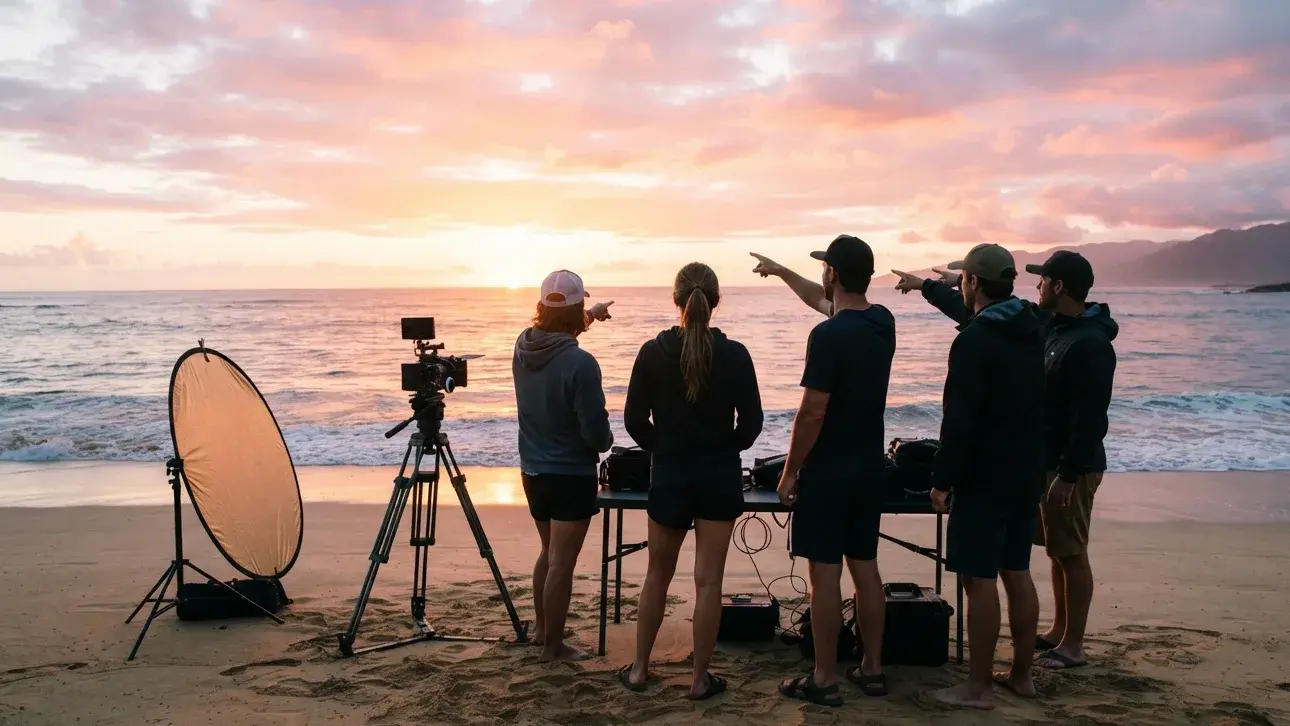
A visa officer cannot read a call sheet, but a good itinerary translates one. Your job here is to turn shooting logic into a plain travel timeline.
Start With the Detailed Shooting Schedule
Everything begins with a detailed shooting schedule. It lists each day, each unit, and each location on Oahu or beyond. Without it, any itinerary is a guess.
Ask the producer for a version that shows prep days, shoot days, and wrap days separately. Officers care about the outer limits, and so do airlines. A schedule that hides prep time will make your arrival date look too early.
Lock the version number. Write "Schedule v4, dated" on your working copy so the team knows which dates the flights follow. That habit prevents the classic problem where the itinerary follows version two and the letter follows version five.
Prep, Shoot, and Wrap Windows for Each Department
Not every department travels on the same days. Directors and producers often arrive first for meetings. Camera and lighting departments arrive close to the first setup. Post-production staff may fly home earlier.
Give each group its own arrival and departure logic:
-
Producers and directors: arrive three to five days before shooting for meetings and scouting
-
Camera, grip, and lighting: arrive one to two days before the first setup
-
Sound and support roles: arrive with the main unit
-
Wrap teams: depart one to two days after the last shot
These gaps are easy to justify in writing. Each one appears in your production letter as a role-based reason.
Do not add spare days you cannot explain. Extra time reads as extra risk. Every gap should have a job attached to it, such as scouting, equipment checks, or a permit meeting.
A Sample Day-by-Day Layout for a Mumbai to Honolulu Crew
A clear day-by-day itinerary format is recommended for clarity. Below is a short example for a fictional documentary crew led by Daniel Brooks. The dates are illustrative.
|
Day |
Activity |
Travel or Stay |
|---|---|---|
|
Day 1 |
Depart Mumbai |
Overnight flight via one connection |
|
Day 2 |
Arrive Honolulu |
Hotel check-in, equipment pickup |
|
Day 3 |
Scouting on Oahu |
Ground transport by production van |
|
Day 4 to 8 |
Main shoot, Oahu |
Same hotel |
|
Day 9 |
Fly to Maui |
Short interisland hop |
|
Day 10 to 12 |
Maui unit |
New hotel |
|
Day 13 |
Return to Honolulu |
Final pickups |
|
Day 14 |
Wrap and depart |
Flight home |
Notice how each row explains itself. An officer can read the table in twenty seconds and understand the whole trip.
Placing Accommodation and Ground Transport Inside the Timeline
Accommodation should be booked early for filming in Hawaii. Hotels fill quickly when several productions or big tourist periods overlap. Reserve rooms as soon as your dates firm up, and choose rates with flexible cancellation.
Your itinerary should show where the crew sleeps each night, at least by city and hotel name. That detail supports the schedule and removes doubts about where you will be.
Ground transportation belongs in the timeline as well. Note van pickups, equipment truck days, and any airport transfers. It is not required on the flight page itself, but it helps your internal coordinator check that nothing collides.
Watch the first and last days closely. Crews often lose a day because the equipment truck cannot load before the hotel checkout. Give those days breathing room.
Time Zones, the Date Line, and the Real Length of Your First Day
Hawaii sits far from most of the world, and the time difference is large. Mumbai is about fifteen and a half hours ahead of Honolulu. That gap changes how arrival dates appear on paper.
Because of the date line, a flight can land on a calendar date that looks earlier than expected. Always write arrival and departure times in local time at each airport. Double-check every date against the airline schedule, because a one-day error can make your file look wrong.
Plan for jet lag as well. A crew that lands in the morning after a long journey will not perform well on a full shoot day. Give at least one rest day before a demanding call, and mention it in your notes as an arrival or preparation day.
Book flights in advance once the visa decision arrives, but keep dates aligned with your prep plan. Early arrival should always serve a purpose, such as equipment testing or a location visit. A clear reason turns an extra day into a professional choice.
Filming Locations and the Logic of Moving Between Them
List filming locations in the order you will visit them. Sequence matters because it explains your interisland flights and hotel changes. If the list jumps from Waikiki to Kauai and back, expect questions.
Group locations by island first, then by area. Every move should serve the shoot, not the tourist map. Officers notice when an itinerary follows scenery instead of a schedule.
Keep equipment in mind. Heavy cases limit which flights work, so check baggage rules before you finalize interisland legs. A camera package that misses its flight throws off the shoot day and the itinerary at once.
If a location may change, keep a backup in your working notes but not in the submitted itinerary. The submitted version should show one confident plan. Alternatives belong in your internal planning file, not in front of the consular officer.
The itinerary is now anchored to real days. Next comes the question of where those days begin, and for most international crews that answer is Oahu.
When Oʻahu Works as a Base for an International Crew
Almost every Hawaii shoot starts by asking one question: which island holds the base? For international crews, the answer usually shapes both the visa story and the flight plan.
Oahu as the Main Production Base
Oʻahu is often a practical base for an international production because Honolulu is a major arrival point and the island has substantial lodging, crew, vendor and production infrastructure. It is not mandatory: the correct base depends on the locations, permits, equipment and local support actually used.
A Honolulu arrival can be easy to explain when the production is based on Oʻahu or connects onward to another island. If the principal work is elsewhere, show the interisland leg, accommodation and ground plan instead of relying on Honolulu alone to explain the assignment.
Oahu is also the strongest hub for local crew and equipment. Grip trucks, lighting packages, camera rentals, and experienced technicians cluster there. You can fly light and rent locally, which simplifies both your flights and your baggage.
Hawaii supports various production types, including documentaries and commercials. A single base on Oahu can serve a wildlife documentary crew, a travel commercial team, and a scripted unit with equal ease. Your itinerary should reflect the type of production you actually run.
Local crew and vendors on Oahu are often the best way to keep a first week efficient. You can rent gear, hire drivers, and staff basic roles without moving anyone from home. That approach shortens the itinerary and reduces the number of visas you need.
It also supports a cleaner story on paper. A crew that lands in Honolulu, works from a single base, and leaves after a defined wrap is easy to understand.
Multi-Island Shoots and the Scheduling They Demand
Multi-island shoots require careful scheduling for transport. Each move between islands takes a full half day once you include packing, airport time, and setup. Do not treat an interisland hop as a quick commute.
Plan these moves on lighter shooting days. Try not to schedule an early call on the morning after an interisland flight. Crew fatigue and equipment delays are common in those windows.
Ask three questions before adding an island to the plan:
-
Does the story truly need this island?
-
Can local crew handle the shoot without moving our full team?
-
Will permits and hotels be ready in time?
If the answer to the first question is no, cut the island. Every extra leg adds cost and adds one more line the officer must understand.
Island Geography and Traffic in Transport Planning
Transport planning must consider island geography and traffic. Honolulu roads back up at predictable hours, and a crew van that leaves late can miss a golden-hour window. Mountain and coastal routes add time that maps rarely show.
Build buffer into every drive. A location that looks twenty minutes away on paper may need an hour at rush time. Test the route at the same hour you plan to travel, if possible.
Your flight arrival time matters here too. A red-eye that lands at dawn gives you a full day but leaves the crew tired. A midday arrival lets you rest, but it costs you a day of prep. Pick the version that fits your schedule and explain it in your notes.
Interisland ground moves also need attention. Rental vehicles, trucks, and vans may have limited availability on the neighboring islands. Reserve them at the same time you reserve rooms.
Peak Tourist Windows Versus Quieter Weeks in Honolulu
Timing affects cost, availability, and crowd levels. Winter and summer holidays bring heavy tourism to Oahu, and hotels, cars, and flights all become harder to secure. Quieter weeks can lower rates and ease location access.
If your story does not depend on a specific date, choose a quieter window. You may find that permits move faster and vendors respond sooner. Crowd control also becomes easier when fewer visitors fill public spaces.
Weather matters as well. Rain patterns differ between the windward and leeward sides of the island, and a location that is dry in one month may be soaked in another. Ask local crew about typical conditions for your chosen dates.
Show your reasoning in your notes. An officer does not need a weather report, but a schedule that clearly avoids peak chaos looks planned. Combine this thinking with your permit timeline, and you will see which weeks make sense.
Finally, check any local events that may close roads or block locations. Parades, races, and festivals can change a plan overnight.
Working Within Local Regulations and Crowd Control on Public Streets
Filming in busy places brings local regulations you must respect. City rules may restrict street closures, equipment placement, and working hours. Some areas require crowd control measures when the public gathers.
Tourism season adds pressure. Popular beaches and city streets fill with visitors, and a small crew can quickly become a big scene. Plan shoot days around traffic and foot flow, and consider early mornings for busy public locations.
Local authorities often want notice before you work in a public area. They can advise on street use, parking, and safety. Build these conversations into your prep window, and note them in the timeline you show your team.
Equipment, Customs, and the Airport Reality of Arriving in Honolulu
Your gear travels with the same itinerary as your people. Customs clearance for cameras, lenses, drones, and lighting kits needs paperwork before you land. Prepare an equipment list with serial numbers and values.
Carry a copy in your bag and share another with the production office. Officers at the airport may ask what the equipment is for and when it leaves. The answer should match your schedule and your visa letter.
If you plan to rent locally, say so in the paperwork. Fewer imported cases means fewer questions. It also means your arrival is smoother, which matters when the crew lands tired.
Oahu gives your itinerary a natural starting point. The next thing that shapes your dates is permission to film, and those approvals move at their own pace.
Hawaii Filming Permits and the Travel Dates They Control
Permits decide when a crew can legally roll a camera, so they also decide when you can sensibly land. Treat permit timing as a fixed point in your itinerary, not a detail you fix later.
What the Hawaii Film Office Handles
The Hawaiʻi Film Office processes permits for specified state-administered locations, while county, federal and private locations follow their own authorities or owner permissions. Identify the jurisdiction for every location before presenting a permit plan as complete.
Start the permit application process as soon as your locations are clear. The office needs to know where you will shoot, when, and with how many people. Vague answers slow everything down.
Filming permits also help your visa story. A permit confirmation or a pending application shows that the shoot is real, organized, and legal. Attach that page to your supporting documents when it exists.
Keep the names consistent. The production company on your permit should match the company on your production letter and your invitation. A mismatch invites questions from both the permit office and the consulate.
Permit Timelines and Fees You Can Plan Around
The Hawaiʻi Film Office states that a complete standard permit application should generally be submitted at least seven business days before the first prep or shoot date; drone activity can require a longer lead. Incomplete or sensitive applications can take longer, so the itinerary should not begin on an unconfirmed minimum date.
Permit, monitoring and location fees depend on the administering agency and site. Some state locations have published daily charges, while other jurisdictions or private owners set different terms. Obtain the current fee for each location instead of using one statewide range.
Build a simple timeline:
-
Submit the online application as soon as locations are confirmed
-
Use the current published minimum lead time and add contingency for the location and activity
-
Add a few days for corrections or follow-up questions
-
Book flights only after the permit window is clear
Location fees may apply on top of permit costs, especially at privately managed sites. Ask each site owner about their rates before you finalize the budget. Surprises here can affect your production costs, and they may shift your dates.
Insurance, Shooting Schedules, and the Documents Permit Offices Ask For
Applications require proof of liability insurance and a shooting schedule. Both must be ready before you submit. Ask your insurer for a certificate that names the right entities and covers the right dates.
Production insurance is not just a permit requirement. It also protects your crew when equipment fails, weather turns, or a location owner files a claim. Shop for a policy early, because coverage dates should match your shoot exactly.
Your detailed shooting schedule feeds directly into your flight plan. The same document serves the permit office, the consulate, and your travel coordinator. Keep every copy identical, and update all of them when a date changes.
If you use a drone, ask about drone permissions at the same time. Drones face extra rules near airports, beaches, and crowds. A missing approval can stop a shot on the day, so treat it as a permit item, not an afterthought.
Keeping a Permit Tracker Beside Your Flight Plan
A permit tracker is a one-page table that saves hours. List each location, the approving body, the submission date, the expected response date, and the final status. Keep it next to your flight plan.
When a permit slips, the tracker shows exactly which shoot day and which flights are affected. You can then decide whether to move the shoot or find a new location. Do this before you spend any money on tickets.
Approvals Beyond the State Permit
Additional approvals may be needed from local authorities or private owners. A state permit does not open every door. County offices, harbor managers, and private landowners often hold their own rules.
Make a list of necessary permits for each location. Work through it one site at a time and note who granted each approval. Additional permits can take longer than the main one, so start them early.
Public locations sometimes need a separate notice or a police presence. Busy streets and popular attractions may call for crowd control and traffic management. Ask early, and build those days around what the authorities agree to.
Keep every approval in a single folder. When your permit contact asks for confirmation, you should find it in seconds. That habit also helps at the visa interview if an officer asks how far along your permitting is.
National Parks, Restricted Areas, and Wildlife Areas
Some of Hawaii's most photogenic places carry the strictest rules. National parks require their own permission, and staff may limit crew size, equipment, and filming hours. Do not plan a major shot in a park without written approval.
Restricted areas add another layer. Military land, protected coastlines, and certain cultural sites may be closed to commercial filming. If a location is essential, ask early and prepare an alternative.
Wildlife areas need special care. Nesting birds, monk seals, and coral reefs are protected, and distance rules apply. Officers rarely ask about these details, but your permit office will.
Sensitive areas, including sacred cultural sites, call for respect and local guidance. Ask community contacts before you request permission. A film that treats these places carefully earns goodwill and avoids delays.
Environmental Considerations and Compliance That Affect Your Dates
Environmental considerations can move your schedule more than any office. Seasonal closures, nesting periods, and weather restrictions may block access for weeks. Check them before you fix your arrival.
Ask each land manager for a list of seasonal limits. Then compare it with your shooting days. If a conflict appears, adjust the shoot or the location, not the permit.
To ensure compliance, assign one person on the crew to track rules. That person reads each permit, notes conditions, and briefs the team each morning. It is a small job with a large payoff.
Necessary clearances differ by site, and some take longer than others. You may need to obtain several before the first shooting day. Keep a checklist that shows who approved what and when.
Finally, remember that permits only matter if the crew can enter the country. Once the approvals are moving, the next task is making sure every person on the crew list is documented correctly.
Crew Rosters and Names That Match Every Passport
A crew is only as ready as its weakest file. This discussion turns a loose group of names into a clean, verifiable list that works for the permit office and the consulate.
How to Maintain One Authoritative Crew Roster
Do not assume that the Hawaiʻi Film Office operates a universal crew-accreditation process with one standard turnaround. Permit, location, employer, union, immigration and equipment requirements can each need different personnel information.
Maintain one production-controlled roster showing each traveler’s legal name, role, employer, immigration workstream, arrival window and departure window. Share only the fields requested by the relevant authority, and protect passport data rather than circulating it in general crew documents.
Ask each permit or location authority what personnel details it needs. Keep a version log so a replacement or late addition is corrected across the petition or visa file, permit application, production letter, hotel plan and itinerary.
Building a Crew List the Consulate Can Trust
A crew list is a simple table, but it must be exact. Include full legal names, roles, passport numbers, nationalities, and travel dates. Keep the format the same across every document.
Here is a layout that works well:
|
Name |
Role |
Passport No. |
Arrival |
Departure |
|---|---|---|---|---|
|
Daniel Brooks |
Director |
On file |
Day 2 |
Day 14 |
|
Emily Carter |
Producer |
On file |
Day 1 |
Day 14 |
|
Michael Reeves |
Camera Operator |
On file |
Day 3 |
Day 13 |
Keep the crew list short and clear. A long list with unclear roles raises doubts. Every person should have a defined function that you can explain in one sentence.
The list also acts as a control document for your team. If a name changes, the flights change too. Update the list first, then the itinerary, then the letter.
Handling Late Additions and Replacements
Crews change. A camera assistant gets sick, an actor drops out, or a producer adds a second unit. Each change affects your paperwork, so build a process before it happens.
When a new person joins, collect the same set of documents you gathered for everyone else. That means a passport copy, a role description, and a signed letter. Check whether accreditation must be updated and whether the visa category still fits the role.
Never add a name to an itinerary without updating the crew list and the production letter. Separate documents that disagree create doubt. Assign one person to own the master list and route every change through them.
Late replacements also face time limits. Visa processing may take weeks, so a replacement may not arrive before the first shooting day. Consider hiring a local crew member for critical roles, and keep a shortlist of local professionals ready.
Give every change a date and a reason in your records. If an officer or permit office asks why a name differs from an earlier version, you can answer in one sentence.
Crew Size and What It Signals
Crew size tells the officer something about the scale of your project. A five-person documentary team looks different from a forty-person commercial unit. Both are fine, but each needs a matching budget and schedule.
Make sure your numbers agree everywhere. If the permit says twelve people and the crew list says sixteen, someone will ask why. Fix the count before you submit anything.
Larger crews also need more hotel rooms, vehicles, and equipment. Those needs feed into the timeline you built earlier. A big crew arriving on one flight may raise questions about baggage and transfers, so consider staggering arrivals.
Valid Passports and Name Consistency Across Every Document
A valid passport is the foundation of every travel document. Check the expiry date for each crew member before planning. U.S. passport-validity treatment can depend on nationality and applicable agreements, while airline checks may add operational scrutiny. Use the official rule for the traveler’s passport rather than one generic number.
Check whether the visa post requires blank passport pages and whether renewal is needed before the filing. Add any renewal time to the production plan instead of assuming the same page rule applies to every passport.
Names must match across the passport, the itinerary, the crew list, and the accreditation form. A nickname, a missing middle name, or a swapped surname order can cause trouble. Copy the name exactly as printed on the passport data page.
If a crew member holds two passports, choose one and use it everywhere. Mixing them creates confusion at every step. Tell the production office which passport each person will carry.
Equipment Carnets, Customs Papers, and the Crew Who Carry Them
Some crew members carry gear as well as personal bags. Their itineraries should mention checked equipment, so airline staff and customs officers can see the full picture. A short note is enough.
Customs paperwork should list each item, its value, and its serial number. Keep the list in a folder that travels with the person who carries the equipment. Copies should sit with the production office and the crew list holder.
Ask customs authorities how they want to see temporary imports handled. Some crews use a carnet, while others use simple declarations. Confirm the rule for your route before you fly.
Returning home is part of the plan. Equipment that entered the country must leave with the crew unless it was rented locally. Your exit paperwork should mirror your entry paperwork.
Once the crew is documented, the question turns to cost. Flights, hotels, and permits all carry money, and the timing of each payment matters for the visa.
Using a Reserved Itinerary While Production Costs Stay Protected
Visa timing and ticket timing rarely line up. This section explains how to document a proposed route without confusing a reservation with work authorization or an issued ticket.
If your team uses “dummy ticket” as a loose label, review what a dummy ticket means before describing the document. This article remains focused on BookForVisa’s flight-itinerary-for-visa workflow.
Why Final Ticket Purchase Can Wait
Do not assume every U.S. visa category or consular post requests the same flight evidence. The Department of State’s foreign-media guidance specifically warns applicants not to make final travel plans or buy tickets until a visa is issued. When an itinerary is useful or requested, present it as proposed travel rather than proof of payment or permission to work.
Why does this matter for a film crew? Because shooting dates can shift. A permit may slip, a location may change, or a visa may take longer than planned. A paid ticket in that situation can turn into a costly problem.
A reservation can show the proposed passenger, route and dates while the visa decision is pending. Its display and status depend on the issuing system, and no booking reference guarantees universal public verification, visa issuance or admission.
Always check the consulate's current guidance. Some offices state preferences on their websites, and those preferences may vary by visa category. Follow what the official page says for your appointment.
Protecting Production Costs Before the Visa Decision
Production costs pile up quickly. Flights for a full crew can cost tens of thousands of dollars, and hotel deposits add to the total. Spending that money before approval is a risk many producers avoid.
Consider the sequence of payments:
-
Before the visa decision: reserved itineraries, refundable hotel holds, permit applications
-
After the visa decision: ticket purchases, final hotel payments, equipment shipping
-
After arrival: local vendor payments and crew per diems
This order protects cash and keeps options open. If a visa is delayed for one crew member, you can move only that person's dates instead of rebooking everyone.
Keep your finance team informed. They need to know which items are firm and which are placeholders. A simple spreadsheet with status labels does the job.
How a Reserved Flight Supports the Visa Story
An issuer-generated reservation should clearly show the passenger, route, dates and reference or status supplied by the system. Do not edit an airline document, invent a booking code or promise that every consular post can retrieve an agency record through the same public channel.
When the visa category and assignment dates are stable, use the flight reservation for visa guide to prepare the proposed route. Confirm the provider’s current document, status, update and pricing terms at checkout instead of relying on a fixed promise embedded in an article.
Date changes matter for crews. When the production schedule moves, the itinerary must move too. A reservation that allows changes saves you from rebuilding the file each time.
Match the reservation to the rest of your paperwork. The route should follow your day-by-day plan, and the exit date should follow your wrap day. Keep the passenger names identical to the passports.
Timing a Reservation Against the Appointment Date
Prepare the submission itinerary after the category, petition or assignment window and appointment are sufficiently stable. There is no universal rule that it must be created a set number of days before the interview. Ask how the issuer handles status changes and updates, and follow any evidence instructions from the responsible post.
Match the reservation dates to the earliest realistic shoot start. Add a small buffer on each end, but do not stretch the trip beyond what your letter states. The itinerary should look like the schedule in plain travel form.
If your appointment moves, update the reservation right away. Changing a reservation is far simpler than explaining a mismatch at the counter. Note the change in your records, and keep the earlier version for reference.
For crews with several appointments on different days, create a separate itinerary for each traveler. Keep the route logic consistent, and give each person a printed copy on the day. Small habits like these keep large crews organized and calm.
Proof of Funds and Financial Records for Crew Applicants
Financial or sponsorship evidence depends on the visa classification and post instructions. When requested, use the exact period and document type specified by the responsible post. A production sponsor letter should identify what the company covers without claiming that funds alone prove future departure.
Employed crew members can add an employment letter and pay slips. Freelancers can add contracts, invoices, or tax records. The goal is a simple, honest picture of your finances.
If the production company pays for the trip, a sponsor letter helps. It should state what the company covers, such as flights, hotels, and daily expenses. Keep the wording consistent with your production letter.
Do not submit statements that show unexplained deposits. If a large payment appears, add a short note. Officers value clarity more than perfection.
When a Travel Agency Books After Approval
Many productions use a travel agency to issue tickets once visas arrive. That is a sensible plan. The agency can build group fares, coordinate seating, and handle baggage for equipment.
Give the agency your final itinerary as soon as the visa decision arrives. Compare it against the reserved version and confirm that dates, names, and routes still match. Any change should be intentional and documented.
Ask about change rules. Group tickets often carry stricter conditions than individual fares. Know what happens if one crew member needs a new date.
Keep the submitted itinerary in the production record after tickets are issued. If a later request asks what was originally submitted, the team can explain any documented change without pretending the final booking was always the same.
Money and paperwork are now in order. The next layer is people on the ground, who can make the plan run smoothly once you land.
Local Fixers, Local Crew, and the Tax Credit Behind Your Itinerary
Some of the strongest support for your itinerary sits in Hawaii itself. Local partners can catch problems before they reach the consulate, and local spending can change the budget.
What Hawaii-Based Fixers Actually Do
Hawaii has experienced local crew and fixers available. They know the islands, the offices, and the unwritten rules. For an international team, that knowledge saves days.
Local fixers commonly coordinate permits, locations, transport, vendors and daily logistics. They may help identify the correct public office, but immigration category advice should come from official sources or qualified U.S. immigration counsel rather than a logistics provider.
Ask a fixer to review your itinerary. They may spot a permit gap, a hotel shortage, or a route that ignores traffic. Small corrections at this stage cost nothing.
Choose a fixer with references from similar shoots. A documentary crew and a commercial unit have different needs, and the right partner understands both.
Companies That Coordinate Transport and Accommodation
Production-service companies can coordinate vehicles, drivers, rooms and airport pickups. Compare providers using written scope, references, insurance, cancellation terms and the jurisdictions in which they actually operate; this article does not endorse a specific vendor.
That kind of production support removes a large workload from your team. Instead of calling ten hotels, you send a schedule and a headcount. The partner returns a plan with confirmed rooms and vehicles.
Some productions ask for full production support, which covers everything from permits to catering. It costs more, but it may fit a small international crew with no local staff. Compare the scope carefully and ask for a written proposal.
Whatever you choose, keep the itinerary as the master document. Partners should follow it, not rewrite it. If a partner changes a date, update every other document at once.
Ask the fixer or coordinator to confirm each booking in writing, with dates, room counts, and cancellation terms. A shared spreadsheet keeps everyone aligned and prevents double bookings.
Check the details of every reservation against the crew list. A missing room for a late arrival can cost an evening of scrambling. It is far easier to solve on paper than at a hotel front desk at midnight.
Booking Hotels Early Without Locking Yourself In
Accommodation should be booked early for filming in Hawaii. Hotels near shooting areas fill fast, and prices rise in peak periods. Start with a hold as soon as the dates firm up.
Look for flexible policies. Free cancellation until a set date keeps your options open while the visa is pending. Read the rules carefully, because some offers lock in after a short window.
Group rates can help. Ask each hotel about a block for your crew, and confirm what happens if the crew size changes. A written agreement avoids confusion later.
Add hotel confirmations to your supporting pack when they exist. They show where each person stays and for how long. Keep the dates in line with your flights.
Briefing Your Local Partner With the Right Information
A local partner can only help if they understand your plan. Send a short brief that covers the project type, crew size, dates, locations, and equipment. Add your visa status and any known constraints.
Include your itinerary and permit tracker in the same package. That way, the partner can see the whole picture and flag conflicts. Ask for written feedback so you have a record.
Schedule a call before you travel. Discuss the first three days in detail, because early problems cost the most. Ask about hotel readiness, vehicle pickups, and the order of permit visits.
Agree on communication rules. Who answers questions during shoot days? Who approves changes? A simple chain of command prevents confusion when the pressure rises.
Keep the relationship professional and clear. Payment terms, responsibilities, and deliverables should all appear in a short written agreement. Good partners appreciate clarity, and it protects both sides if plans shift.
Local Crew and Cultural Awareness in Permitting
Local crew can enhance cultural awareness and efficient permitting. People who live and work in Hawaii understand which places call for extra care and which offices respond quickly. That helps you avoid missteps.
They also know the local regulations that outsiders miss. A short conversation can save a location or prevent an awkward mistake on a sensitive site. Their advice often costs less than the delay it prevents.
Hiring locally can also reduce the size of your traveling team. Fewer visas means less paperwork and lower risk. Your itinerary gets shorter and simpler.
Introduce local crew in your production letter when relevant. It shows the officer that your project has a real base in Hawaii.
The Refundable Tax Credit and How It Affects Planning
Hawaii offers a refundable tax credit for qualifying productions. The credit helps offset production costs in Hawaii, so it can shift how you plan your budget. Many producers factor it in from the start.
Productions must confirm eligibility and spend requirements for the rebate. Rules can change, so read the current guidelines and confirm details with the responsible office. Do not assume your project qualifies.
Some Hawaiʻi production expenditures may qualify under the current tax-credit rules, but eligibility depends on the production, registration, minimum spend, filing and documentation requirements. Track costs from the beginning and have the production’s tax adviser confirm treatment rather than assuming every local payment qualifies.
Incentive planning should begin before filming to track eligible spend. Set up a system on day one, with a simple ledger or a shared sheet. Waiting until wrap makes the numbers harder to prove.
Consider how the credit influences your crew mix. If local hires count, using them can reduce costs and reduce visa needs. Your itinerary then reflects a smaller traveling team, which is easier to document.
With partners, budget, and incentives clear, only one job remains. Every piece of paper must come together in a packet that works on appointment day.
Assembling the Final Visa Packet and Catching Errors Before Your Appointment
The last stage is quality control. Your file should read like a single story from cover page to itinerary, and every person should be able to explain it in plain words.
Build the Packet Around the Post’s Checklist
Document order should follow the embassy or consulate’s current instructions. If no fixed order is published, use a short index and group the application, category evidence, production assignment, itinerary, permissions, accommodation and funding documents so each fact can be located quickly.
A practical working order, subject to the post’s checklist, is:
-
Appointment confirmation and application confirmation page
-
Valid passport and any previous visas
-
Production letter on company letterhead
-
Flight itinerary with the booking reference
-
Crew list and permit confirmations
-
Project synopsis and shooting schedule
-
Hotel confirmation or accommodation plan
-
Financial proof such as a recent bank statement
Use paper clips instead of staples so the officer can separate pages. Add plain tabs if the pack is thick. Keep a digital copy in the same order.
Check that each document has a date, a name, and a contact. Loose pages without context can confuse a busy officer.
Give yourself a deadline for the review, at least one week before the appointment. That buffer allows time to reprint pages, request a corrected letter, or adjust a reservation. Rushed fixes create new errors.
Keep a checklist with initials and dates next to each item. When two people sign off, the chance of an unnoticed mistake drops sharply.
A Final Cross-Check for Names, Dates, and Places
Before the appointment, run one last comparison. Lay out the application, the itinerary, the letter, and the schedule side by side. Check every name, date, and place.
Look for these common mismatches:
-
A shoot end date that differs from the return flight
-
A hotel booking that ends before the crew departs
-
A crew count that changes between documents
-
A role title that differs between the letter and the crew list
Read the documents aloud if you can. Odd wording and inconsistent details jump out when you hear them. Fix each issue at the source, then reprint.
Ask a colleague who did not build the file to review it. Fresh eyes catch what tired ones miss. A ten-minute review can save weeks.
Questions Officers Commonly Ask Film Crew Applicants
Prepare short, direct answers. You do not need a speech. You need the facts, in the same words you used on paper.
Expect questions such as:
-
What is the film about, and who is producing it?
-
How long will you stay, and where will you sleep?
-
What is your role on set?
-
Who pays for your travel?
-
When do you plan to return home?
Answer honestly and briefly. If you do not know something, say so, and offer to provide the document. Guessing creates inconsistencies.
Bring documents that support each answer. A sponsor letter answers the payment question. The itinerary answers the return question. The crew list answers the role question.
What to Do If Shoot Dates Change After the Interview
Shoot dates can change after approval. Weather, permits, and talent schedules all move. Handle these shifts calmly and in writing.
First, check whether the change falls within the validity of your visa and any petition. Some approvals are tied to specific dates. If the new dates fall outside them, ask the responsible party for guidance before you travel.
Second, update every document. The itinerary, crew list, letter, and hotel bookings should all show the new plan. Keep the earlier versions in your archive, labeled by date.
Third, notify the people who need to know. That includes your permit office, your fixer, and your travel agency. Delays cause the most damage when nobody hears about them.
Do not assume that a date extension, new production activity or different employer is covered by the existing visa, petition or admission. Ask the petitioner, qualified counsel and relevant authority before traveling or changing the authorized work.
Digital Backups and Communication Plans for the Whole Team
Paper can be lost, and phones can die. Build a simple backup system before departure. Store scanned copies of every document in a shared folder that the production office can access.
Give each crew member a one-page card with key contacts: the production office, the fixer, the hotel, and the coordinator who handles emergencies. Save the same details on their phones. If a delay hits, they will know whom to call.
Agree on a check-in routine. Each person messages the group when they land and clear entry. That habit lets the coordinator spot problems quickly and reroute transport if someone is held up.
Keep a printed copy of the entire visa packet in your carry-on. Checked bags can go missing, and you may need those pages within minutes of landing. A small folder can prevent a very large headache.
Finally, share the packet with a trusted person at home. If something goes wrong overseas, they can send a fresh copy at once.
Entry Day Preparation at the Airport
Approval does not end the process. Officers at the port of entry make their own decision. Carry your visa, passport, letter, itinerary, and crew list in one folder.
Be ready to explain the purpose of your trip in one or two sentences. Keep your answers consistent with the file. Officers may also ask about equipment, so keep your customs list handy.
Arrive rested if you can. A tired crew that stumbles over simple questions creates doubt. Share a short briefing on the flight so everyone gives the same clear answers.
Plan a buffer on arrival day. Airport lines, customs checks, and equipment pickups can take hours. A relaxed first day sets the tone for the whole shoot.
Your Hawaii Film Crew Itinerary Is Ready for the Consulate Window
A strong itinerary for a Hawaiʻi film assignment supports one clear, truthful plan. It follows the authorized assignment and shooting schedule, shows every necessary island leg and leaves after the traveler’s final duty. Dates should align with the petition or visa evidence, permits, crew roster, accommodation and production letter.
Confirm categories role by role, lock the documented schedule and build flights that follow it. Keep major travel costs flexible until the visa is issued, and use local production partners to check permit and logistics details. The result should be an accurate working plan, not a promise of approval.
Ready to turn the approved production window into a clear travel itinerary? Check each traveler’s category, passport name, assignment dates, route, accommodation and final duty, then review the finished document against the controlled crew roster.
Create your film-assignment itineraryFrequently Asked Questions
Which U.S. visa does a foreign film crew need?
There is no single film-crew visa for every assignment. The category depends on each traveler’s actual activity, employer, production type and qualifications. Qualifying foreign news or documentary work may use the media category, while entertainment or other production labor may require a petition-based temporary-worker category. Confirm each role before building flights.
Can a film crew use a B-1 visa or ESTA for filming?
Do not assume so. B-1 and Visa Waiver Program travel cover limited permitted activities, not general U.S. employment. The Department of State states that working foreign-media representatives cannot use visitor visas or the Visa Waiver Program for that media activity. Other production work may require a petition-based category.
What dates should a film-production flight itinerary show?
Use the authorized assignment or petition window and the traveler’s real duties. Arrival may include documented prep, scouting or equipment handover, while departure should follow that person’s final shoot, wrap or approved meeting. Match the dates to the production letter, schedule, hotel and permits.
Does a film permit replace the correct visa or work authorization?
No. A location permit authorizes specified activity at specified places and times under the issuing authority’s conditions. It does not grant immigration status, employment authorization, equipment clearance, airline acceptance or admission to the United States.
Should film crews buy tickets before the visa is issued?
The Department of State’s foreign-media guidance advises applicants not to make final travel plans or buy tickets until a visa is issued. When a proposed itinerary is useful or requested, keep its status accurate and avoid a non-refundable purchase solely to strengthen the file.
What should happen if production dates change after submission?
Use the embassy, consulate, petitioner or counsel’s appropriate update process. Revise the itinerary, assignment letter, crew roster, accommodation and affected permits together. Do not edit an airline PDF, quietly swap documents or assume that new dates remain inside the existing authorization.
Friendly reminder: BookForVisa provides travel-proof documents for planning and visa-application support. Requirements vary by destination, consulate, visa category and applicant situation. A flight reservation can support a file, but it does not guarantee approval, boarding or entry.