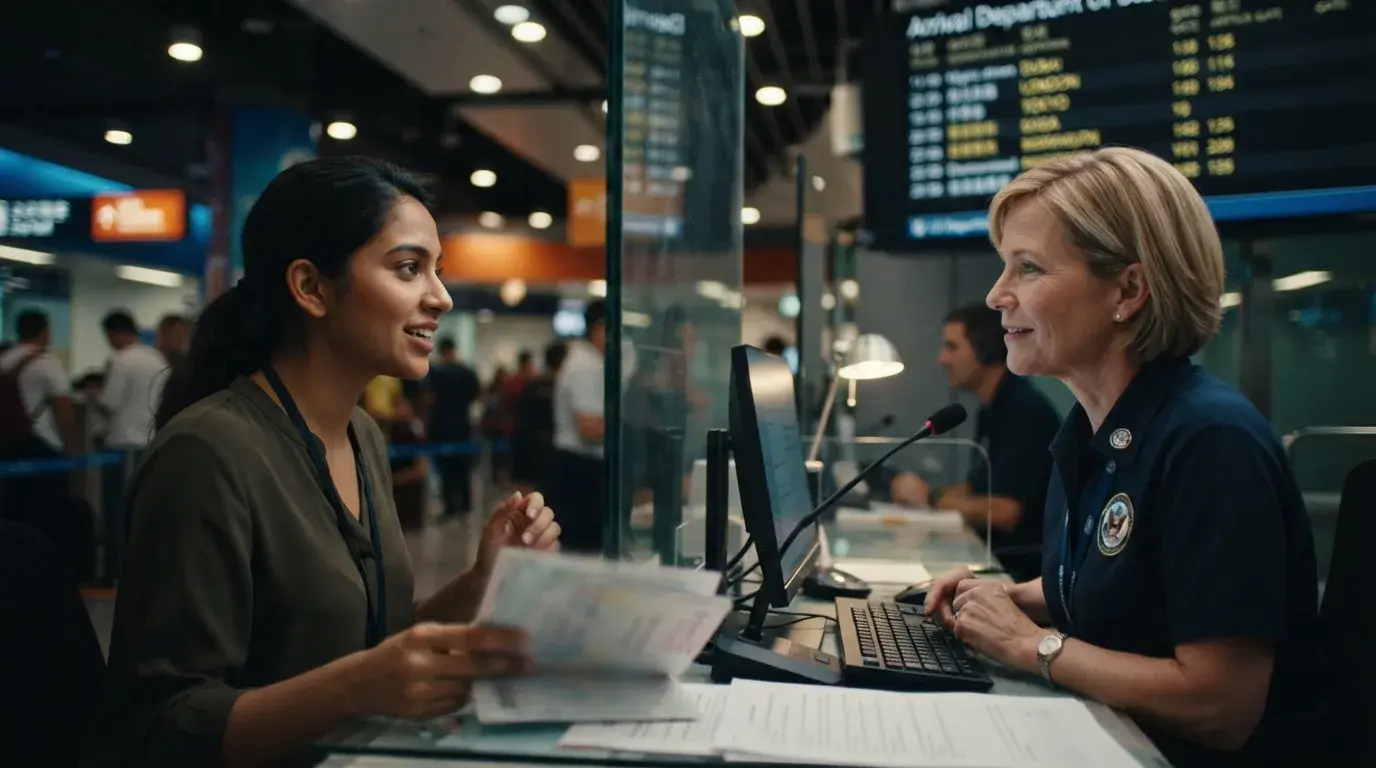
Your flight plan may look reasonable when you submit your visa application, but a delayed appointment, changed travel date or revised route can make the original itinerary outdated. In 2026, many applicants are being asked more direct follow-up questions about what changed, whether the current plan still fits the purpose of travel and whether the new itinerary still makes sense beside the supporting documents.
You need to prepare for the full chain of questions, not just one new departure date. A strong answer shows the original plan, the reason for the revision, the practical effect and the current route. Review your latest reservation carefully before the interview and make sure every meaningful change has a clear, truthful explanation.
Key facts before your embassy interview:
- A changed flight date is not automatically a problem, but an unclear explanation can become one.
- Officers may compare the application form, reservation, cover letter, accommodation proof, insurance dates and spoken answer.
- Small airline or flight-number changes usually need less explanation than date, return, airport or duration changes.
- A current PNR or reservation should support the latest plan, not contradict the story submitted in the visa file.
- Do not buy final airfare just to look confident if official guidance warns against locking in travel too early.
Need updated travel proof before your interview? Prepare a clean flight reservation for visa with BookForVisa when your appointment moves, your dates change or your route needs to match the latest plan.
Create Your Flight ReservationIn This Guide
Official-source check: Travel.State.Gov says visitor applicants may be asked for evidence of trip purpose, intent to depart and ability to pay, and also warns not to buy tickets until a visa is issued. GOV.UK asks visitors to show they are genuine visitors with enough funds and intent to leave. The EU Visa Code framework also supports checking route, stay purpose and supporting documentation. Sources: Travel.State.Gov Visitor Visa, GOV.UK Standard Visitor visa and EU Visa Code summary.
Reviewed for: embassy-interview wording, post-application flight-change logic, PNR terminology, route-date consistency, official-source alignment and BookForVisa reservation intent.
From “What Is Your Flight Date?” to “Why Did Your Flight Plan Change?”
A changed flight date can now open a wider line of questioning than the date itself. Officers may compare your current route with the application, supporting documents and the explanation you give during a short interview. The latest reservation may show where you plan to go now, but it does not automatically explain how the plan changed.
That matters when your application lists one departure date and your latest confirmation shows another. You may be asked why the date moved, whether the return date changed and whether the revised timing still fits the travel purpose. The same applies to airport and route changes. A different arrival city can prompt questions about whether your main destination remains the same.
Since 2026, inconsistencies between flight details and application information can attract closer scrutiny. A changed itinerary may prompt questions about whether your actual intent still matches what you originally presented. The change itself is not automatically the problem. An unclear explanation can be.
The latest reservation may no longer tell the whole travel story
A current reservation confirms your latest proposed route. It does not explain why the original plan became impractical. If the application says you intended to travel on June 8 but the current confirmation says June 15, the officer may want to understand the gap between those two dates.
The explanation should be practical. Maybe the appointment became available later than expected. Maybe an event date moved. Maybe the airline changed the schedule. Maybe the applicant had to adjust leave approval. The strongest answer connects the reason to the new plan without adding unnecessary drama.
For U.S. applicants, interviews can be especially direct about return intent and home-country ties. Employment, family responsibilities, property, school obligations or a concrete job commitment can support the stated plan to return more effectively than vague emotional reasons. These details should only be introduced when they are true and relevant to the question asked.
Why the sequence of changes can matter more than the number of changes
Do not prepare only the latest itinerary. Reconstruct the sequence:
- Original plan: What dates, airports and route did you first submit?
- Reason for revision: What specifically caused the change?
- Current plan: What do you now genuinely intend to follow?
Suppose you planned to fly from Delhi to New York on August 10, but your visa appointment was later than expected and you moved the departure to August 18. If the return date stayed the same, your trip became shorter. That is the full change you should understand, not just the new departure date.
The sequence matters more when several details move together. A later departure may affect trip duration. A different arrival airport may affect your first destination. A changed return date may raise questions about work, study, finances or commitments back home.
For many student and long-term applicants, the timeline may also interact with program start dates, reporting windows, employer letters or sponsor support. The point is not to over-explain every detail. The point is to know the chain well enough that your answer remains stable if the officer asks the same issue from another angle.
Follow-up questions matter as much as the first question
The first question may be simple: “Why did your flight change?” The next question tests whether the rest of your story still fits.
You may hear:
- Did your return date change too?
- Are you still attending the same event?
- Has your approved leave changed?
- Why are you arriving in a different city?
- When are you expected back at work or university?
Visa interviews can be very short, sometimes only a few minutes, so you may have little time to repair a confusing answer. Prepare the likely follow-up chain before you attend. If your departure changed because of appointment timing, know how that affected the rest of the trip. If the trip became longer, explain the extra days and ensure your financial documents still support the revised plan.
Interview answers may also influence future immigration applications, especially if a later application describes the same travel history differently. This is why the safest preparation is consistency rather than performance.
The real preparation upgrade is better consistency, not better scripting
A memorized speech will not help if the officer changes the wording of the question. What helps is a stable factual account. Your application, latest flight confirmation and spoken explanation should point to the same travel plan.
If something changed, acknowledge it. Explain the reason plainly. Then state what you now intend to do. Keep your latest confirmation updated so it reflects material itinerary changes. Know which parts of the application remain unchanged, especially travel purpose, trip length, return plans and home-country commitments.
For applicants who need a broader planning baseline, the visa flight itinerary requirements guide is useful because it explains how route, dates, stay purpose and supporting evidence should fit together before submission.

Not Every Flight Change Carries the Same Interview Risk
A new flight detail does not always change how an officer sees your trip. The real question is whether the revision affects the dates, destination, duration, finances or return plan that support your visa application.
Start with the change-severity ladder
The first step is to classify the change correctly. Preparing a long explanation for a minor routing adjustment can create unnecessary confusion, while treating a major change casually can leave you unprepared for obvious follow-up questions.
Minor or operational changes usually leave the structure of the trip intact. These may include:
- A different flight number.
- A different connection.
- A small departure-time adjustment.
- A different airline with substantially the same route and dates.
You should still know your current itinerary, but these changes often require little explanation unless the officer asks.
Material itinerary changes affect a visible part of the trip. Examples include:
- Moving the departure by several days.
- Changing the return date.
- Arriving through another city.
- Shortening or extending the stay.
- Replacing the original route with a substantially different one.
These changes deserve more preparation because they can affect information elsewhere in your application.
Trip-defining changes go further. A new itinerary may suggest a different principal destination, a much longer stay or a return plan that no longer matches the original purpose of travel. At that point, the likely questions are no longer limited to the flight itself. The officer may want to understand whether the nature of the trip has changed.
Date changes become more important when they alter the visit logic
A departure-date change and a return-date change can create different concerns. Suppose you planned to leave Delhi on September 10 for a conference beginning September 13, but your new flight departs on September 6. The officer may reasonably ask what you plan to do during the extra days.
Now reverse the situation. If you move the departure to September 12 but keep the same return date, your trip becomes shorter. You should know whether the revised schedule still allows you to complete the activity described in your application.
A changed return date can attract even closer attention because it affects the total length of stay. If a ten-day trip becomes a three-week trip, you may need to explain:
- Why you need the additional time.
- Whether your leave from work or studies still covers the trip.
- Whether your finances support the longer stay.
- Whether your return commitments remain unchanged.
Financial documents should remain consistent and verifiable. A longer itinerary should not create an obvious gap between the duration you now propose and the funds you presented for the trip.
The important distinction is simple. A changed date with the same travel purpose may be easy to explain. A changed date that alters the structure of the visit requires a broader answer.
Airport and route changes can trigger destination logic questions
A route can change without changing your purpose, but the geography still needs to make sense. If your application says you are visiting Rome but your updated itinerary lands in Milan, you should know how Milan fits into the trip. Perhaps you plan to continue by train. Perhaps the order of your cities changed. Either way, the route should connect logically to the journey you described.
The same applies when your departure airport changes. Leaving from another city may affect the sequence of the trip or the number of days spent in each location.
Multi-city travel deserves extra attention. A revised route can accidentally make another destination appear more important than the country or city presented as the main purpose of travel. You do not need to defend every connection or airline change. You do need to understand why the updated route still supports the trip you say you intend to take.
Use the change-impact map to find hidden questions
A material flight change can affect more than the reservation. Check every item linked to the altered date, city or trip length.
Review whether the change affects:
- Accommodation dates.
- Event or conference attendance.
- Approved leave.
- University schedules.
- Host availability.
- Internal travel plans.
- Insurance dates.
- Total trip duration.
- Your expected return to work or study.
Mark each item as unchanged, updated or needs explanation. This is especially important when a longer stay affects your financial position or when a changed return date affects your stated reason for going home.
For some U.S. interviews, officers may also ask broader questions about return intent or possible fear of returning home. A flight change that significantly delays your return can therefore attract wider questions about intentions, particularly if your answers suggest concerns about going back. Answer truthfully and avoid inventing reassuring statements. The purpose of the review is to understand how a changed itinerary affects the rest of your case before you are asked to explain it.
dummy ticket for visa explains temporary flight evidence and its limits. If travel dates changed before an interview, provide accurate current information and any update the authority requests.
How to Explain a Changed Flight Without Making It Bigger
When an officer asks why your flight changed, the strongest answer is usually a simple, truthful one. Explain the change, show what it affected and make clear what you now plan to do.
Use the reason → consequence → current plan model
A useful answer has three parts: the specific reason, the practical consequence and the current itinerary.
Example answer: “My visa appointment took place later than expected, so I moved my departure from June 8 to June 15. My return date remains June 28, and my stated purpose of attending the same conference has not changed.”
That structure gives consular officers the needed facts without turning one question into a long speech. It also reduces vague answers during a short consular interview.
For an F-1 student interview, a changed flight may lead to questions about the program start date, admission timing or arrival window. For a visitor file, the same change may lead to questions about leave approval, return obligations or trip affordability. The answer should match the visa category and the practical effect of the change.
If the officer asks about finances, your financial documentation should support the revised trip. A longer stay can affect living expenses, sponsor support or the amount shown in your records. Bank statements, tax returns and other documentary proof should remain consistent, especially when recent large deposits require explanation.
Prepare different answer types for different flight changes
A departure-date change needs a timing answer. Say what made the original date impractical and whether the return date stayed the same.
A return-date change needs a duration answer. If you extended the trip, explain why the extra days are relevant and whether the new costs are covered.
An airport change needs a route answer. If you now land in Paris instead of Lyon, explain how Paris fits the itinerary and how you will continue to the destination in your application.
A routing change usually needs less detail. A new connection through another country does not automatically change your destination, but you should know the route well enough to answer accurately.
Multiple flight changes are easier to explain in order. Start with the original plan, identify what caused each revision and finish with the itinerary you will actually follow. A UK visitor whose return moves by two weeks may face different questions from a U.S. student arriving close to a course start date. Match the answer to the visa category and route.
Avoid the three answering mistakes
First, do not deny an obvious change. If your application shows one date and the new reservation shows another, saying “nothing changed” can invite increased scrutiny.
Second, do not give a reason that fails to explain the full revision. Saying “the flight was more convenient” does not explain why a ten-day trip became a month-long stay.
Third, do not defend the reservation instead of answering the question. The officer may be testing return intent, the stability of your travel plan or whether the revised itinerary still matches your purpose.
Do not force unrelated evidence into a simple flight answer. A family business, job offer, career plans, undergraduate work, property or other strong ties may become relevant later, but mentioning them without a prompt can make your response sound rehearsed.
Avoid inventing a safer-sounding reason. Inconsistencies may affect visa issuance and could create problems for future immigration opportunities if later applications contain a different explanation of the same travel history.
Prepare for the question behind the question
Some flight questions are really testing another part of the application.
- “Why did you delay your return?” may test whether you plan to stay longer than declared.
- “Why are you arriving so early?” may test whether the new date still fits the course, event or visit schedule.
- “Why did you change your destination airport?” may test whether the route still supports the location named in the application.
- “Why did your flight plan change after submission?” may test whether the original application was prepared carefully.
For U.S. cases, questions about a green card or long-term work may relate to immigrant intent rather than the flight itself. Your answer should still begin with the itinerary change and address the broader concern only if asked.
Before the interview, review the latest reservation, application, embassy website and supporting records. Know the facts well enough to answer the same change from a different angle.
The Pre-Interview Flight-Change Audit
A final itinerary check should do more than confirm your current departure time. You need to see the full travel record the way an officer may see it, including earlier dates, revised routes and any supporting details affected by those changes.

Build one clean flight-change timeline
Start with a simple chronological record of every material flight change. This is for your own preparation, not a document you need to present unless specifically requested.
Record:
- Your original departure date.
- Your original return date.
- Your original arrival and departure airports.
- Each significant change.
- The real reason for each change.
- Your current intended itinerary.
Keep each entry short. For example:
Original plan: Travel from May 10 to May 22.
Change: Departure moved to May 14.
Reason: The visa interview and expected travel timing made the earlier date impractical.
Effect: The trip became four days shorter.
Current plan: Travel from May 14 to May 22.
This timeline is especially useful when applicants have received several flight confirmations during the application process. Without a clear record, you can easily remember an older date during the interview and create an avoidable mismatch.
Review changes made in the past as well as the latest revision. A previous route may still appear in your application, appointment paperwork or supporting correspondence.
Run the consistency triangle
Now compare three things:
- What your visa application says.
- What your current flight confirmation shows.
- What you plan to say during the interview.
Check the details line by line. Focus on:
- Departure date.
- Return date.
- Total trip length.
- Arrival city.
- Departure city.
- Main destination.
- Purpose of travel.
- Expected return commitments.
The three versions do not need to be identical if your plans genuinely changed. They do need to make sense together. A student may have updated travel dates after receiving new university guidance. A conference visitor may have adjusted dates after the agenda changed. A family visitor may have shifted the route because the host’s availability changed.
Those facts should only enter the interview if they are true and relevant. Do not introduce education history, qualifications, unrelated research or personal achievements simply to make a flight change sound more convincing. The purpose of the audit is accuracy. It is not to create a more impressive story.
Rehearse the follow-up chain, not a memorized speech
Do not rehearse one perfect answer. Rehearse the same flight change from several directions.
Start with: “Why did your flight change?” Then continue:
- When did you decide to change it?
- Did the return date change too?
- Did the trip become longer or shorter?
- Are you still visiting the same destination?
- What will you do on the additional days?
- When are you expected back home?
The wording may change, but your facts should not. This matters because an officer may move quickly from one point to another. New rules, security checks or case-specific concerns can also change the direction of the interview.
A useful exercise is to ask someone else to review your itinerary without explaining it first. Let them identify what looks different. Their questions may reveal a gap you did not notice. Avoid relying on generic interview tips. Your rehearsal should be based on your own route, dates, purpose and changes.
Do a final reservation reality check
Before the appointment, open the actual flight confirmation you intend to rely on and verify every important detail.
Check:
- The travel dates.
- The departure and arrival airports.
- The route.
- The return sector.
- Major connections where relevant.
- The passenger name.
- The booking reference or PNR.
- The document date and current status.
Make sure you are not carrying several conflicting versions without knowing which one reflects your current plan. If the itinerary changed after you prepared your application, confirm that you can explain the difference clearly.
Also check the latest official embassy or consular guidance relevant to your visa category, because procedures can differ across countries and may change over time. A strong flight reservation for visa strategy keeps the reservation current while protecting the applicant from unnecessary final-airfare risk before the decision is clear.
Where you need a flexible flight reservation that can remain current as dates evolve, BookForVisa provides a verifiable PNR, PDF proof and date-change support for applicants who need their travel proof to match the latest interview reality.
The reservation itself does not replace preparation. You still need to know why the itinerary changed and what the current plan means for the rest of your trip.
Walk Into the Interview Knowing Exactly Why Your Flight Plan Changed
A changed flight does not need a complicated explanation. You need a clear timeline, a current itinerary and answers that still match the purpose, duration and return plan shown in your visa application.
Before leaving for the interview, ask yourself:
- What was my original flight plan?
- What changed?
- Why did it change?
- What else did the change affect?
- What is my current itinerary?
- Does my current answer still match my stated travel purpose?
Once those answers are clear, you can enter the interview ready to explain the evolution of your flight plan without turning a normal change into unnecessary confusion. Review every material change before the interview. Know what moved, why it moved and what else changed with it. When your reservation, application and spoken explanation all make sense together, you can answer follow-up questions calmly without sounding rehearsed or uncertain.
Need your reservation to match your latest interview timeline? Create a BookForVisa flight reservation before the appointment so your route, dates and PDF proof line up with the travel plan you will explain.
Create Your Flight ReservationFrequently Asked Questions
Will a changed flight date hurt my visa interview?
Not automatically. A changed flight date becomes risky when it contradicts the application, changes the trip length or cannot be explained clearly. Prepare the reason, the effect and the current plan.
Should I update my flight reservation before the embassy interview?
Yes, if the old reservation no longer reflects your intended trip. A current reservation helps when the date, route or return plan changed after the original application was prepared.
What should I say if the officer asks why my flight changed?
Give a short factual answer: why it changed, what changed because of it and what your current itinerary is. Avoid denying obvious changes or adding unrelated evidence unless asked.
Is a route change more serious than a date change?
It depends. A small connection change may be minor, but a new arrival city or different main destination can raise questions about trip logic. The route should still support the purpose stated in the application.
Can I explain that my visa appointment was delayed?
Yes, if that is the real reason. Explain how the delayed appointment made the original flight date impractical and whether the return date, trip duration or event attendance changed.
Should I buy a full ticket to avoid questions?
Not usually. Many official visa resources warn applicants not to buy final travel before approval. A reservation can support intended travel plans without forcing you into non-refundable airfare too early.
Can multiple flight changes look suspicious?
Multiple changes can invite follow-up questions, especially if dates, duration or destination logic changed. They are easier to explain when you know the sequence and can show the current plan is consistent.
Do I need to bring older reservations to the interview?
Usually you should bring the current proof required for your case. However, you should personally understand earlier versions if they appear in your application, cover letter or appointment paperwork.
What if my return date changed after submission?
Prepare a duration answer. Explain why the return moved, whether the longer or shorter stay still fits the purpose and whether your leave, funds, accommodation and insurance still match.
Can BookForVisa help if my interview date changes?
BookForVisa can help you prepare updated flight reservation proof when your interview timing changes and your travel dates need to stay aligned with the current visa plan.
Friendly reminder: BookForVisa provides temporary travel-proof documents for planning and visa-application support. Requirements vary by destination, consulate, airline, route and applicant situation. Always confirm the latest official checklist for your case. A flight reservation can support a file, but it does not guarantee visa approval, boarding or entry.